Center for Advanced Orthopedic Studies, Beth Israel Deaconess Medical Center, Harvard Medical School, 330 Brookline Avenue, RN-115, Boston, MA 02215, USA.
Nat Rev Rheumatol. 2011 Apr;7(4):244-9. doi: 10.1038/nrrheum.2010.193. Epub 2010 Dec 7.
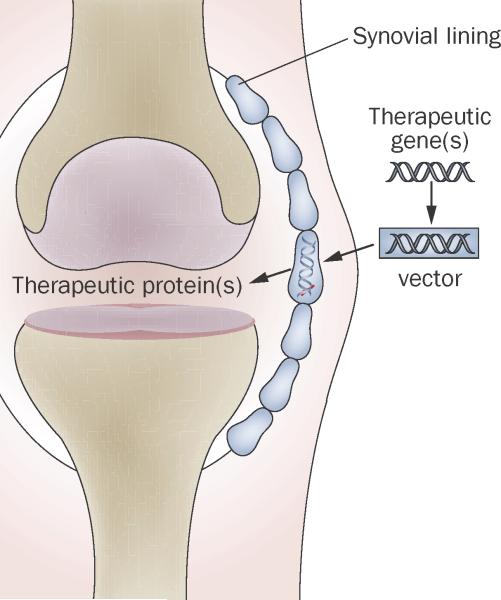
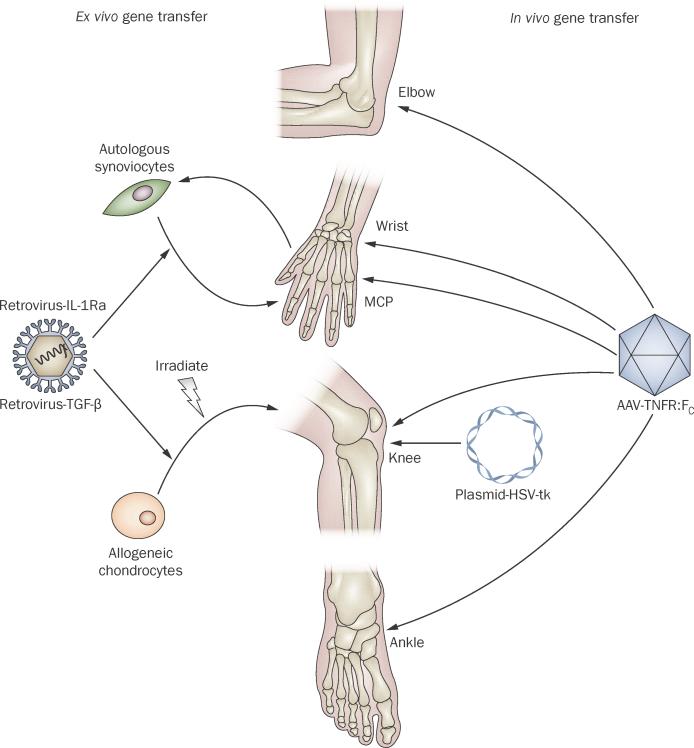
Gene transfer technologies enable the controlled, targeted and sustained expression of gene products at precise anatomical locations, such as the joint. In this way, they offer the potential for more-effective, less-expensive treatments of joint diseases with fewer extra-articular adverse effects. A large body of preclinical data confirms the utility of intra-articular gene therapy in animal models of rheumatoid arthritis and osteoarthritis. However, relatively few clinical trials have been conducted, only one of which has completed phase II. This article summarizes the status in 2010 of the clinical development of gene therapy for arthritis, identifies certain constraints to progress and suggests possible solutions.
基因转移技术可实现基因产物在精确解剖部位的可控、靶向和持续表达,如关节。通过这种方式,它们有可能为治疗关节疾病提供更有效、更廉价且关节外不良反应更少的治疗方法。大量临床前数据证实了关节内基因治疗在类风湿关节炎和骨关节炎动物模型中的效用。然而,只有相对较少的临床试验已经开展,其中只有一项完成了二期临床试验。本文总结了 2010 年关节炎基因治疗的临床发展状况,确定了进展的某些限制,并提出了可能的解决方案。