Department of Medicine, University of Manchester, Manchester, UK.
BMC Complement Altern Med. 2010 Dec 7;10:75. doi: 10.1186/1472-6882-10-75.
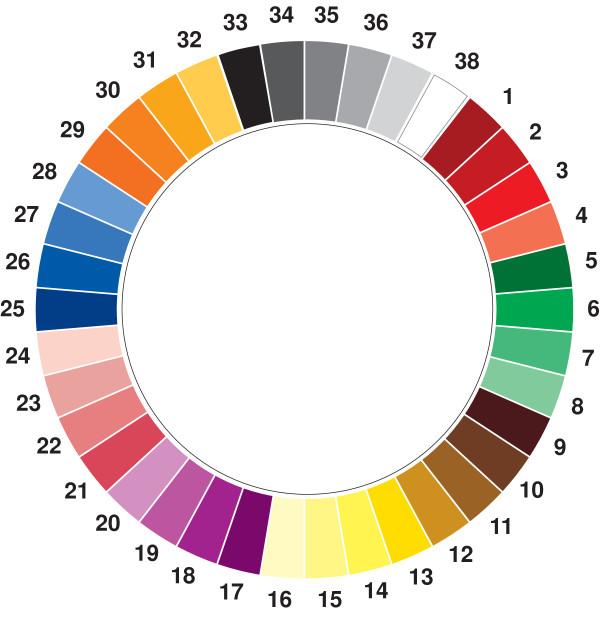
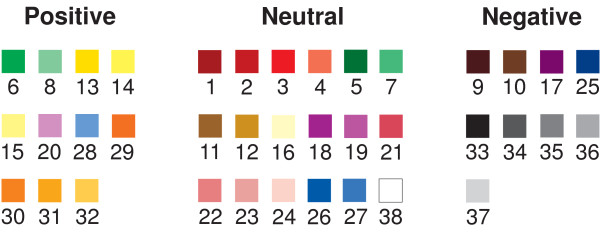
Approximately two thirds of patients with irritable bowel syndrome (IBS) respond well to hypnotherapy. However, it is time consuming as well as expensive to provide and therefore a way of predicting outcome would be extremely useful. The use of imagery and color form an integral part of the hypnotherapeutic process and we have hypothesised that investigating color and how it relates to mood might help to predict response to treatment. In order to undertake this study we have previously developed and validated a method of presenting colors to individuals for research purposes called the Manchester Color Wheel (MCW). Using this instrument we have been able to classify colors into positive, neutral and negative shades and this study aimed to assess their predictive role in hypnotherapy.
156 consecutive IBS patients (aged 14-74, mean 42.0 years, 127 (81%) females, 29 (19%) males) were studied. Before treatment, each patient was asked to relate their mood to a color on the MCW as well as completing the IBS Symptom Severity Score, the Hospital Anxiety and Depression (HAD) Scale, the Non-colonic Symptom Scale, the Quality of Life Scale and the Tellegen Absorption Scale (TAS) which is a measure of hypnotisability. Following hypnotherapy all these measures were repeated with the exception of the TAS.
For patients with a positive mood color the odds of responding to hypnotherapy were nine times higher than that of those choosing either a neutral or negative color or no color at all (odds ratio: 8.889; p = 0.042). Furthermore, a high TAS score and the presence of HAD anxiety also had good predictive value (odds ratio: 4.024; p = 0.092, 3.917; p < 0.001 respectively) with these markers and a positive mood color being independent of each other. In addition, these factors could be combined to give an even stronger prediction of outcome. Twice as many responders (63, 77.8%) had a positive mood color or were anxious or had a high TAS score compared with 32 (42.7%) without these factors (p < 0.001).
A positive mood color, especially when combined with HAD anxiety and a high TAS score, predict a good response to hypnotherapy.
大约三分之二的肠易激综合征(IBS)患者对催眠疗法反应良好。然而,提供这种治疗既耗时又昂贵,因此预测疗效的方法将非常有用。意象和颜色是催眠治疗过程中不可或缺的一部分,我们假设研究颜色及其与情绪的关系可能有助于预测治疗反应。为了进行这项研究,我们之前开发并验证了一种用于研究目的的向个体呈现颜色的方法,称为曼彻斯特颜色轮(MCW)。使用这个工具,我们能够将颜色分为积极、中性和消极的色调,本研究旨在评估它们在催眠治疗中的预测作用。
研究了 156 例连续的 IBS 患者(年龄 14-74 岁,平均 42.0 岁,127 例(81%)为女性,29 例(19%)为男性)。在治疗前,每位患者被要求将自己的情绪与 MCW 上的一种颜色联系起来,同时完成 IBS 症状严重程度评分、医院焦虑和抑郁量表(HAD)、非结肠症状量表、生活质量量表和 Tellegen 吸收量表(TAS),TAS 是催眠能力的衡量标准。催眠治疗后,除 TAS 外,所有这些措施均重复进行。
对于情绪积极的患者,选择积极情绪颜色的患者对催眠治疗的反应可能性是选择中性或消极颜色或不选择颜色的患者的九倍(优势比:8.889;p = 0.042)。此外,高 TAS 评分和 HAD 焦虑的存在也具有良好的预测价值(优势比:4.024;p = 0.092,3.917;p <0.001),这些标志物与积极情绪颜色是相互独立的。此外,这些因素可以结合起来,对治疗结果进行更有力的预测。与没有这些因素的患者(32 例,42.7%)相比,有两倍多的应答者(63 例,77.8%)有积极的情绪颜色或焦虑或 TAS 评分高(p <0.001)。
积极的情绪颜色,尤其是与 HAD 焦虑和高 TAS 评分相结合,预测对催眠治疗的良好反应。