Nanotoxicology Laboratory, Department of Environmental and Molecular Toxicology, Oregon State University, Corvallis, OR 97331, USA.
Arch Toxicol. 2011 Jul;85(7):787-98. doi: 10.1007/s00204-010-0627-4. Epub 2010 Dec 8.
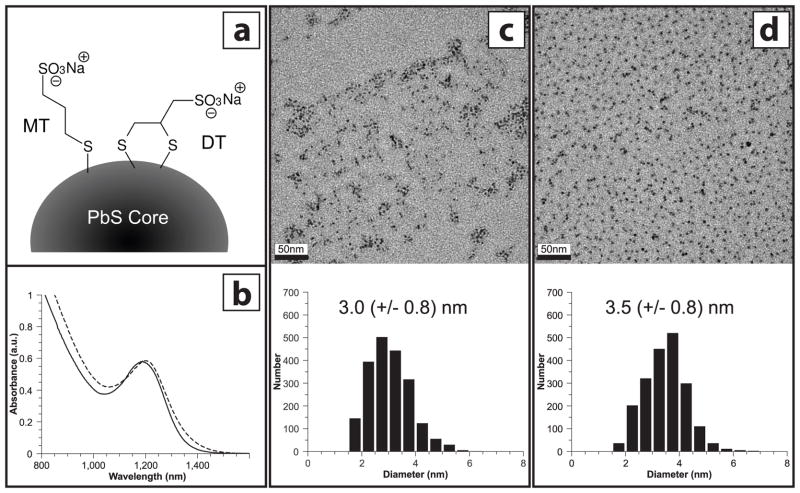
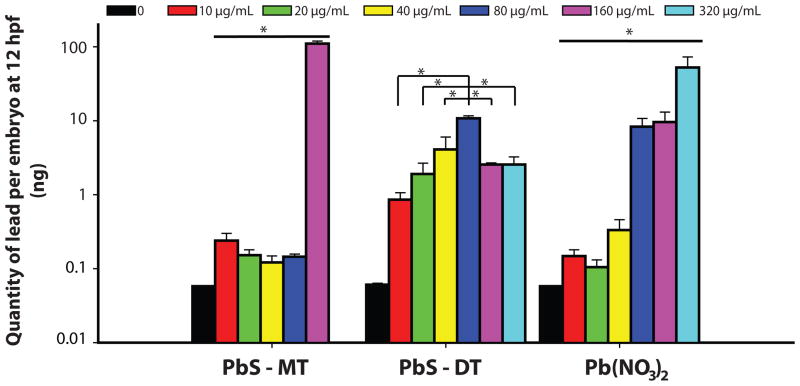
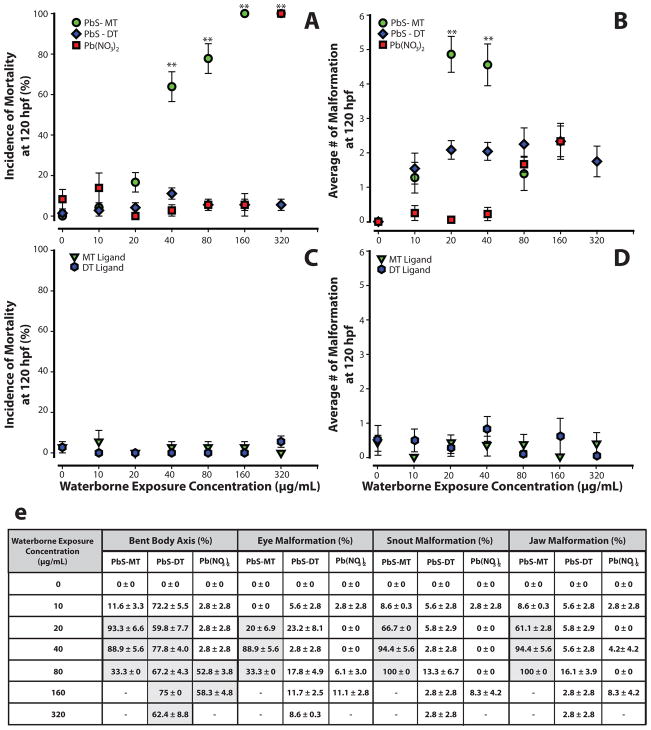
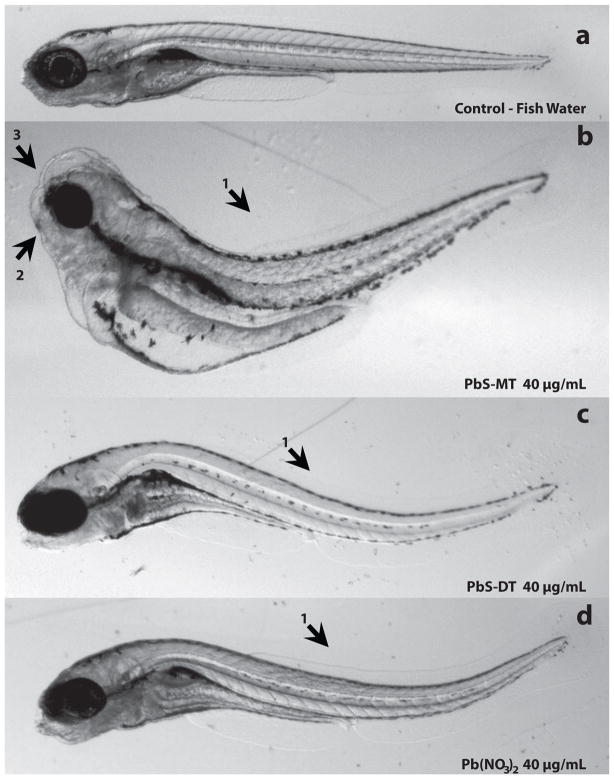
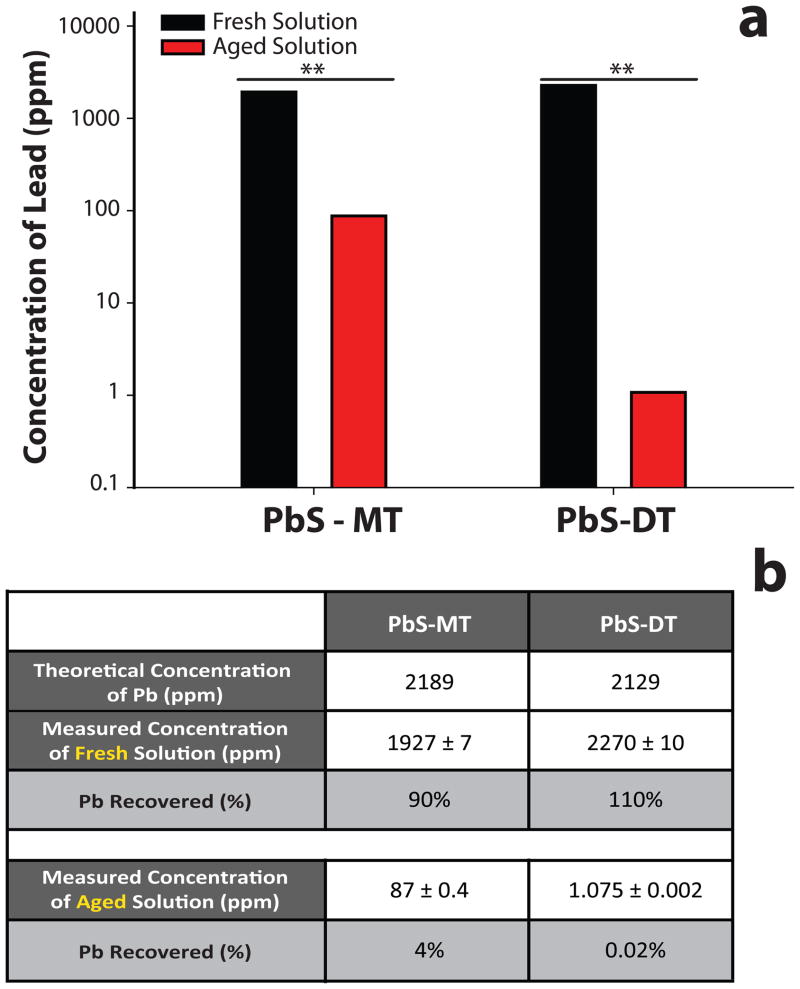
As the number of nanoparticle-based products increase in the marketplace, there will be increased potential for human exposures to these engineered materials throughout the product life cycle. We currently lack sufficient data to understand or predict the inherent nanomaterial characteristics that drive nanomaterial-biological interactions and responses. In this study, we utilized the embryonic zebrafish (Danio rerio) model to investigate the importance of nanoparticle (NP) surface functionalization, in particular as it pertains to nanoparticle stability, on in vivo biological responses. This is a comparative study where two lead sulfide nanoparticles (PbS-NPs) with nearly identical core sizes, but functionalized with either sodium 3-mercaptopropanesulfonate (MT) or sodium 2,3-dimercaptopropanesulfonate (DT) ligand, were used. Developmental exposures and assessments revealed differential biological responses to these engineered nanoparticles. Exposures beginning at 6 h post fertilization (hpf) to MT-functionalized nanoparticles (PbS-MT) led to 100% mortality by 120 hpf while exposure to DT-functionalized nanoparticles (PbS-DT) produced less than a 5% incident in mortality at the same concentration. Exposure to the MT and DT ligands themselves did not produce adverse developmental effects when not coupled to the NP core. Following exposure, we confirmed that the embryos took up both PbS-MT and PbS-DT material using inductively coupled plasma-mass spectrometry (ICP-MS). The stability of the nanoparticles in the aqueous solution was also characterized. The nanoparticles decompose and precipitate upon exposure to air. Soluble lead ions were observed following nanoparticle precipitation and in greater concentration for the PbS-MT sample compared to the PbS-DT sample. These studies demonstrate that in vivo assessments can be effectively used to characterize the role of NP surface functionalization in predicting biological responses.
随着市场上基于纳米粒子的产品数量增加,人们在整个产品生命周期中接触这些工程材料的潜在可能性将会增加。我们目前缺乏足够的数据来理解或预测驱动纳米材料-生物相互作用和反应的固有纳米材料特性。在这项研究中,我们利用胚胎斑马鱼(Danio rerio)模型来研究纳米颗粒(NP)表面功能化的重要性,特别是因为它与纳米颗粒的稳定性有关,对体内生物反应的影响。这是一项比较研究,使用了两种具有几乎相同核心尺寸但用 3-巯基丙磺酸(MT)或 2,3-二巯基丙磺酸(DT)配体功能化的硫化铅纳米颗粒(PbS-NPs)。发育暴露和评估揭示了对这些工程纳米颗粒的不同生物反应。从受精后 6 小时(hpf)开始暴露于 MT 功能化纳米颗粒(PbS-MT)会导致 120 hpf 时 100%的死亡率,而暴露于 DT 功能化纳米颗粒(PbS-DT)在相同浓度下产生的死亡率不到 5%。当不与 NP 核心结合时,暴露于 MT 和 DT 配体本身不会产生不良的发育影响。暴露后,我们使用电感耦合等离子体质谱法(ICP-MS)证实胚胎吸收了 PbS-MT 和 PbS-DT 材料。还对纳米颗粒在水溶液中的稳定性进行了表征。纳米颗粒在暴露于空气时分解和沉淀。在纳米颗粒沉淀后观察到可溶性铅离子,并且 PbS-MT 样品中的浓度高于 PbS-DT 样品。这些研究表明,体内评估可有效用于表征 NP 表面功能化在预测生物反应中的作用。