Department of Pathology and Laboratory Medicine, Women & Infants Hospital of Rhode Island, Warren Alpert Medical School of Brown University, 101 Dudley Street, Providence, Rhode Island 02905, USA.
Diagn Pathol. 2010 Dec 9;5:80. doi: 10.1186/1746-1596-5-80.
Selenium has been shown to inhibit cancer development and growth through the mediation of selenium-binding proteins. Decreased expression of selenium-binding protein 1 has been reported in cancers of the prostate, stomach, colon, and lungs. No information, however, is available concerning the roles of selenium-binding protein 1 in uterine leiomyoma.
Using Western Blot analysis and immunohistochemistry, we examined the expression of selenium-binding protein 1 in uterine leiomyoma and normal myometrium in 20 patients who had undergone hysterectomy for uterine leiomyoma.
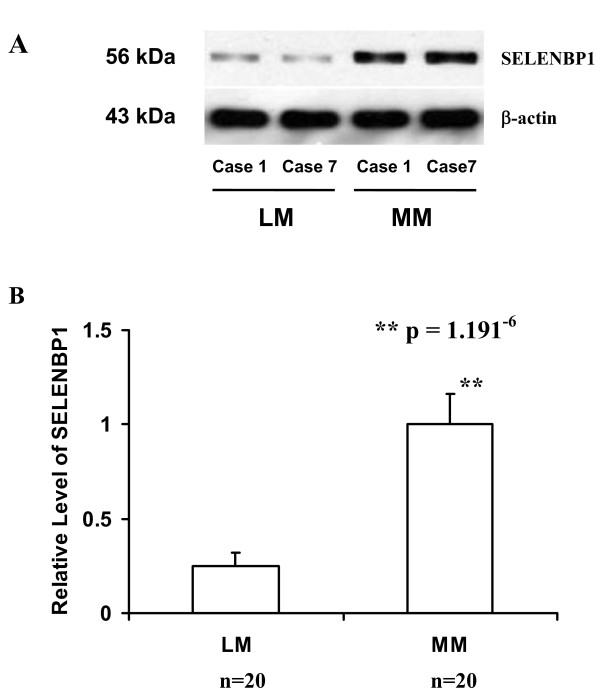
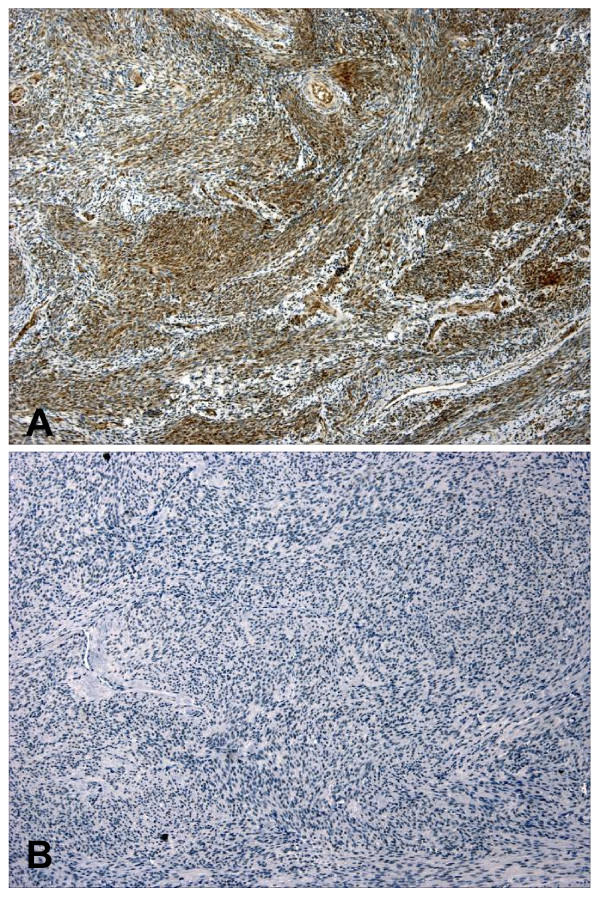
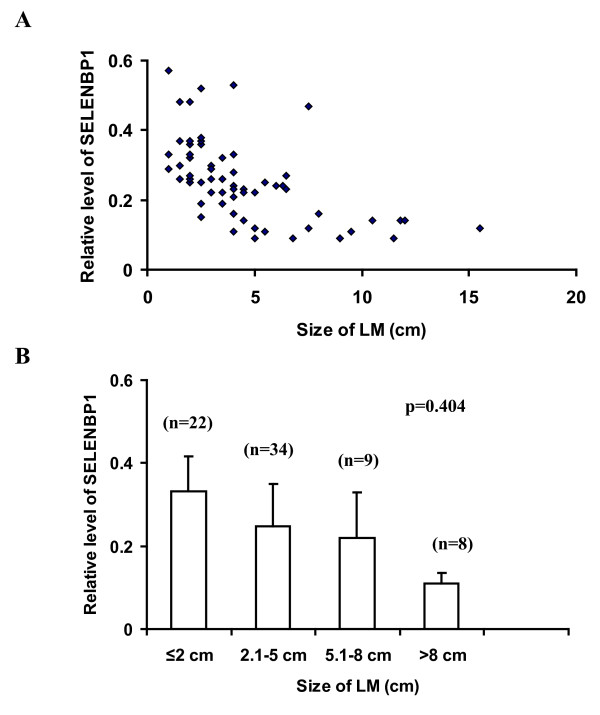
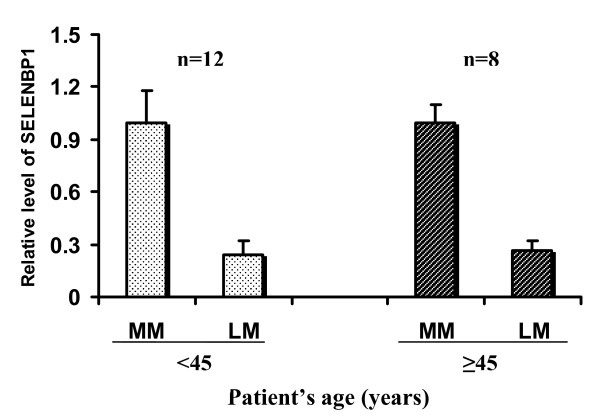
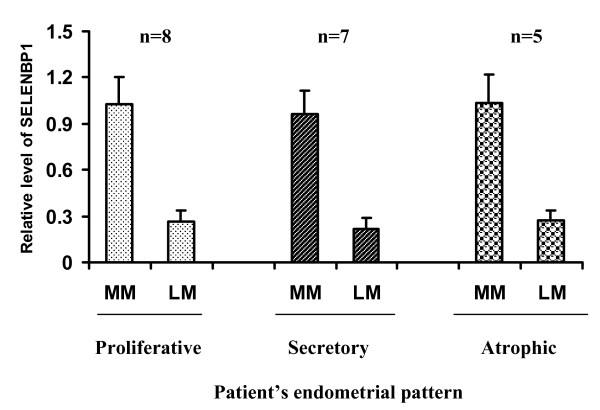
The patient age ranged from 34 to 58 years with a mean of 44.3 years. Proliferative endometrium was seen in 8 patients, secretory endometrium in 7 patients, and atrophic endometrium in 5 patients. Two patients showed solitary leiomyoma, and eighteen patients revealed 2 to 5 tumors. Tumor size ranged from 1 to 15.5 cm with a mean of 4.3 cm. Both Western blot analysis and immunohistochemistry showed a significant lower level of selenium-binding protein 1 in leiomyoma than in normal myometrium. Larger tumors had a tendency to show a lower level of selenium-binding protein 1 than smaller ones, but the difference did not reach a statistical significance. The expression of selenium-binding protein 1 was the same among patients with proliferative, secretory, and atrophic endometrium in either leiomyoma or normal myometrium. Also, we did not find a difference of selenium-binding protein 1 level between patients younger than 45 years and older patients in either leiomyoma or normal myometrium.
Decreased expression of selenium-binding protein 1 in uterine leiomyoma may indicate a role of the protein in tumorigenesis. Our findings may provide a basis for future studies concerning the molecular mechanisms of selenium-binding protein 1 in tumorigenesis as well as the possible use of selenium in prevention and treatment of uterine leiomyoma.
研究表明,硒通过硒结合蛋白的介导来抑制癌症的发展和生长。据报道,前列腺癌、胃癌、结肠癌和肺癌中硒结合蛋白 1 的表达降低。然而,关于硒结合蛋白 1 在子宫肌瘤中的作用尚无信息。
我们使用 Western Blot 分析和免疫组织化学方法,在 20 例行子宫肌瘤切除术的患者中检测了硒结合蛋白 1 在子宫肌瘤和正常子宫肌层中的表达。
患者年龄 34 至 58 岁,平均 44.3 岁。8 例患者为增殖期子宫内膜,7 例为分泌期子宫内膜,5 例为萎缩性子宫内膜。2 例患者为单发子宫肌瘤,18 例患者为 2 至 5 个肿瘤。肿瘤大小 1 至 15.5cm,平均 4.3cm。Western blot 分析和免疫组织化学均显示硒结合蛋白 1 在子宫肌瘤中的水平明显低于正常子宫肌层。较大的肿瘤倾向于显示较低水平的硒结合蛋白 1,但差异无统计学意义。在子宫肌瘤或正常子宫肌层中,增殖期、分泌期和萎缩期患者的硒结合蛋白 1 表达相同。此外,我们在子宫肌瘤或正常子宫肌层中均未发现 45 岁以下患者和年龄较大患者的硒结合蛋白 1 水平存在差异。
子宫肌瘤中硒结合蛋白 1 的表达降低可能表明该蛋白在肿瘤发生中的作用。我们的发现为进一步研究硒结合蛋白 1 在肿瘤发生中的分子机制以及硒在预防和治疗子宫肌瘤中的可能用途提供了依据。