Joseph and Mildred Sonshine Family Centre for Head and Neck Diseases, Department of Otolaryngology-Head and Neck Surgery Program, Mount Sinai Hospital, University of Toronto Medical School, Department of Otolaryngology-Head and Neck Surgery, Toronto, Ontario, Canada.
PLoS One. 2010 Nov 30;5(11):e14130. doi: 10.1371/journal.pone.0014130.
We previously demonstrated that nuclear and cytoplasmic accumulation of the intracellular domain (Ep-ICD) of epithelial cell adhesion molecule (EpCAM) accompanied by a reciprocal reduction of its extracellular domain (EpEx), occurs in aggressive thyroid cancers. This study was designed to determine whether similar accumulation of Ep-ICD is a common event in other epithelial cancers.
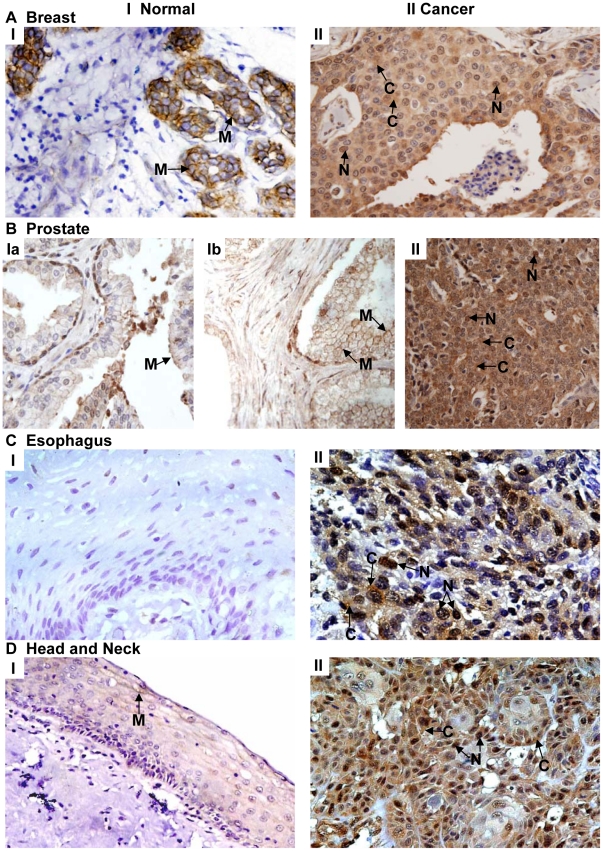
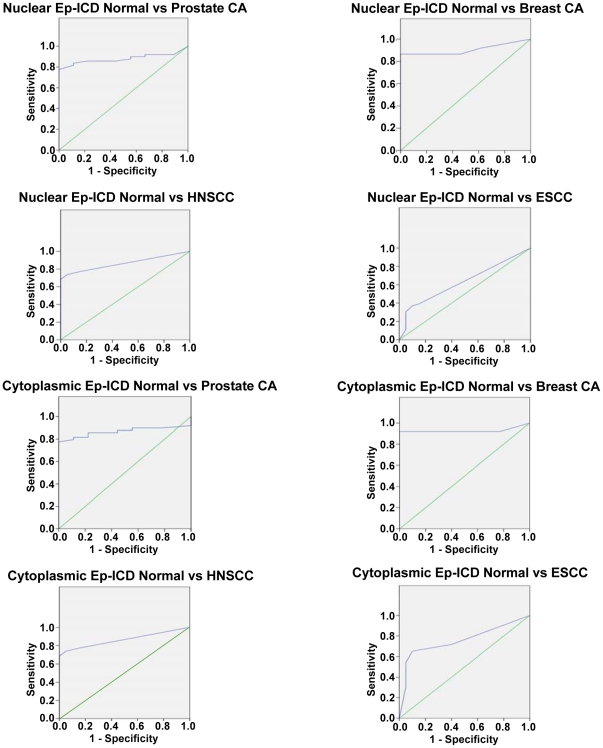
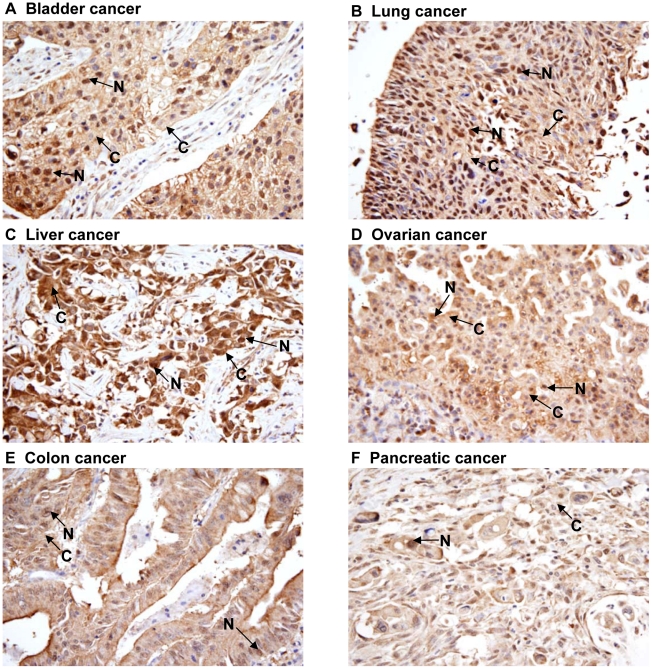
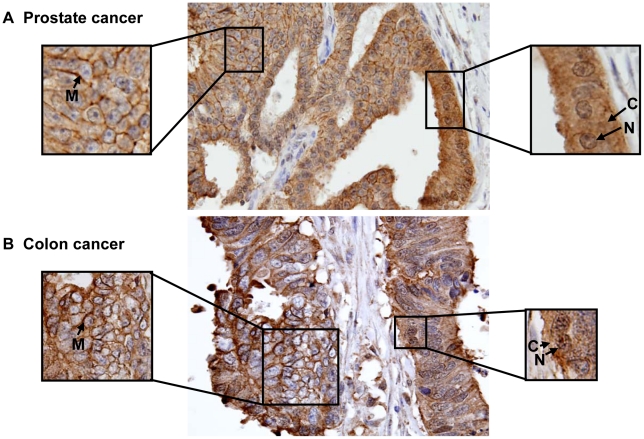
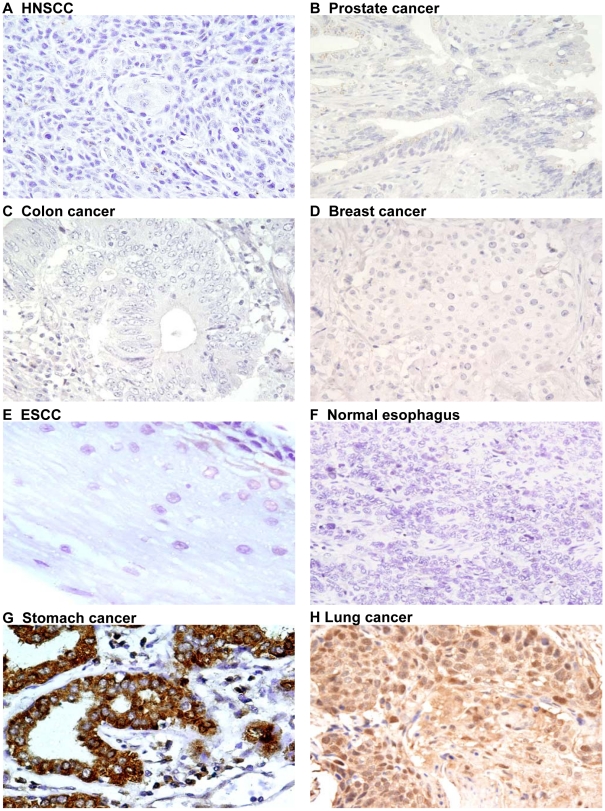
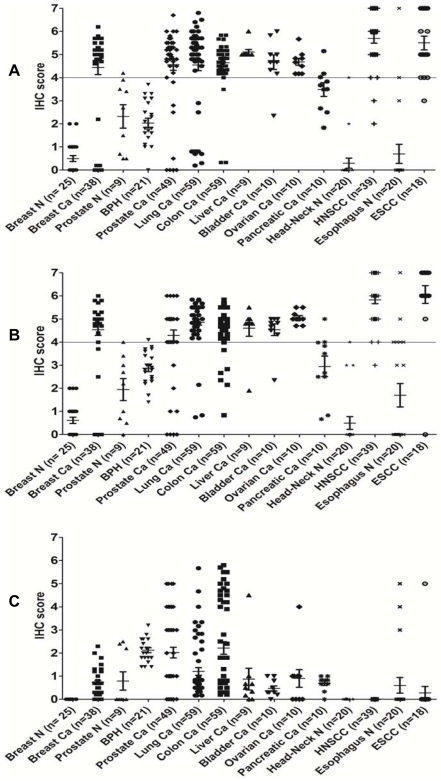
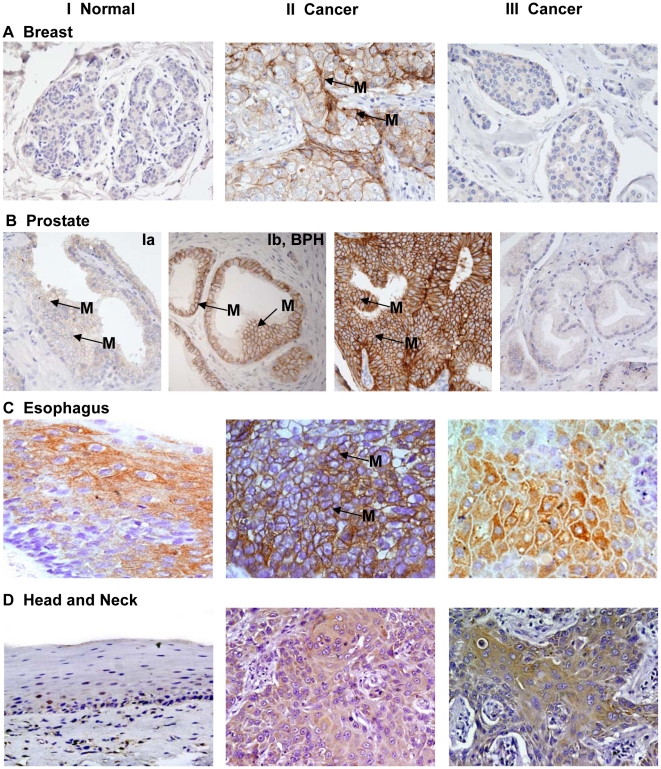
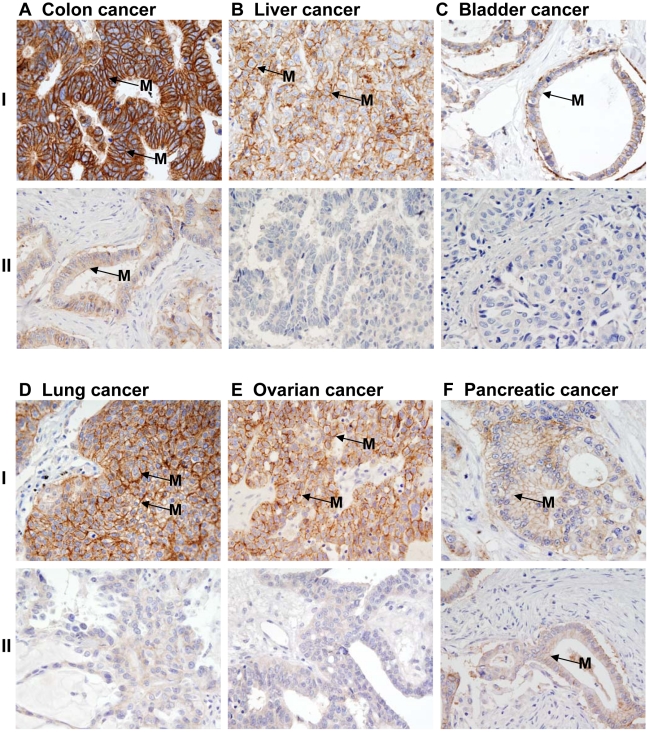
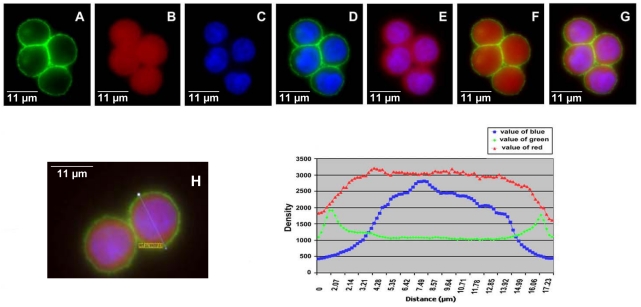
Ten epithelial cancers were immunohistochemically analyzed using Ep-ICD and EpEx domain-specific antibodies. The subcellular localization of EpEx and Ep-ICD in the human colon adenocarcinoma cell line CX-1 was observed using immunofluorescence. Nuclear and cytoplasmic Ep-ICD expression was increased in cancers of the breast (31 of 38 tissues, 82%), prostate (40 of 49 tissues, 82%), head and neck (37 of 57 tissues, 65%) and esophagus (17 of 46 tissues, 37%) compared to their corresponding normal tissues that showed membrane localization of the protein. Importantly, Ep-ICD was not detected in the nuclei of epithelial cells in most normal tissues. High nuclear and cytoplasmic Ep-ICD accumulation also occurred in the other six epithelial cancer types analyzed - lung, colon, liver, bladder, pancreatic, and ovarian. A concomitant reduction in membrane EpEx expression was observed in a subset of all cancer types. Receiver operating characteristic curve analysis revealed nuclear Ep-ICD distinguished breast cancers with 82% sensitivity and 100% specificity and prostate cancers with 82% sensitivity and 78% specificity. Similar findings were observed for cytoplasmic accumulation of Ep-ICD in these cancers. We provide clinical evidence of increased nuclear and cytoplasmic Ep-ICD accumulation and a reduction in membranous EpEx in these cancers.
Increased nuclear and cytoplasmic Ep-ICD was observed in all epithelial cancers analyzed and distinguished them from normal tissues with high-sensitivity, specificity, and AUC. Development of a robust high throughput assay for Ep-ICD will facilitate the determination of its diagnostic, prognostic and therapeutic relevance in epithelial cancers.
我们之前的研究表明,上皮细胞黏附分子(EpCAM)的细胞内结构域(Ep-ICD)的核质积累,伴随着其细胞外结构域(EpEx)的相应减少,发生在侵袭性甲状腺癌中。本研究旨在确定类似的 Ep-ICD 积累是否是其他上皮癌的常见事件。
使用 Ep-ICD 和 EpEx 结构域特异性抗体对 10 种上皮癌进行免疫组织化学分析。用人结肠腺癌细胞系 CX-1 观察 EpEx 和 Ep-ICD 的亚细胞定位。与蛋白的膜定位相比,乳腺癌(38 例组织中的 31 例,82%)、前列腺癌(49 例组织中的 40 例,82%)、头颈部癌(57 例组织中的 37 例,65%)和食管癌(46 例组织中的 17 例,37%)中的癌症中,核质 Ep-ICD 的表达增加。重要的是,在大多数正常组织的上皮细胞中未检测到 Ep-ICD 的核定位。在分析的其他六种上皮癌类型-肺癌、结肠癌、肝癌、膀胱癌、胰腺癌和卵巢癌中,也发生了高核质 Ep-ICD 的积累。在所有癌症类型的一部分中观察到膜 EpEx 表达的减少。受试者工作特征曲线分析显示,核 Ep-ICD 可区分具有 82%敏感性和 100%特异性的乳腺癌,以及具有 82%敏感性和 78%特异性的前列腺癌。在这些癌症中,细胞质 Ep-ICD 的积累也观察到了类似的发现。我们提供了这些癌症中核质 Ep-ICD 积累增加和膜 EpEx 减少的临床证据。
在分析的所有上皮癌中均观察到核质 Ep-ICD 增加,其具有高敏感性、特异性和 AUC,可将其与正常组织区分开来。开发一种稳健的高通量 Ep-ICD 检测方法将有助于确定其在上皮癌中的诊断、预后和治疗相关性。