Center for Pharmacology and Toxicology, Hannover Medical School, Hannover, Germany.
PLoS One. 2010 Nov 30;5(11):e14143. doi: 10.1371/journal.pone.0014143.
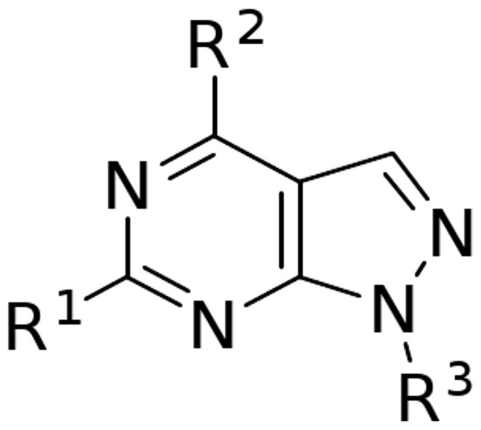
The non-receptor tyrosine kinases c-Abl and c-Src are overexpressed in various solid human tumours. Inhibition of their hyperactivity represents a molecular rationale in the combat of cancerous diseases. Here we examined the effects of a new family of pyrazolo [3,4-d] pyrimidines on a panel of 11 different murine lung tumour progenitor cell lines, that express stem cell markers, as well as on the human lung adenocarcinoma cell line A549, the human hepatoma cell line HepG2 and the human colon cancer cell line CaCo2 to obtain insight into the mode of action of these experimental drugs.
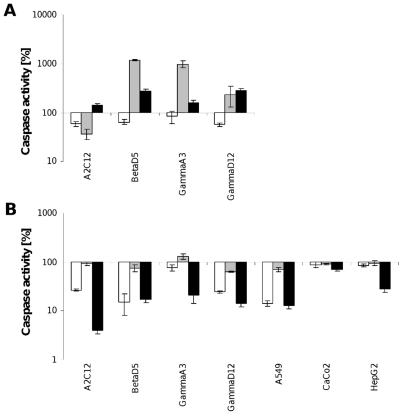
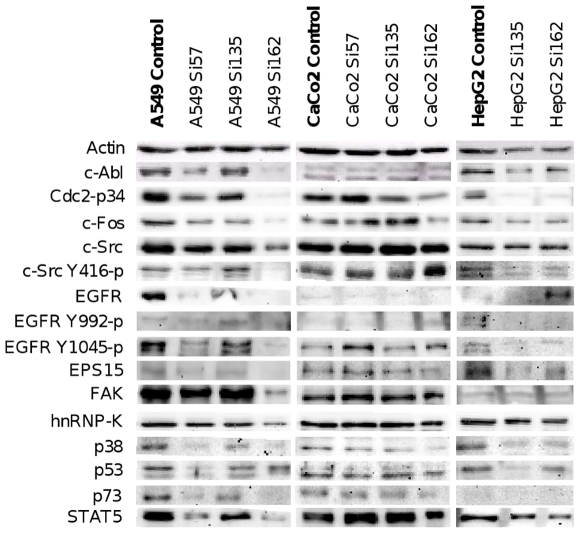
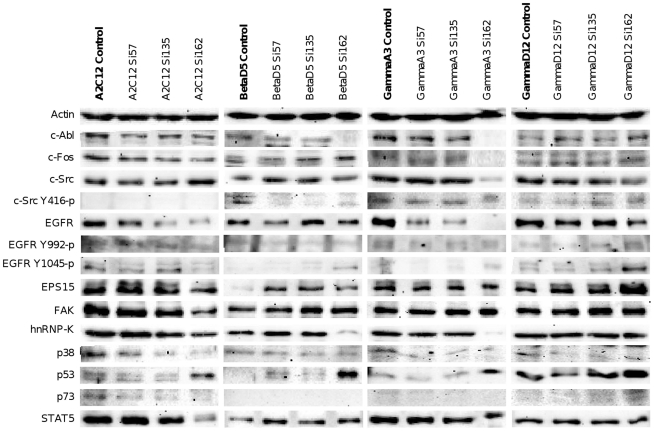
METHODOLOGY/PRINCIPAL FINDINGS: Treatment with the dual kinase inhibitors blocked c-Abl and c-Src kinase activity efficiently in the nanomolar range, induced apoptosis, reduced cell viability and caused cell cycle arrest predominantly at G0/G1 phase while western blot analysis confirmed repressed protein expression of c-Abl and c-Src as well as the interacting partners p38 mitogen activated protein kinase, heterogenous ribonucleoprotein K, cyclin dependent kinase 1 and further proteins that are crucial for tumour progression. Importantly, a significant repression of the epidermal growth factor receptor was observed while whole genome gene expression analysis evidenced regulation of many cell cycle regulated genes as well integrin and focal adhesion kinase (FAK) signalling to impact cytoskeleton dynamics, migration, invasion and metastasis.
CONCLUSIONS/SIGNIFICANCE: Our experiments and recently published in vivo engraftment studies with various tumour cell lines revealed the dual kinase inhibitors to be efficient in their antitumour activity.
非受体酪氨酸激酶 c-Abl 和 c-Src 在各种实体人类肿瘤中过度表达。抑制它们的过度活跃代表了对抗癌症疾病的分子原理。在这里,我们研究了一组 11 种不同的鼠肺肿瘤祖细胞系表达干细胞标志物的情况下,新的吡唑并[3,4-d]嘧啶家族对这些实验药物作用模式的影响,这些细胞系以及人肺腺癌细胞系 A549、人肝癌细胞系 HepG2 和人结肠癌细胞系 CaCo2。
方法/主要发现:双重激酶抑制剂的治疗在纳摩尔范围内有效抑制 c-Abl 和 c-Src 激酶活性,诱导细胞凋亡,降低细胞活力并导致细胞周期停滞主要在 G0/G1 期,而 Western blot 分析证实了 c-Abl 和 c-Src 以及相互作用伙伴 p38 有丝分裂原激活蛋白激酶、异质核糖核蛋白 K、细胞周期蛋白依赖性激酶 1 和进一步对肿瘤进展至关重要的蛋白质的蛋白表达受到抑制。重要的是,观察到表皮生长因子受体的显著抑制,而全基因组基因表达分析证明了许多细胞周期调节基因以及整合素和粘着斑激酶 (FAK) 信号的调节,以影响细胞骨架动力学、迁移、侵袭和转移。
结论/意义:我们的实验和最近发表的各种肿瘤细胞系的体内植入研究表明,双重激酶抑制剂在抗肿瘤活性方面非常有效。