Pharoah Fiona, Mari Jair, Rathbone John, Wong Winson
South West Community Mental Health Team, Oxford and Buckinghamshire Mental Health NHS Foundation Trust, Apex 550 (Unit 5), The Valley Centre, Gordon Road, High Wycombe, Buckinghamshire, UK, HP13 6EQ.
Cochrane Database Syst Rev. 2010 Dec 8(12):CD000088. doi: 10.1002/14651858.CD000088.pub2.
People with schizophrenia from families that express high levels of criticism, hostility, or over involvement, have more frequent relapses than people with similar problems from families that tend to be less expressive of emotions. Forms of psychosocial intervention, designed to reduce these levels of expressed emotions within families, are now widely used.
To estimate the effects of family psychosocial interventions in community settings for people with schizophrenia or schizophrenia-like conditions compared with standard care.
We updated previous searches by searching the Cochrane Schizophrenia Group Trials Register (September 2008).
We selected randomised or quasi-randomised studies focusing primarily on families of people with schizophrenia or schizoaffective disorder that compared community-orientated family-based psychosocial intervention with standard care.
We independently extracted data and calculated fixed-effect relative risk (RR), the 95% confidence intervals (CI) for binary data, and, where appropriate, the number needed to treat (NNT) on an intention-to-treat basis. For continuous data, we calculated mean differences (MD).
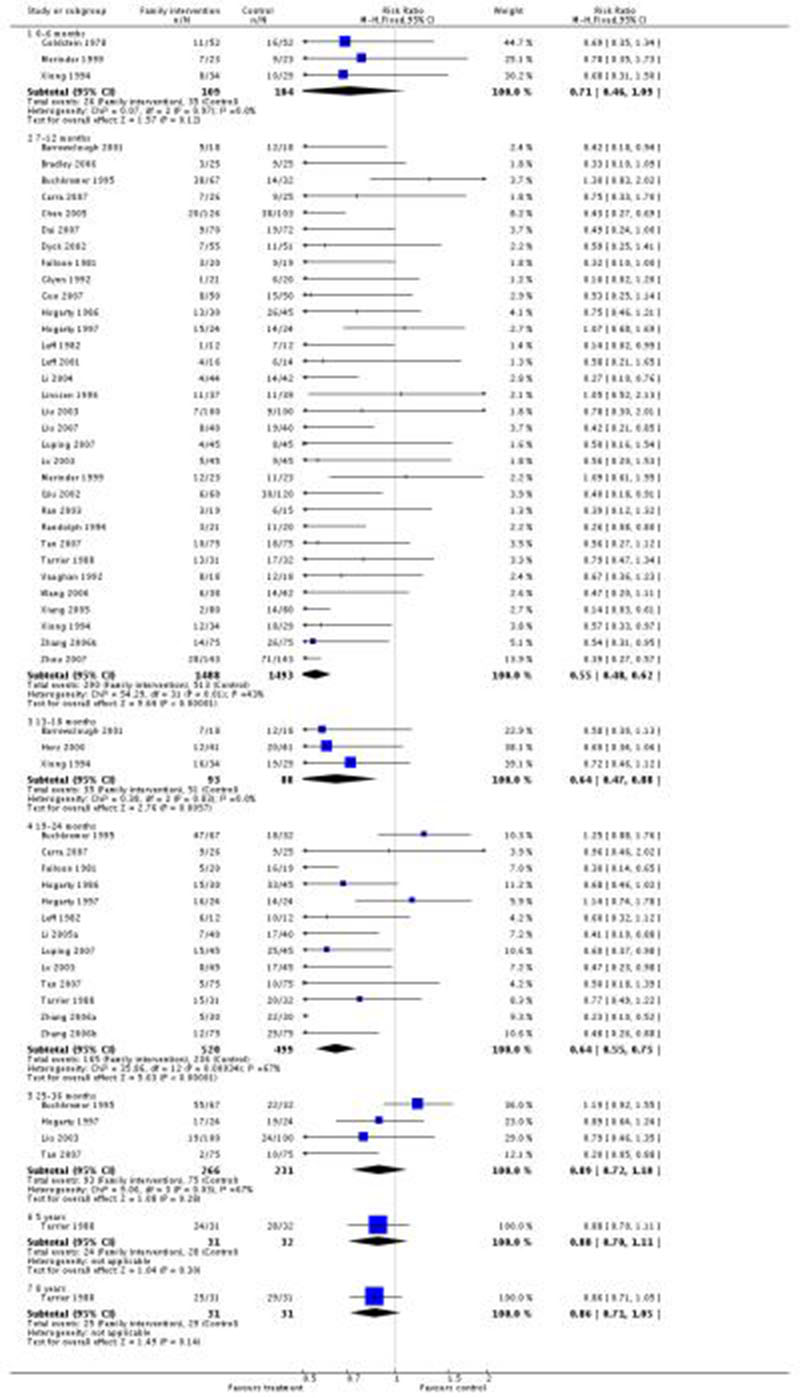
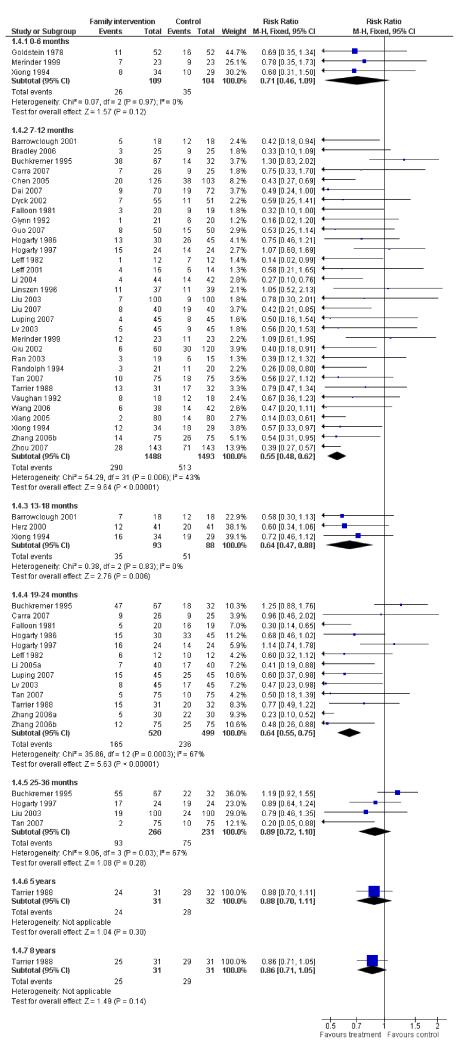
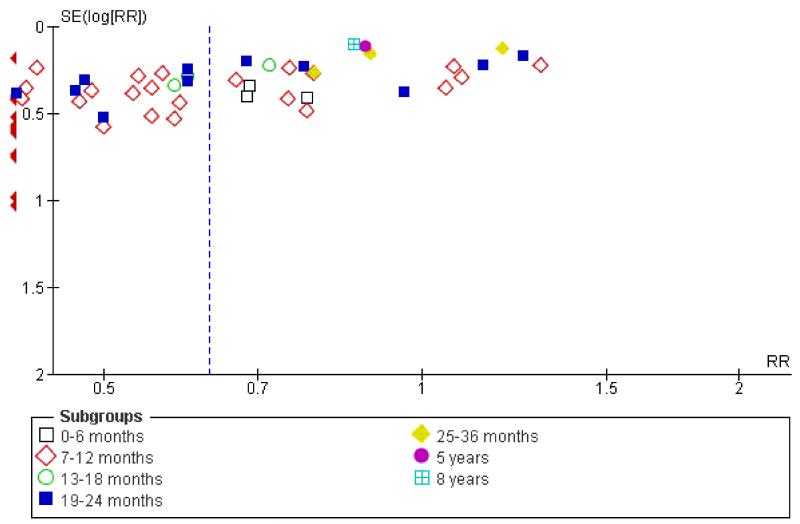
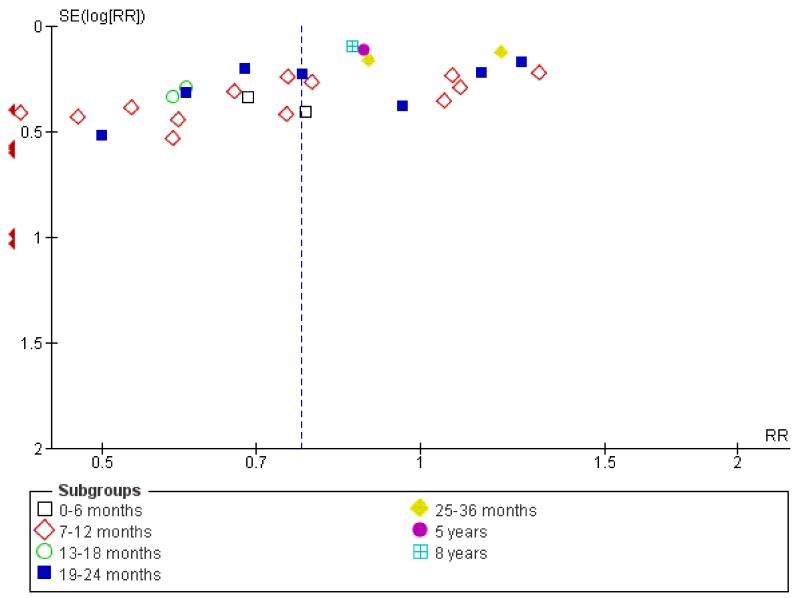
This 2009-10 update adds 21 additional studies, with a total of 53 randomised controlled trials included. Family intervention may decrease the frequency of relapse (n = 2981, 32 RCTs, RR 0.55 CI 0.5 to 0.6, NNT 7 CI 6 to 8), although some small but negative studies might not have been identified by the search. Family intervention may also reduce hospital admission (n = 481, 8 RCTs, RR 0.78 CI 0.6 to 1.0, NNT 8 CI 6 to 13) and encourage compliance with medication (n = 695, 10 RCTs, RR 0.60 CI 0.5 to 0.7, NNT 6 CI 5 to 9) but it does not obviously affect the tendency of individuals/families to leave care (n = 733, 10 RCTs, RR 0.74 CI 0.5 to 1.0). Family intervention also seems to improve general social impairment and the levels of expressed emotion within the family. We did not find data to suggest that family intervention either prevents or promotes suicide.
AUTHORS' CONCLUSIONS: Family intervention may reduce the number of relapse events and hospitalisations and would therefore be of interest to people with schizophrenia, clinicians and policy makers. However, the treatment effects of these trials may be overestimated due to the poor methodological quality. Further data from trials that describe the methods of randomisation, test the blindness of the study evaluators, and implement the CONSORT guidelines would enable greater confidence in these findings.
来自表达高度批评、敌意或过度干涉的家庭的精神分裂症患者,比来自情感表达较少的类似家庭问题的患者复发更为频繁。旨在降低家庭中这些情感表达水平的心理社会干预形式目前被广泛使用。
评估社区环境中针对精神分裂症或类精神分裂症患者的家庭心理社会干预与标准护理相比的效果。
我们通过检索Cochrane精神分裂症组试验注册库(2008年9月)更新了之前的检索。
我们选择主要关注精神分裂症或分裂情感性障碍患者家庭的随机或半随机研究,将以社区为导向的家庭心理社会干预与标准护理进行比较。
我们独立提取数据,并计算固定效应相对风险(RR)、二分类数据的95%置信区间(CI),并在适当情况下计算意向性分析的治疗所需人数(NNT)。对于连续性数据,我们计算平均差(MD)。
2009 - 10年的更新增加了21项额外研究,共纳入53项随机对照试验。家庭干预可能会降低复发频率(n = 2981,32项随机对照试验,RR 0.55,CI 0.5至0.6,NNT 7,CI 6至8),尽管检索可能未识别出一些规模较小且结果为阴性的研究。家庭干预还可能减少住院次数(n = 481,8项随机对照试验,RR 0.78,CI 0.6至1.0,NNT 8,CI 6至13)并促进药物依从性(n = 695,10项随机对照试验,RR 0.60,CI 0.5至0.7,NNT 6,CI 5至9),但它对个体/家庭离开护理的倾向没有明显影响(n = 733,10项随机对照试验,RR 0.74,CI 0.5至1.0)。家庭干预似乎还能改善总体社会功能损害以及家庭中的情感表达水平。我们未找到数据表明家庭干预能预防或促进自杀。
家庭干预可能会减少复发事件和住院次数,因此对精神分裂症患者、临床医生和政策制定者具有吸引力。然而,由于方法学质量较差,这些试验的治疗效果可能被高估。来自描述随机化方法、测试研究评估者的盲法以及实施CONSORT指南的试验的进一步数据,将使人们对这些结果更有信心。