Head and neck research group, Research Centre, Akershus University Hospital, Postbox 65, 1478 Lørenskog, Norway.
J Headache Pain. 2011 Feb;12(1):63-9. doi: 10.1007/s10194-010-0265-5. Epub 2010 Dec 16.
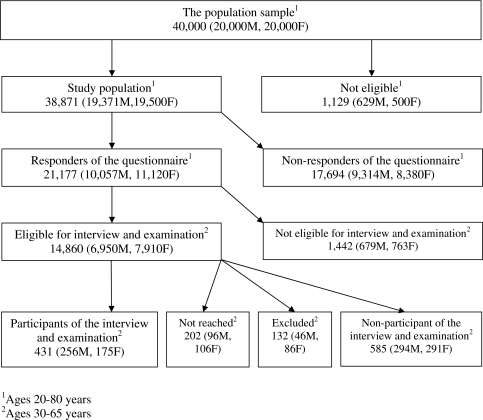
The main objective of this study is to investigate the relationship between tension-type headache and obstructive sleep apnea in the general population. The method involves a cross-sectional population-based study. A random age and gender stratified sample of 40,000 persons aged 20-80 years residing in Akershus, Hedmark or Oppland County, Norway were drawn by the National Population Register. A postal questionnaire containing the Berlin Questionnaire was used to classify respondents to be of either high or low risk of obstructive sleep apnea. Included in this study were 297 persons with high risk and 134 persons with low risk of sleep apnea, aged 30-65 years. They underwent an extensive clinical interview, a physical and a neurological examination by physicians, and in-hospital polysomnography. Those with apnea hypopnoea index (AHI) ≥5 were classified with obstructive sleep apnea. Tension-type headache was diagnosed according to the International Classification of Headache Disorders. Results showed the prevalence of frequent and chronic tension-type headache was 18.7 and 2.1% in the participants with obstructive sleep apnea. The logistic regression analyses showed no significant relationship between tension-type headache and obstructive sleep apnea, with adjusted odds ratios for frequent tension-type headache of 0.95 (0.55-1.62) and chronic tension-type headache of 1.91 (0.37-9.85). The results did not change when using cut-off of moderate (AHI ≥15) and severe (AHI ≥30) obstructive sleep apnea. Thus, we did not find any significant relationship between tension-type headache and the AHI. The presence and severity of sleep apneas seem not to influence presence and attack-frequency of tension-type headache in the general population.
本研究的主要目的是调查普通人群中紧张型头痛与阻塞性睡眠呼吸暂停之间的关系。方法为横断面基于人群的研究。通过挪威全国人口登记处,从阿克什胡斯、海德马克或奥普兰郡随机抽取年龄和性别分层的 40000 名 20-80 岁人群作为样本。采用包含柏林问卷的邮寄问卷,根据问卷结果将受访者分为阻塞性睡眠呼吸暂停高危和低危人群。本研究纳入了 297 名高危和 134 名低危阻塞性睡眠呼吸暂停患者,年龄在 30-65 岁之间。他们接受了全面的临床访谈、医生进行的体格检查和神经检查,并在医院进行了多导睡眠图检查。呼吸暂停低通气指数(apnea hypopnoea index,AHI)≥5 的患者被诊断为阻塞性睡眠呼吸暂停。紧张型头痛根据国际头痛疾病分类进行诊断。结果显示,阻塞性睡眠呼吸暂停患者中频繁和慢性紧张型头痛的患病率分别为 18.7%和 2.1%。逻辑回归分析显示,紧张型头痛与阻塞性睡眠呼吸暂停之间无显著关系,频繁紧张型头痛的调整比值比为 0.95(0.55-1.62),慢性紧张型头痛为 1.91(0.37-9.85)。当使用中度(AHI≥15)和重度(AHI≥30)阻塞性睡眠呼吸暂停的截断值时,结果没有改变。因此,我们没有发现紧张型头痛与 AHI 之间存在任何显著关系。睡眠呼吸暂停的存在和严重程度似乎不会影响普通人群中紧张型头痛的存在和发作频率。