Department of Pediatrics, Eastern Virginia Medical School, Norfolk, VA 23501-1980, USA.
Mol Immunol. 2011 Jan;48(4):683-90. doi: 10.1016/j.molimm.2010.11.014. Epub 2010 Dec 15.
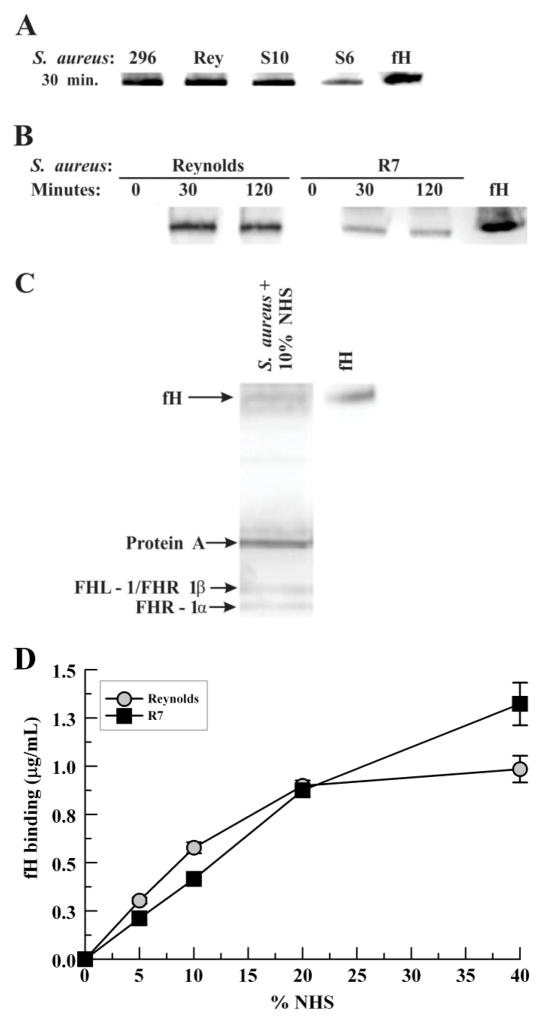
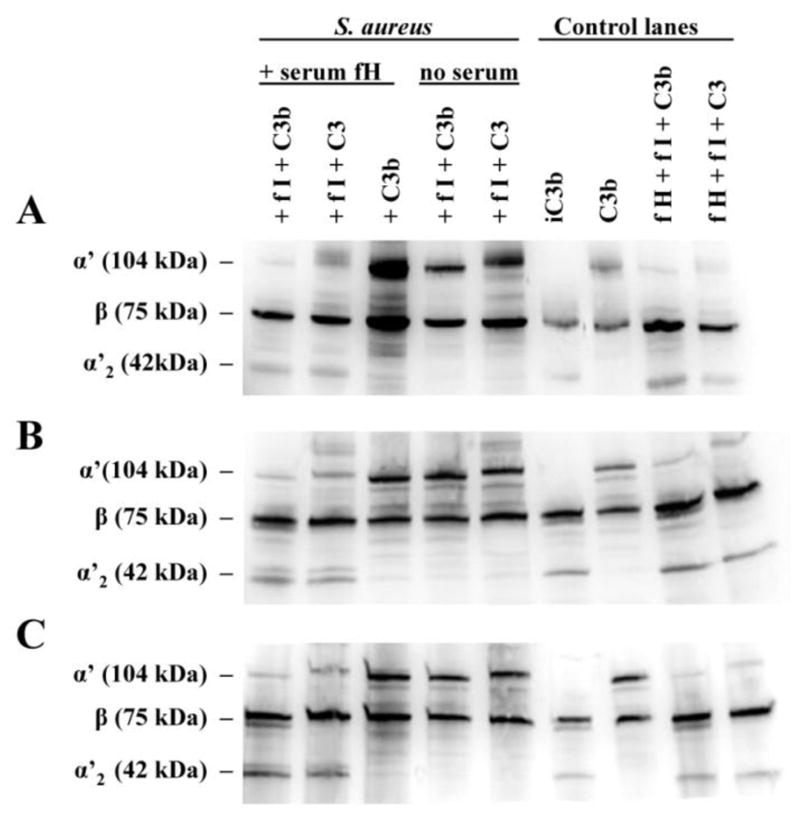
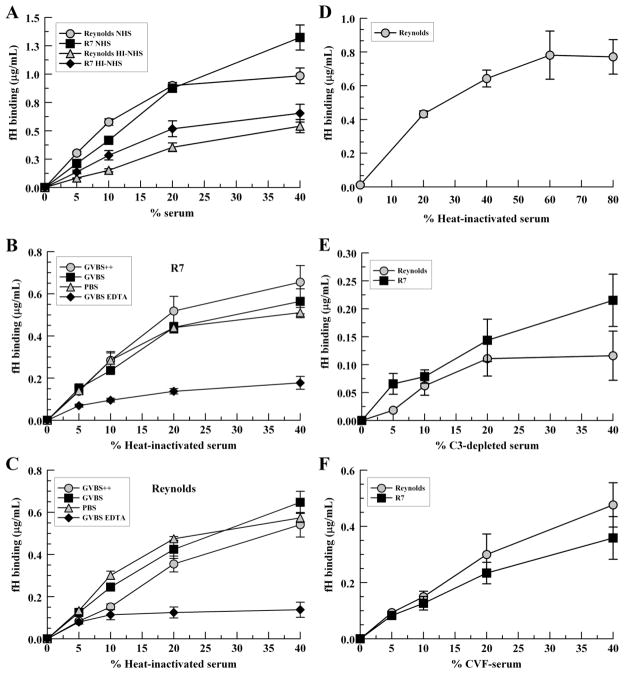
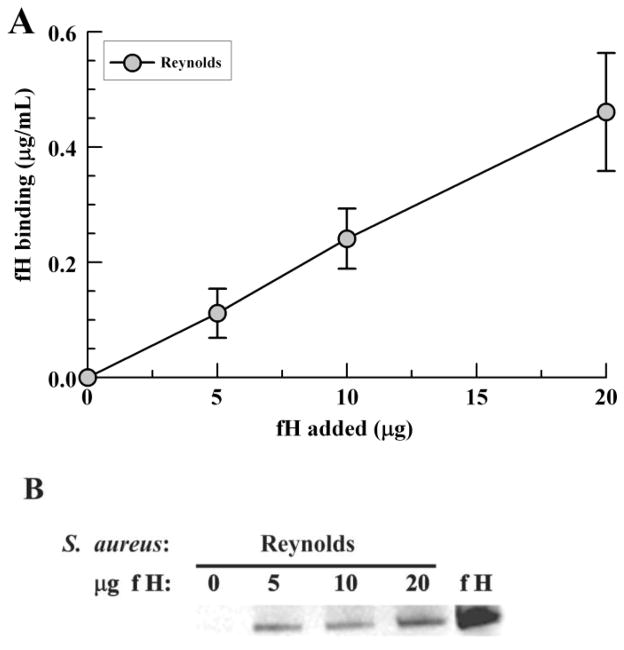
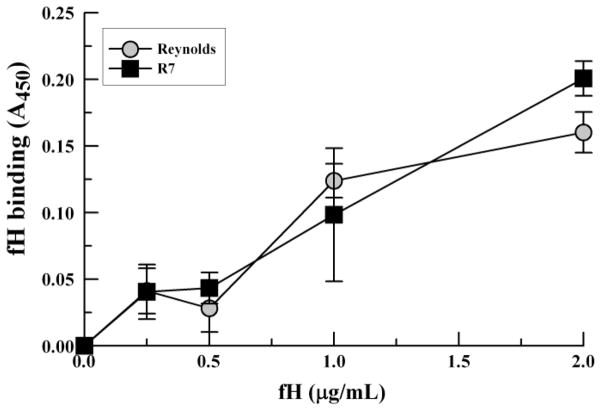
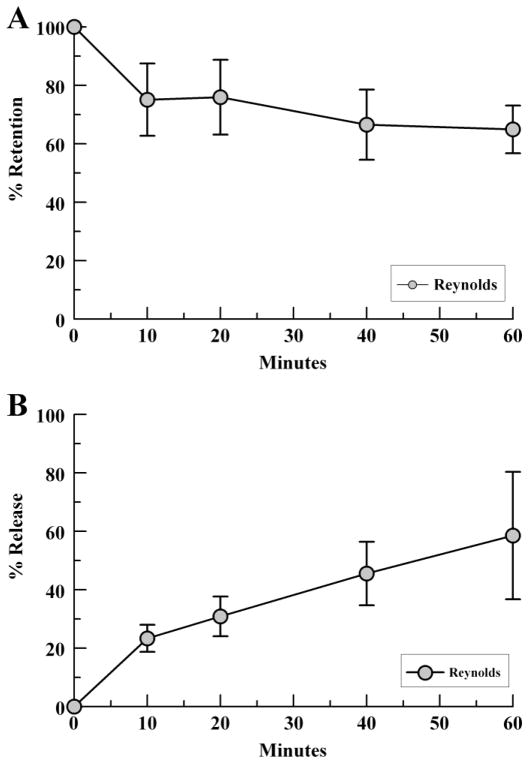
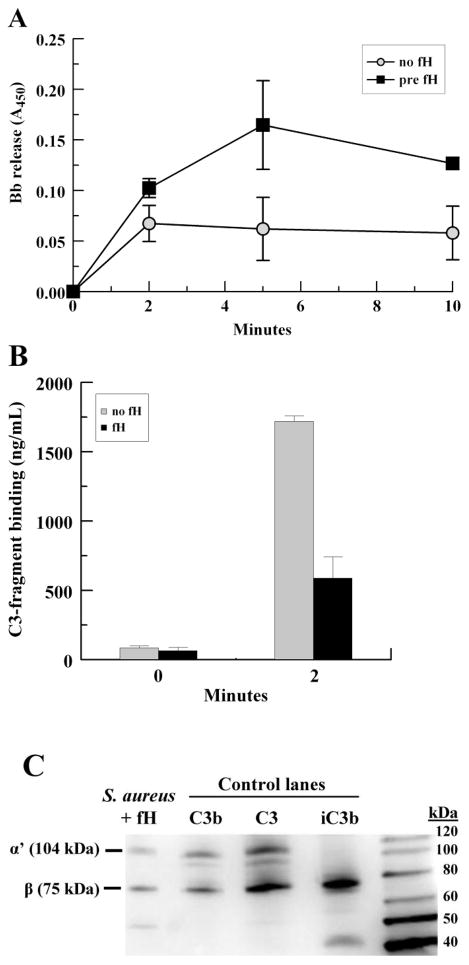
Staphylococcus aureus is a significant human pathogen that causes skin-structure, invasive, and hospital-associated infections worldwide. The complement system is vital to innate defense against many bacterial infections. As shown with other pathogens, mechanisms for circumventing complement attack may include recruitment of the complement regulatory protein factor H (fH). In the present study, we show that S. aureus binds fH in a dose-dependent and time-dependent manner. Interestingly, this interaction does not require complement activation nor C3-fragment presence and occurs efficiently in the absence of other serum components suggesting a mechanism other than bridging between intermediary molecules. However, fH binding is greater when incubated with normal human serum compared to heat-inactivated serum, which suggests that complement activation may enhance fH binding. S. aureus-bound fH was found to inhibit the alternative pathway through disruption of the alternative pathway C3 convertase as shown by an increase in Bb release and a decrease in total C3-fragment deposition. Furthermore, S. aureus-bound fH retains cofactor activity for factor-I mediated cleavage of C3b. These studies show that the acquisition of fH to the S. aureus surface inhibits complement-mediated opsonization via disruption of the alternative pathway convertase; thus, we report an immune-evasion mechanism not previously described for S. aureus.
金黄色葡萄球菌是一种重要的人类病原体,可导致世界各地的皮肤结构、侵袭性和医院相关性感染。补体系统对于抵抗许多细菌感染的先天防御至关重要。正如其他病原体所示,规避补体攻击的机制可能包括招募补体调节蛋白因子 H(fH)。在本研究中,我们表明金黄色葡萄球菌以剂量和时间依赖的方式结合 fH。有趣的是,这种相互作用不需要补体激活或 C3 片段的存在,并且在没有其他血清成分的情况下有效发生,这表明存在不同于中介分子之间桥接的机制。然而,与热失活血清相比,在与正常人类血清孵育时,fH 的结合更多,这表明补体激活可能增强 fH 的结合。金黄色葡萄球菌结合的 fH 被发现通过破坏替代途径 C3 转化酶来抑制替代途径,这表现为 Bb 释放增加和总 C3 片段沉积减少。此外,金黄色葡萄球菌结合的 fH 保留了因子 I 介导的 C3b 切割的辅助因子活性。这些研究表明,金黄色葡萄球菌表面获得 fH 通过破坏替代途径转化酶来抑制补体介导的调理作用;因此,我们报告了一种以前未描述的金黄色葡萄球菌的免疫逃避机制。