Department of Bioengineering, Stanford University, Stanford, CA 94305, USA.
Science. 2010 Dec 17;330(6011):1677-81. doi: 10.1126/science.1193771.
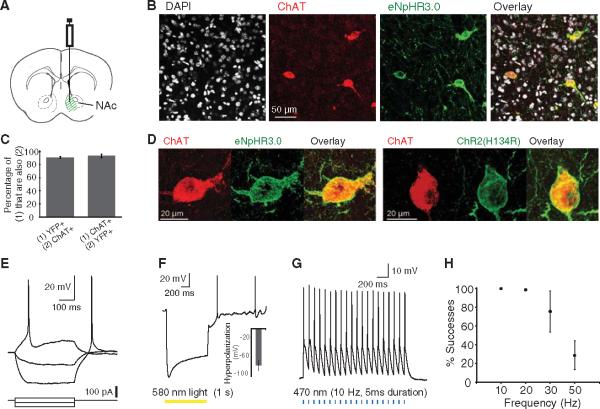
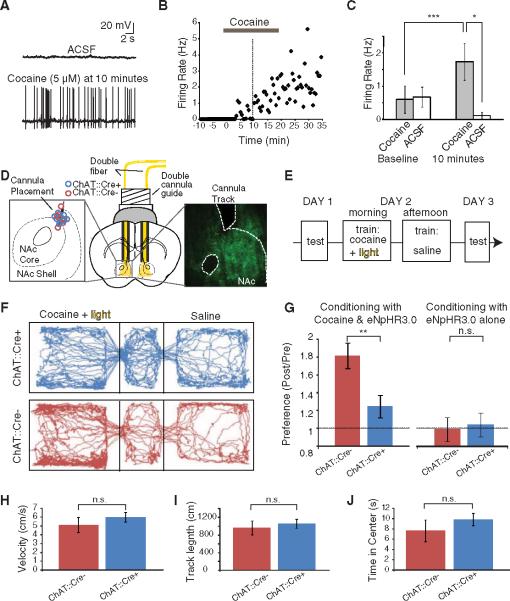
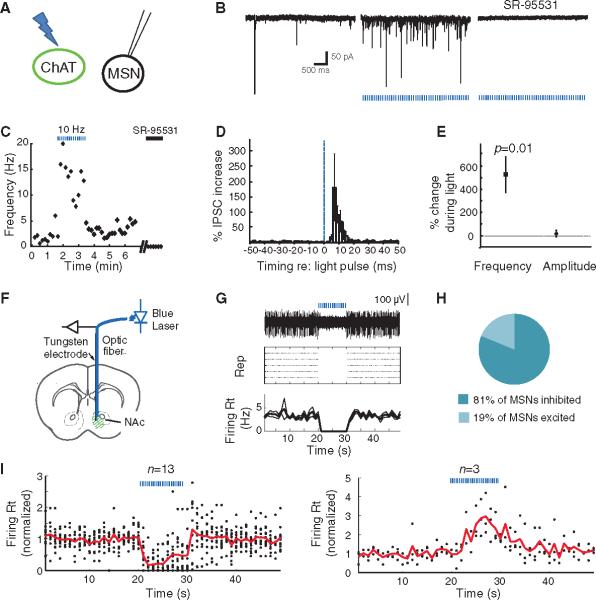
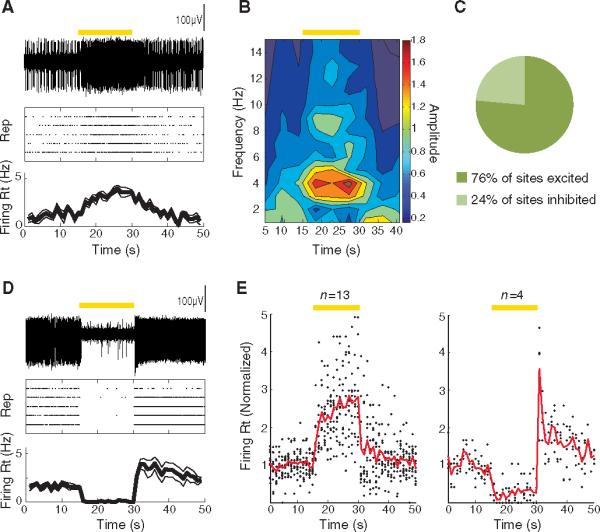
Cholinergic neurons are widespread, and pharmacological modulation of acetylcholine receptors affects numerous brain processes, but such modulation entails side effects due to limitations in specificity for receptor type and target cell. As a result, causal roles of cholinergic neurons in circuits have been unclear. We integrated optogenetics, freely moving mammalian behavior, in vivo electrophysiology, and slice physiology to probe the cholinergic interneurons of the nucleus accumbens by direct excitation or inhibition. Despite representing less than 1% of local neurons, these cholinergic cells have dominant control roles, exerting powerful modulation of circuit activity. Furthermore, these neurons could be activated by cocaine, and silencing this drug-induced activity during cocaine exposure (despite the fact that the manipulation of the cholinergic interneurons was not aversive by itself) blocked cocaine conditioning in freely moving mammals.
胆碱能神经元分布广泛,乙酰胆碱受体的药理学调节会影响许多大脑过程,但由于对受体类型和靶细胞的特异性有限,这种调节会产生副作用。因此,胆碱能神经元在回路中的因果作用尚不清楚。我们整合了光遗传学、自由活动的哺乳动物行为、体内电生理学和切片生理学,通过直接兴奋或抑制来探测伏隔核中的胆碱能中间神经元。尽管这些胆碱能细胞只占局部神经元的不到 1%,但它们具有主导控制作用,对回路活动进行有力的调节。此外,这些神经元可以被可卡因激活,并且在可卡因暴露期间抑制这种药物诱导的活动(尽管本身对胆碱能中间神经元的操作并不具有厌恶感)阻断了自由活动的哺乳动物的可卡因条件作用。