Department of Otolaryngology, University of Tampere, Medical School, Tampere, Finland.
J Nanobiotechnology. 2010 Dec 18;8:32. doi: 10.1186/1477-3155-8-32.
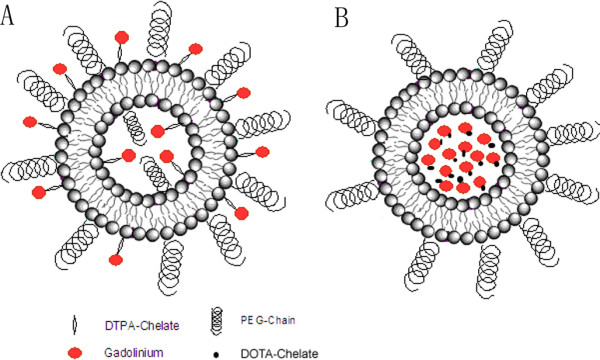
Treatment of inner ear diseases remains a problem because of limited passage through the blood-inner ear barriers and lack of control with the delivery of treatment agents by intravenous or oral administration. As a minimally-invasive approach, intratympanic delivery of multifunctional nanoparticles (MFNPs) carrying genes or drugs to the inner ear is a future therapy for treating inner ear diseases, including sensorineural hearing loss (SNHL) and Meniere's disease. In an attempt to track the dynamics and distribution of nanoparticles in vivo, here we describe manufacturing MRI traceable liposome nanoparticles by encapsulating gadolinium-tetra-azacyclo-dodecane-tetra-acetic acid (Gd-DOTA) (abbreviated as LPS+Gd-DOTA) and their distribution in the inner ear after either intratympanic or intracochlear administration.
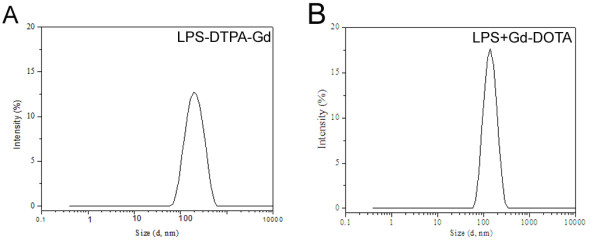
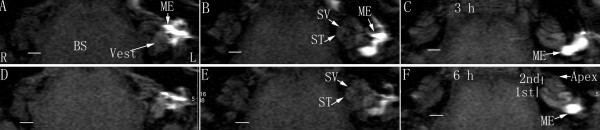
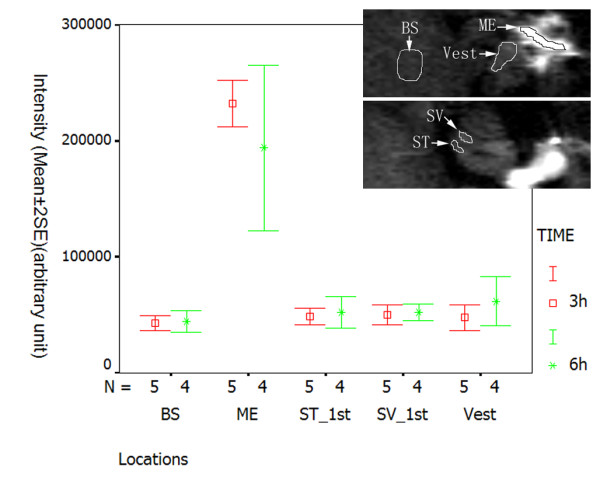
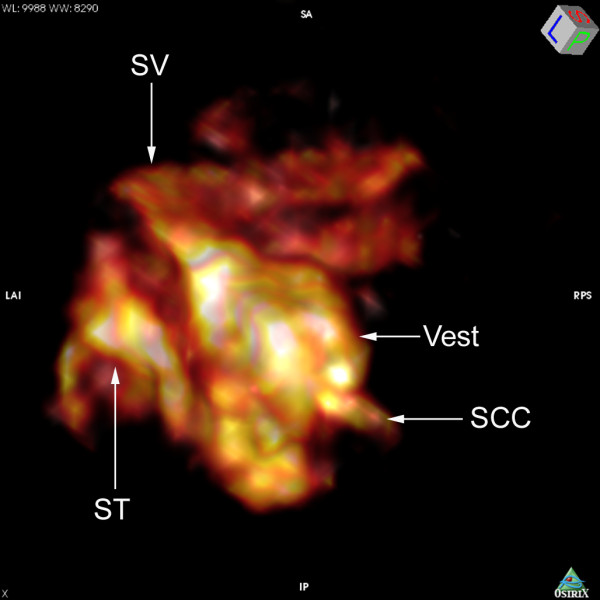
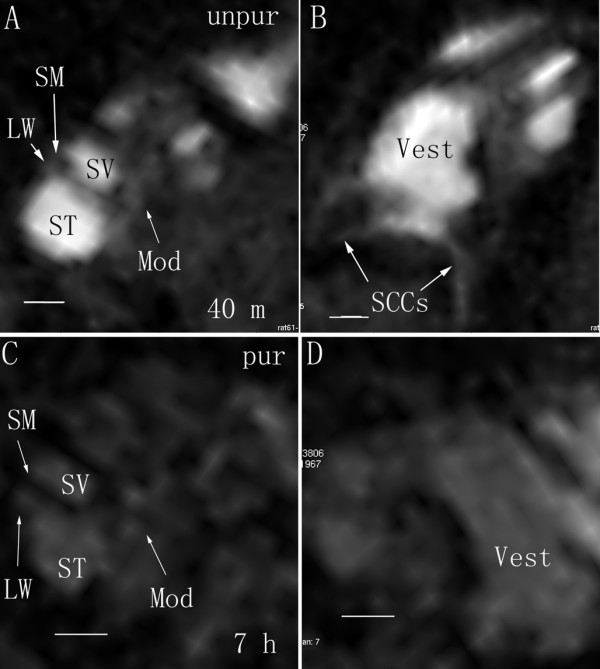
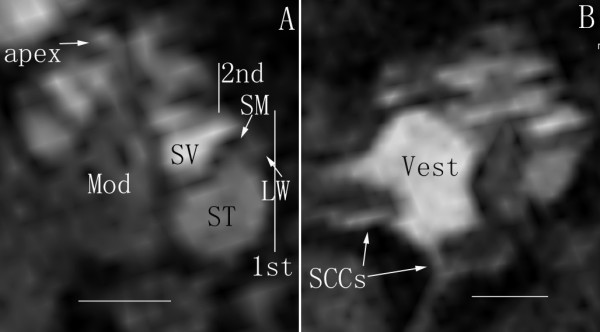
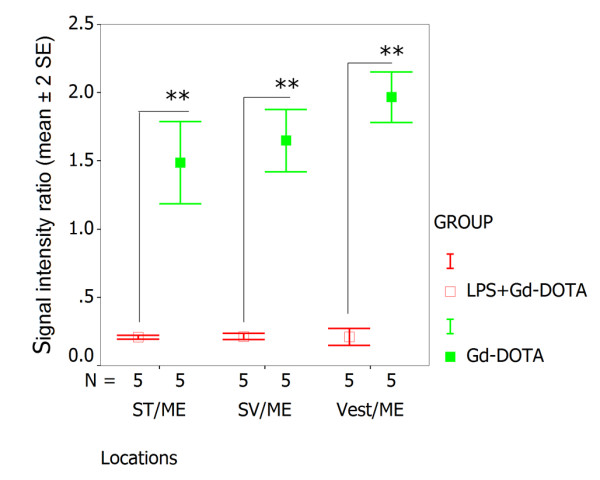
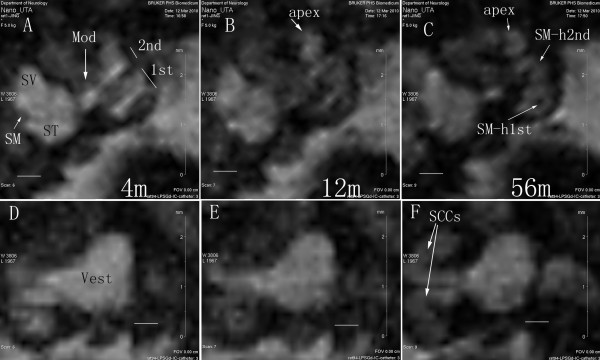
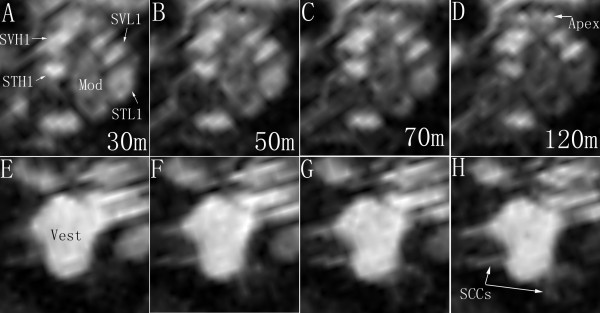
Measurements of relaxivities (r1 and r2) showed that LPS+Gd-DOTA had efficient visible signal characteristics for MRI. In vivo studies demonstrated that LPS+Gd-DOTA with 130 nm size were efficiently taken up by the inner ear at 3 h after transtympanic injection and disappeared after 24 h. With intracochlear injection, LPS+Gd-DOTA were visualized to distribute throughout the inner ear, including the cochlea and vestibule with fast dynamics depending on the status of the perilymph circulation.
Novel LPS+Gd-DOTA were visible by MRI in the inner ear in vivo demonstrating transport from the middle ear to the inner ear and with dynamics that correlated to the status of the perilymph circulation.
由于血-内耳屏障的通透性有限,并且通过静脉内或口服给药无法控制治疗剂的递送,内耳疾病的治疗仍然是一个问题。作为一种微创方法,将携带基因或药物的多功能纳米颗粒(MFNPs)经鼓室内递送至内耳是治疗内耳疾病(包括感音神经性听力损失(SNHL)和梅尼埃病)的未来疗法。为了尝试在体内追踪纳米颗粒的动力学和分布,我们在这里描述了通过包封钆-四氮杂环十二烷四乙酸(Gd-DOTA)(简称 LPS+Gd-DOTA)来制造可通过 MRI 追踪的脂质体纳米颗粒,并描述了它们在内耳中的分布经鼓室或耳蜗内给药后的情况。
弛豫率(r1 和 r2)的测量表明,LPS+Gd-DOTA 具有用于 MRI 的高效可见信号特征。体内研究表明,大小为 130nm 的 LPS+Gd-DOTA 在经鼓室注射后 3 小时内被内耳有效摄取,并在 24 小时后消失。经耳蜗内注射,LPS+Gd-DOTA 被可视化分布于整个内耳,包括耳蜗和前庭,其分布动力学取决于外淋巴循环的状态。
新型 LPS+Gd-DOTA 可通过 MRI 在体内的内耳中可视化,证明了从中耳向内耳的转运,并且其动力学与外淋巴循环的状态相关。