Department of Microbiology and Immunology, Hokkaido University Graduate School of Medicine, Sapporo, Japan.
PLoS One. 2010 Dec 8;5(12):e14258. doi: 10.1371/journal.pone.0014258.
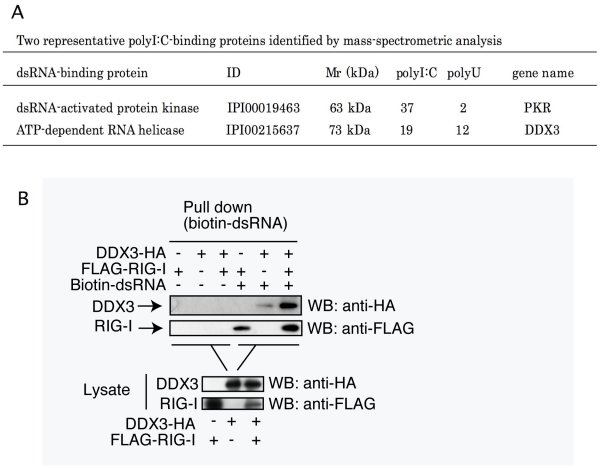
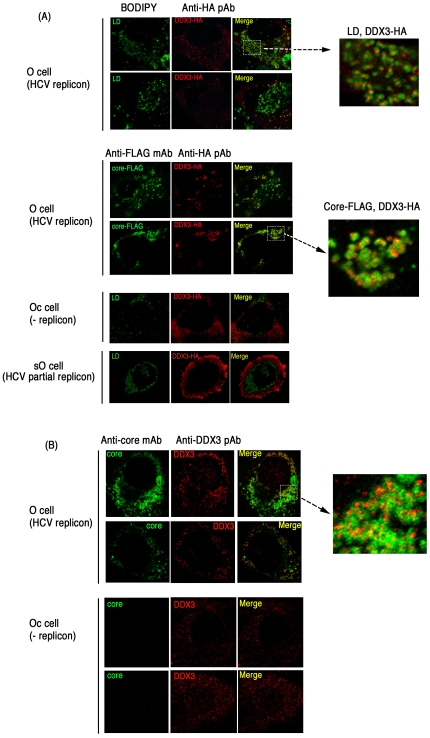
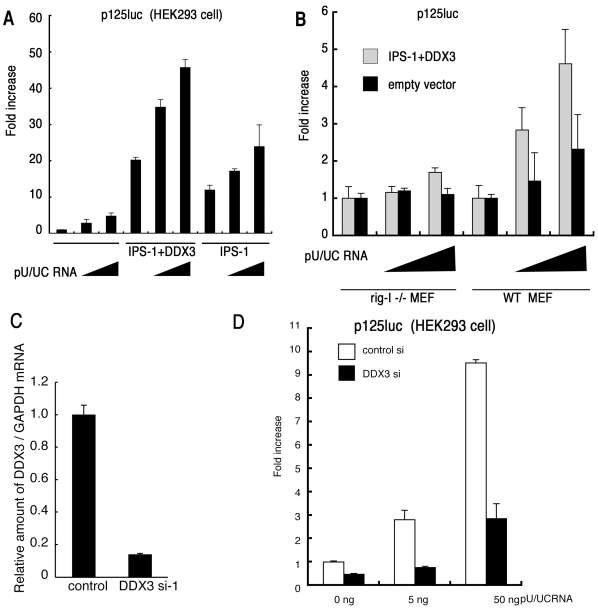
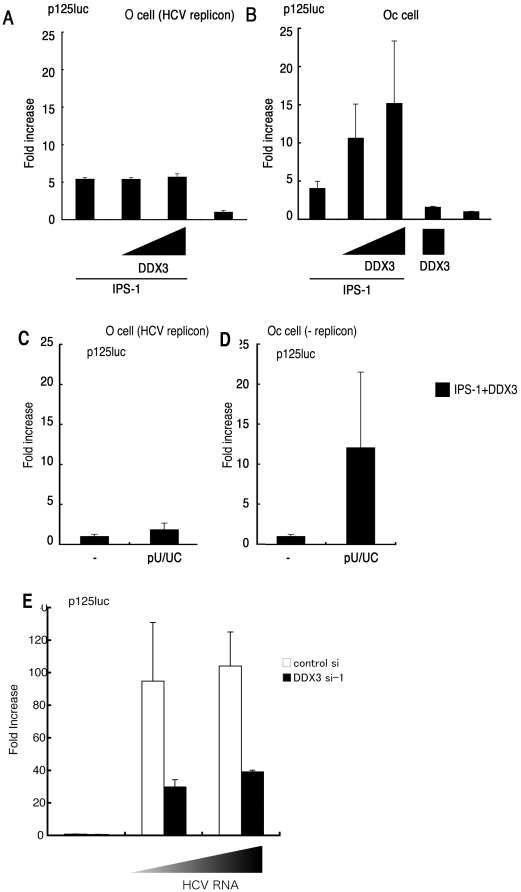
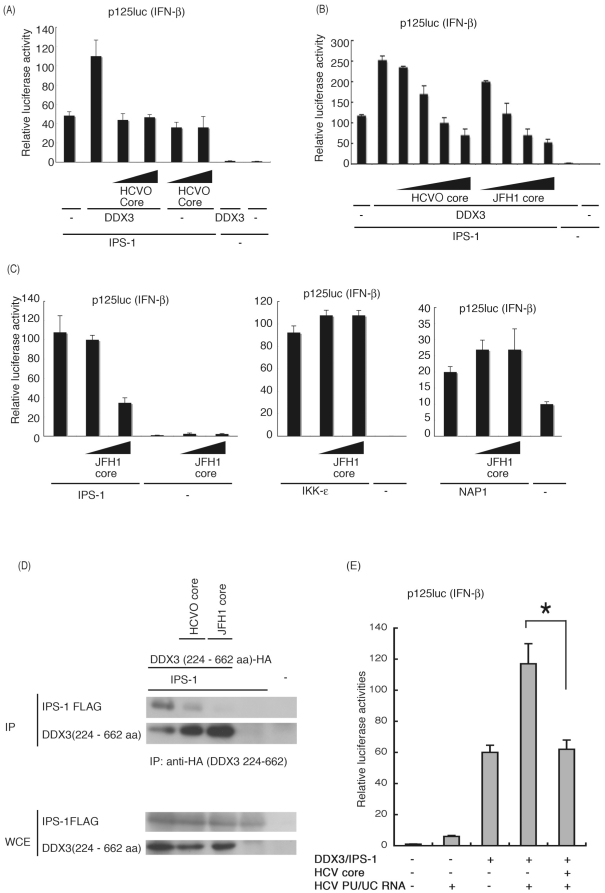
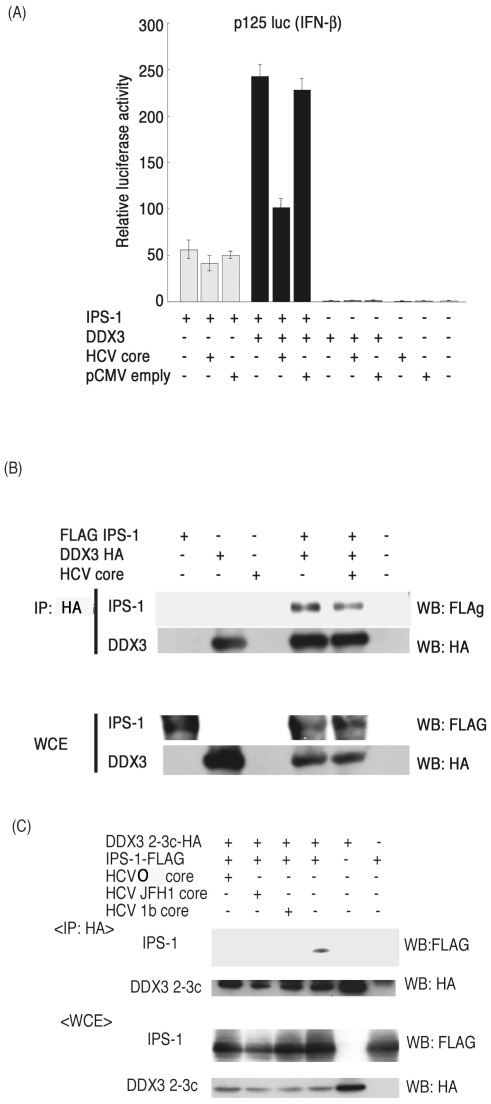
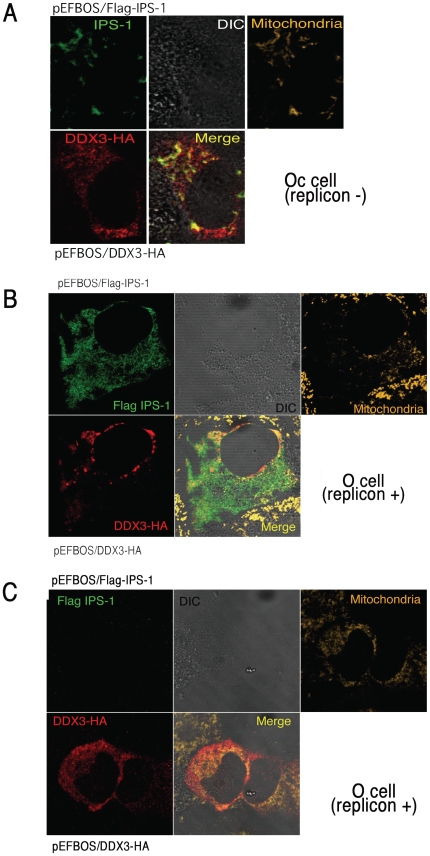
The DEAD box helicase DDX3 assembles IPS-1 (also called Cardif, MAVS, or VISA) in non-infected human cells where minimal amounts of the RIG-I-like receptor (RLR) protein are expressed. DDX3 C-terminal regions directly bind the IPS-1 CARD-like domain as well as the N-terminal hepatitis C virus (HCV) core protein. DDX3 physically binds viral RNA to form IPS-1-containing spots, that are visible by confocal microscopy. HCV polyU/UC induced IPS-1-mediated interferon (IFN)-beta promoter activation, which was augmented by co-transfected DDX3. DDX3 spots localized near the lipid droplets (LDs) where HCV particles were generated. Here, we report that HCV core protein interferes with DDX3-enhanced IPS-1 signaling in HEK293 cells and in hepatocyte Oc cells. Unlike the DEAD box helicases RIG-I and MDA5, DDX3 was constitutively expressed and colocalized with IPS-1 around mitochondria. In hepatocytes (O cells) with the HCV replicon, however, DDX3/IPS-1-enhanced IFN-beta-induction was largely abrogated even when DDX3 was co-expressed. DDX3 spots barely merged with IPS-1, and partly assembled in the HCV core protein located near the LD in O cells, though in some O cells IPS-1 was diminished or disseminated apart from mitochondria. Expression of DDX3 in replicon-negative or core-less replicon-positive cells failed to cause complex formation or LD association. HCV core protein and DDX3 partially colocalized only in replicon-expressing cells. Since the HCV core protein has been reported to promote HCV replication through binding to DDX3, the core protein appears to switch DDX3 from an IFN-inducing mode to an HCV-replication mode. The results enable us to conclude that HCV infection is promoted by modulating the dual function of DDX3.
DEAD 盒解旋酶 DDX3 在非感染的人类细胞中组装 IPS-1(也称为 Cardif、MAVS 或 VISA),其中表达的 RIG-I 样受体(RLR)蛋白数量很少。DDX3 C 端区域直接结合 IPS-1 CARD 样结构域以及丙型肝炎病毒(HCV)核心蛋白的 N 端。DDX3 将病毒 RNA 物理结合形成 IPS-1 包含的斑点,通过共聚焦显微镜可见。HCV 多聚 U/UC 诱导 IPS-1 介导的干扰素(IFN)-β启动子激活,该激活可通过共转染的 DDX3 增强。DDX3 斑点定位于产生 HCV 颗粒的脂滴(LD)附近。在这里,我们报告 HCV 核心蛋白干扰 HEK293 细胞和肝细胞 Oc 细胞中 DDX3 增强的 IPS-1 信号。与 DEAD 盒解旋酶 RIG-I 和 MDA5 不同,DDX3 在肝细胞核因子(NF)-κB 激活后,在 HCV 感染的 HepG2 细胞中呈组成性表达,并与 IPS-1 共定位在线粒体周围。然而,在带有 HCV 复制子的肝细胞(Oc 细胞)中,即使共表达 DDX3,DDX3/IPS-1 增强的 IFN-β诱导也被大大阻断。DDX3 斑点几乎不与 IPS-1 融合,并且部分组装在位于 Oc 细胞中 LD 附近的 HCV 核心蛋白中,尽管在一些 Oc 细胞中 IPS-1 减少或从线粒体扩散开。在无复制子或无核心复制子阳性细胞中表达 DDX3 未能导致复合物形成或 LD 关联。HCV 核心蛋白和 DDX3 仅在表达复制子的细胞中部分共定位。由于 HCV 核心蛋白已被报道通过与 DDX3 结合来促进 HCV 复制,因此核心蛋白似乎将 DDX3 从 IFN 诱导模式切换到 HCV 复制模式。结果使我们能够得出结论,HCV 感染通过调节 DDX3 的双重功能来促进。