Department of Biological Sciences, Fayetteville State University, Fayetteville, North Carolina, United States of America.
PLoS One. 2010 Dec 15;5(12):e14329. doi: 10.1371/journal.pone.0014329.
The theropod dinosaur family Troodontidae is known from the Upper Jurassic, Lower Cretaceous, and Upper Cretaceous of Asia and from the Upper Jurassic and Upper Cretaceous of North America. Before now no undisputed troodontids from North America have been reported from the Early Cretaceous.
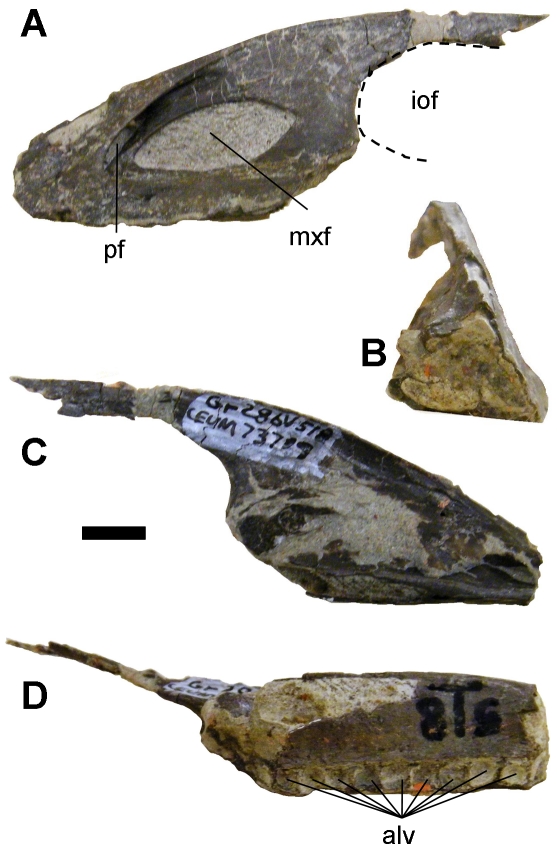
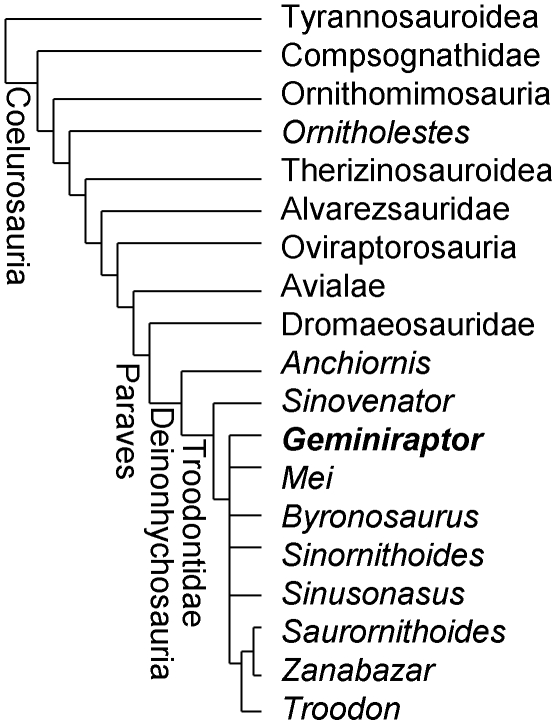
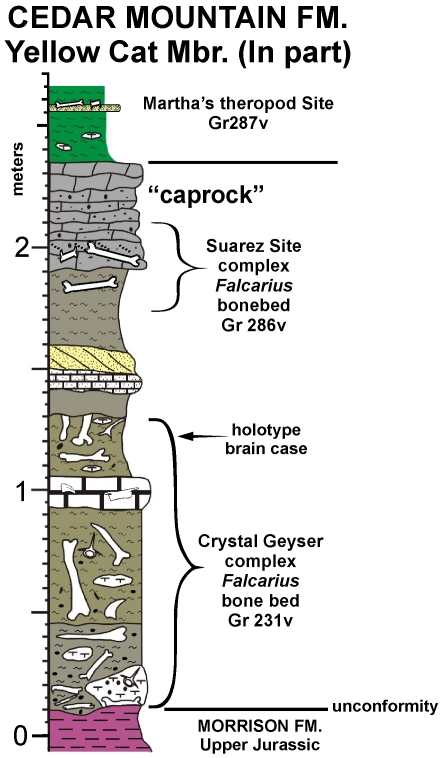
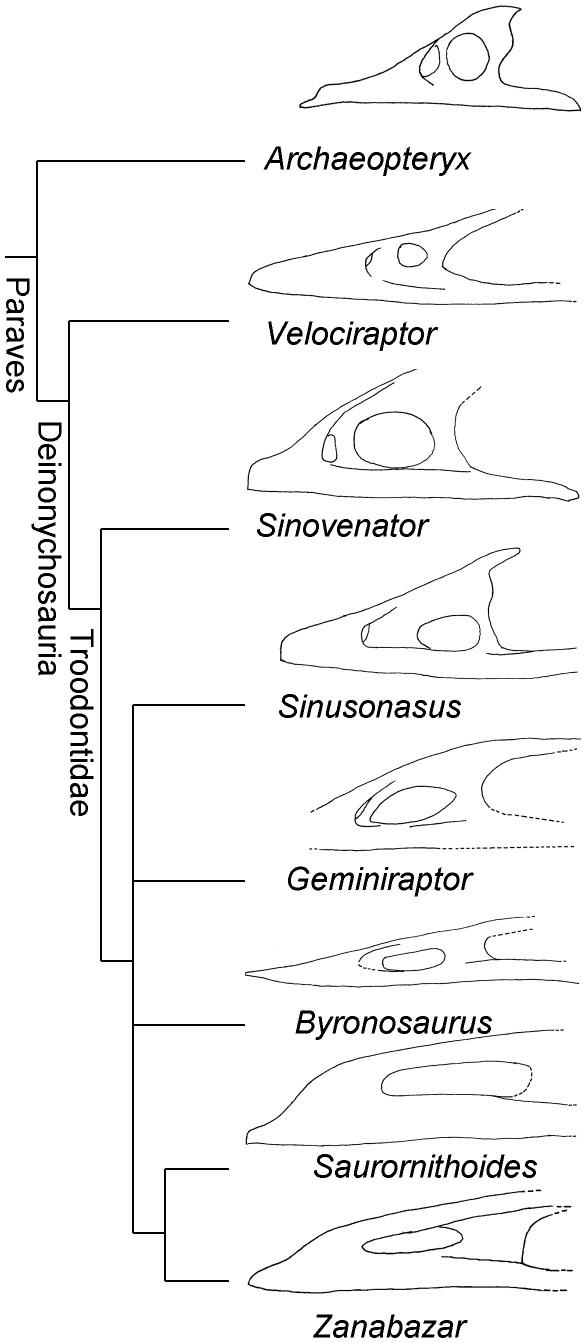
METHODOLOGY/PRINCIPAL FINDINGS: Herein we describe a theropod maxilla from the Lower Cretaceous Cedar Mountain Formation of Utah and perform a phylogenetic analysis to determine its phylogenetic position. The specimen is distinctive enough to assign to a new genus and species, Geminiraptor suarezarum. Phylogenetic analysis places G. suarezarum within Troodontidae in an unresolved polytomy with Mei, Byronosaurus, Sinornithoides, Sinusonasus, and Troodon+(Saurornithoides+Zanabazar). Geminiraptor suarezarum uniquely exhibits extreme pneumatic inflation of the maxilla internal to the antorbital fossa such that the anterior maxilla has a triangular cross-section. Unlike troodontids more closely related to Troodon, G. suarezarum exhibits bony septa between the dental alveoli and a promaxillary foramen that is visible in lateral view.
CONCLUSIONS/SIGNIFICANCE: This is the first report of a North American troodontid from the Lower Cretaceous. It therefore contributes to a fuller understanding of troodontid biogeography through time. It also adds to the known dinosaurian fauna of the Cedar Mountain Formation.
兽脚亚目恐龙家族驰龙科已知生存于上侏罗统、下白垩统和上白垩统的亚洲,以及上侏罗统和上白垩统的北美洲。在此之前,尚未有确凿无疑的来自北美洲早白垩世的驰龙类被报道过。
方法/主要发现:本文描述了一件来自犹他州下白垩统雪松山组的兽脚类上颌骨,并进行了系统发育分析以确定其系统发育位置。该标本的特征足够独特,可以归入一个新属和新种,双足龙(Geminiraptor suarezarum)。系统发育分析将 G. suarezarum 置于驰龙科内一个未解决的多系群中,与美颌龙、比氏北票龙、中国鸟龙、窦鼻龙和伤齿龙+(似鳄龙+驰龙)并列。双足龙(Geminiraptor suarezarum)的上颌骨在眶前窝内部具有极度充气膨胀的特征,使得前上颌骨呈三角形横截面,这在驰龙科中是独一无二的。与更接近伤齿龙的驰龙类不同,G. suarezarum 的齿槽之间有骨隔板,并且在侧视图中可见前上颌骨孔。
结论/意义:这是首次报道来自北美洲早白垩世的驰龙类。因此,它有助于更全面地了解驰龙类的生物地理历史。它也增加了雪松山组已知的恐龙动物群。