Department of Biological Chemistry, Johns Hopkins Medical School, Baltimore, Maryland, United States of America.
PLoS Pathog. 2010 Dec 16;6(12):e1001226. doi: 10.1371/journal.ppat.1001226.
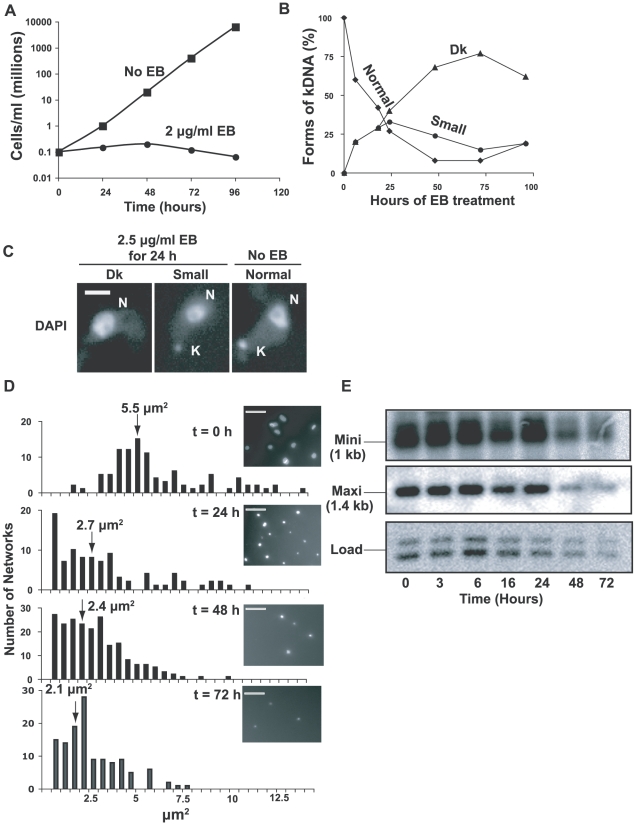
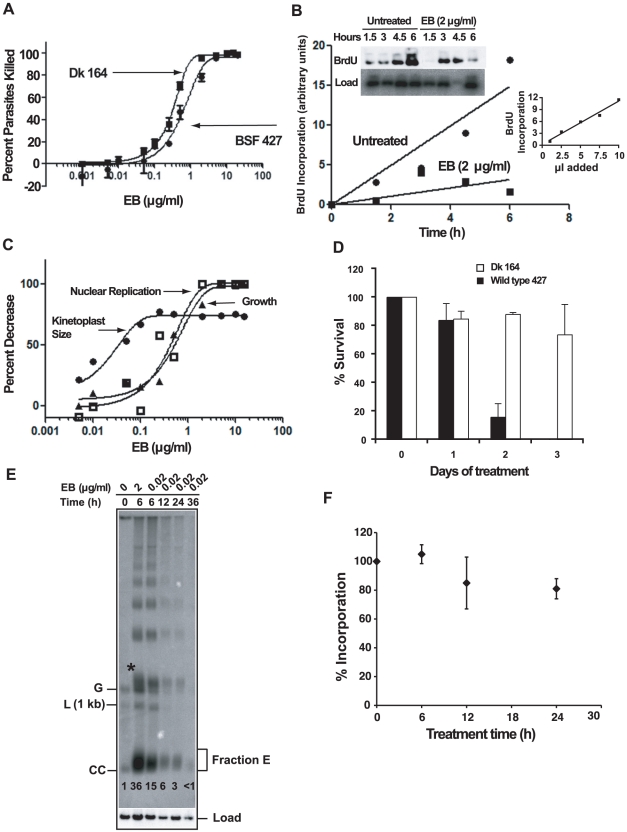
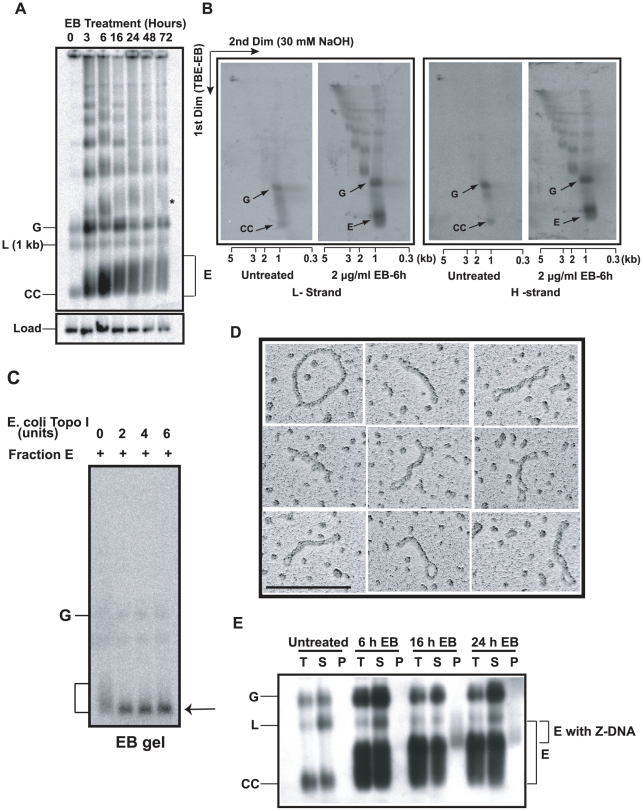
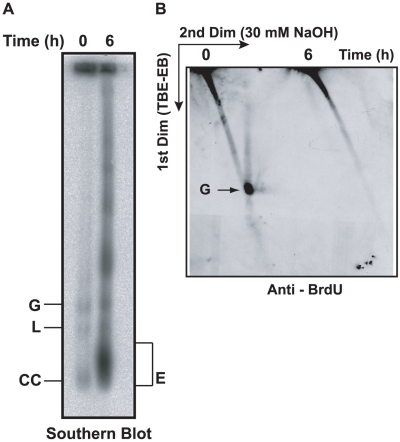
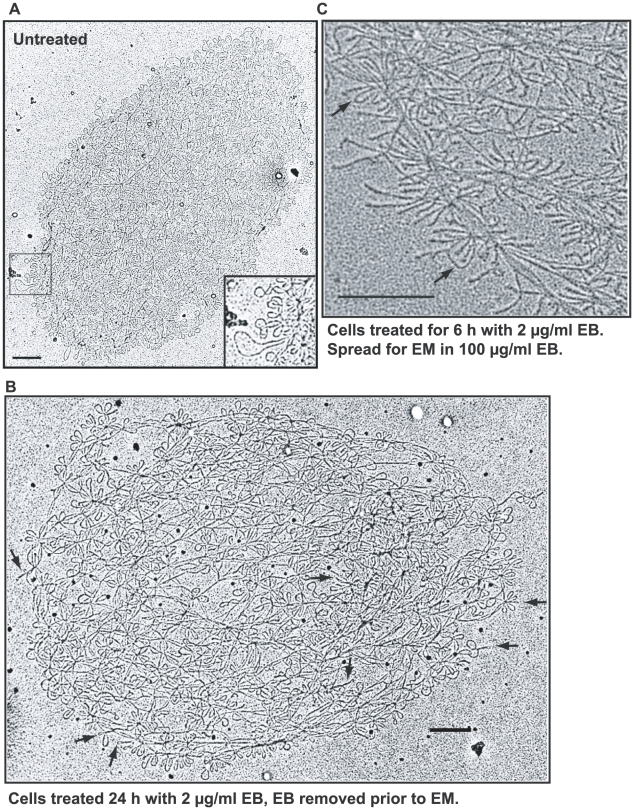
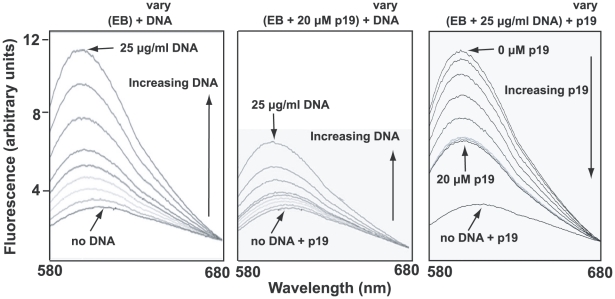
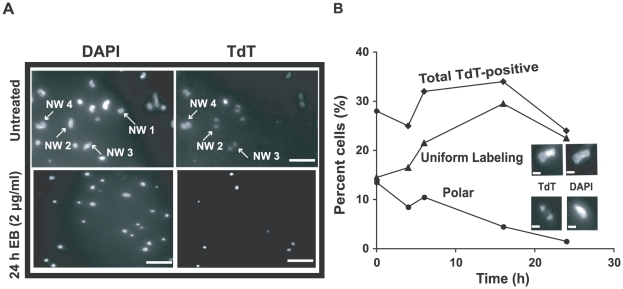
Introduced in the 1950s, ethidium bromide (EB) is still used as an anti-trypanosomal drug for African cattle although its mechanism of killing has been unclear and controversial. EB has long been known to cause loss of the mitochondrial genome, named kinetoplast DNA (kDNA), a giant network of interlocked minicircles and maxicircles. However, the existence of viable parasites lacking kDNA (dyskinetoplastic) led many to think that kDNA loss could not be the mechanism of killing. When recent studies indicated that kDNA is indeed essential in bloodstream trypanosomes and that dyskinetoplastic cells survive only if they have a compensating mutation in the nuclear genome, we investigated the effect of EB on kDNA and its replication. We here report some remarkable effects of EB. Using EM and other techniques, we found that binding of EB to network minicircles is low, probably because of their association with proteins that prevent helix unwinding. In contrast, covalently-closed minicircles that had been released from the network for replication bind EB extensively, causing them, after isolation, to become highly supertwisted and to develop regions of left-handed Z-DNA (without EB, these circles are fully relaxed). In vivo, EB causes helix distortion of free minicircles, preventing replication initiation and resulting in kDNA loss and cell death. Unexpectedly, EB also kills dyskinetoplastic trypanosomes, lacking kDNA, by inhibiting nuclear replication. Since the effect on kDNA occurs at a >10-fold lower EB concentration than that on nuclear DNA, we conclude that minicircle replication initiation is likely EB's most vulnerable target, but the effect on nuclear replication may also contribute to cell killing.
溴化乙锭(EB)于 20 世纪 50 年代被引入,尽管其杀伤机制仍不清楚且存在争议,但仍被用作治疗非洲牛的抗锥虫药物。EB 长期以来被认为会导致线粒体基因组(称为动基体 DNA,kDNA)的丢失,kDNA 是一个由相互连锁的微小环和大环组成的巨大网络。然而,存在缺乏 kDNA 的存活寄生虫(无动基体),这使得许多人认为 kDNA 的丢失不可能是杀伤机制。当最近的研究表明 kDNA 在血液锥虫中确实是必不可少的,并且无动基体细胞只有在核基因组中存在补偿性突变时才能存活,我们研究了 EB 对 kDNA 及其复制的影响。我们在这里报告了 EB 的一些显著影响。使用 EM 和其他技术,我们发现 EB 与网络微小环的结合较弱,这可能是因为它们与阻止螺旋展开的蛋白质有关。相比之下,已从网络中释放出来用于复制的共价闭合微小环广泛结合 EB,使它们在分离后变得高度超螺旋,并形成左手 Z-DNA 区域(没有 EB,这些环是完全松弛的)。在体内,EB 会导致游离微小环的螺旋扭曲,从而阻止复制起始,导致 kDNA 丢失和细胞死亡。出乎意料的是,EB 还通过抑制核复制来杀死缺乏 kDNA 的无动基体锥虫。由于对游离微小环的影响发生在比核 DNA 低 10 倍以上的 EB 浓度下,我们得出结论,微小环复制起始可能是 EB 最脆弱的靶标,但对核复制的影响也可能有助于细胞杀伤。