Laboratoire de Dermatologie Moléculaire, UPRES EA3754, Institut Universitaire de Recherche Clinique, UMI/INSERM, Montpellier, France.
PLoS One. 2010 Dec 20;5(12):e15701. doi: 10.1371/journal.pone.0015701.
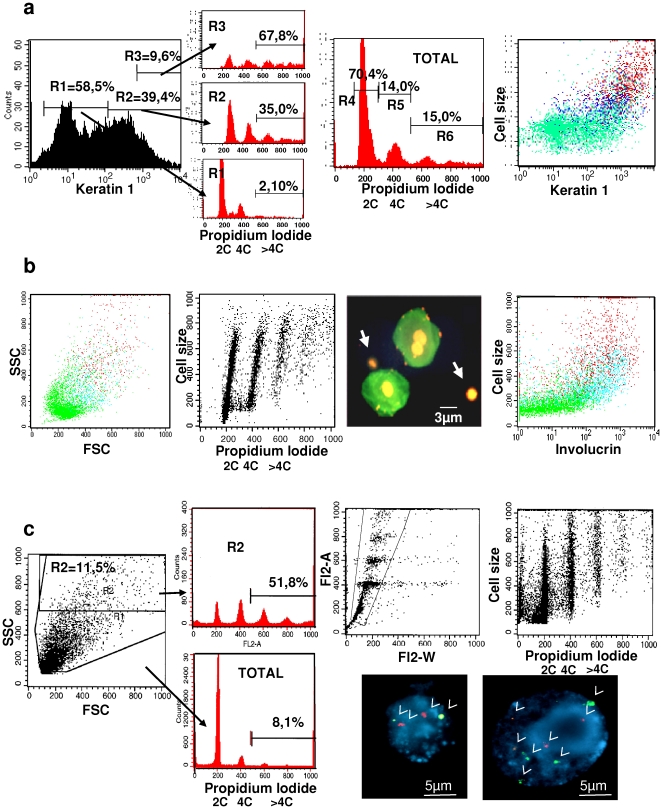
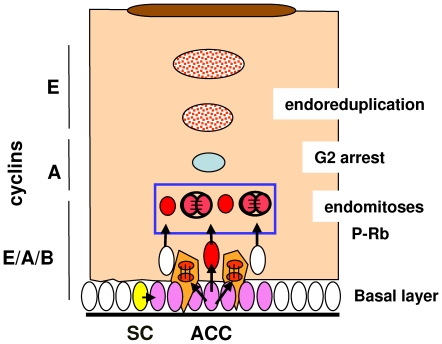
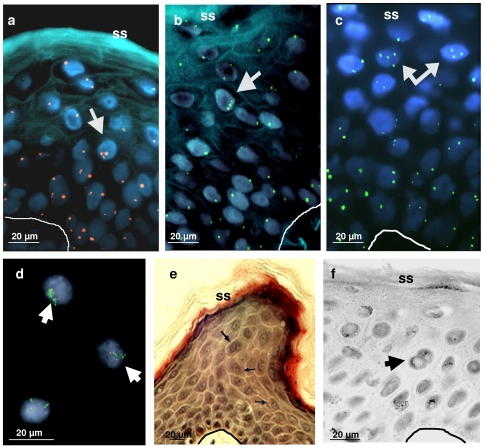
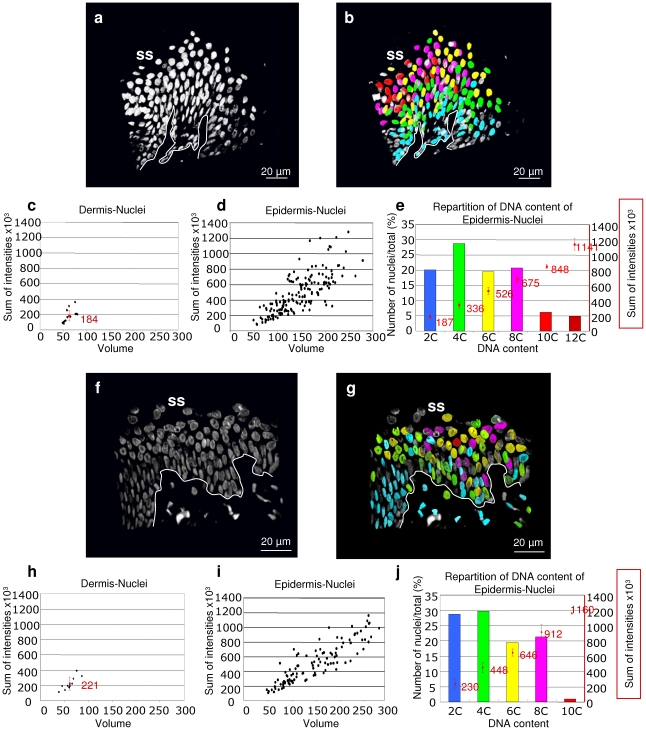
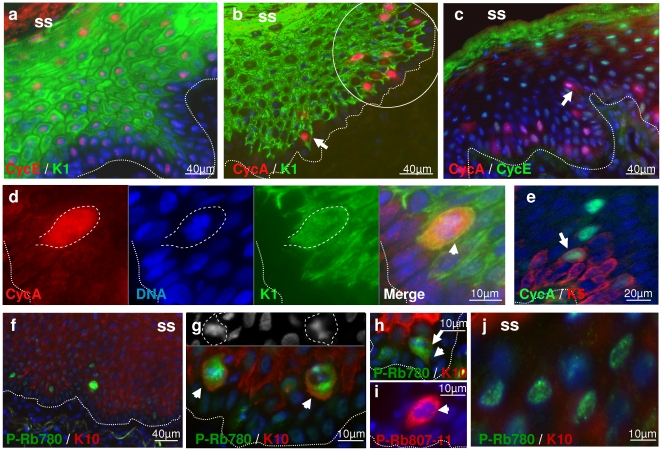
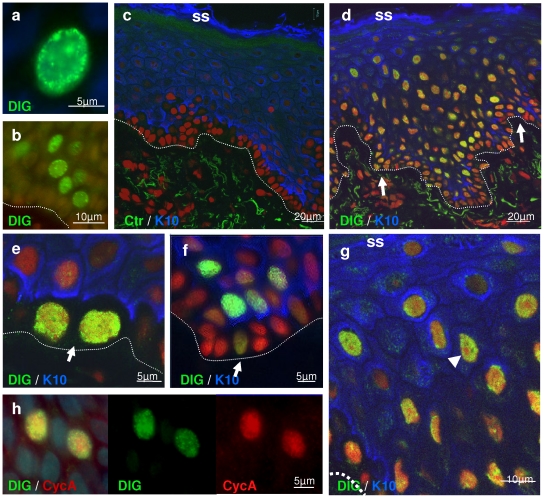
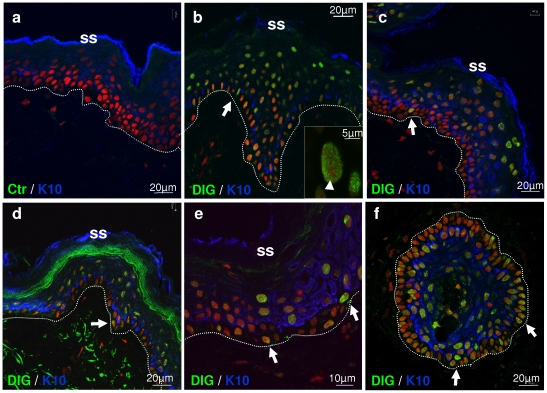
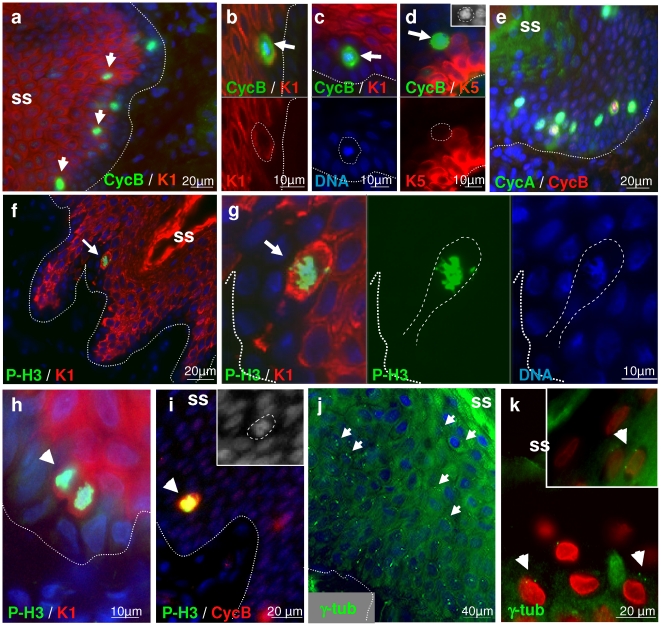
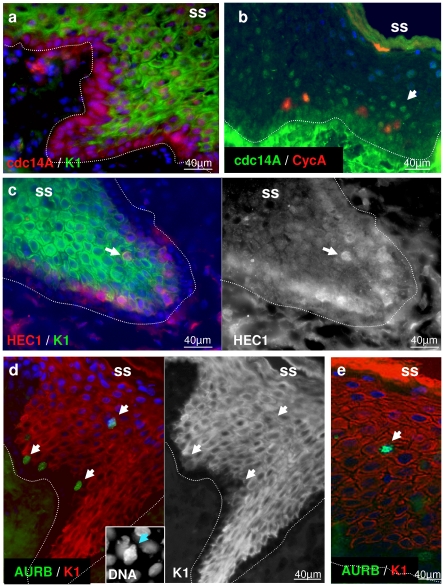
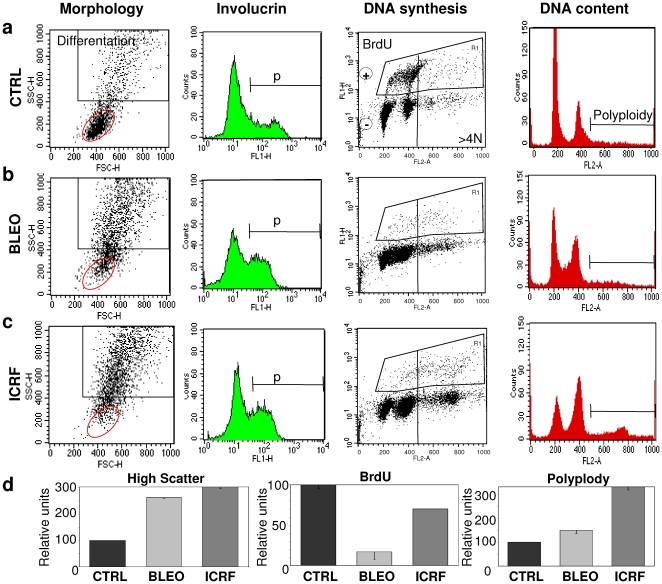
How human self-renewal tissues co-ordinate proliferation with differentiation is unclear. Human epidermis undergoes continuous cell growth and differentiation and is permanently exposed to mutagenic hazard. Keratinocytes are thought to arrest cell growth and cell cycle prior to terminal differentiation. However, a growing body of evidence does not satisfy this model. For instance, it does not explain how skin maintains tissue structure in hyperproliferative benign lesions. We have developed and applied novel cell cycle techniques to human skin in situ and determined the dynamics of key cell cycle regulators of DNA replication or mitosis, such as cyclins E, A and B, or members of the anaphase promoting complex pathway: cdc14A, Ndc80/Hec1 and Aurora kinase B. The results show that actively cycling keratinocytes initiate terminal differentiation, arrest in mitosis, continue DNA replication in a special G2/M state, and become polyploid by mitotic slippage. They unambiguously demonstrate that cell cycle progression coexists with terminal differentiation, thus explaining how differentiating cells increase in size. Epidermal differentiating cells arrest in mitosis and a genotoxic-induced mitosis block rapidly pushes epidermal basal cells into differentiation and polyploidy. These observations unravel a novel mitosis-differentiation link that provides new insight into skin homeostasis and cancer. It might constitute a self-defence mechanism against oncogenic alterations such as Myc deregulation.
人类组织的自我更新如何协调增殖与分化尚不清楚。人类表皮经历持续的细胞生长和分化,并且始终暴露于诱变危险中。角朊细胞被认为在终末分化之前停止细胞生长和细胞周期。然而,越来越多的证据并不符合这一模型。例如,它不能解释皮肤如何在过度增殖的良性病变中维持组织结构。我们已经开发并应用了新的细胞周期技术原位研究人类皮肤,并确定了 DNA 复制或有丝分裂的关键细胞周期调节剂的动力学,例如细胞周期蛋白 E、A 和 B,或后期促进复合物途径的成员:cdc14A、Ndc80/Hec1 和 Aurora 激酶 B。结果表明,活跃循环的角质形成细胞启动终末分化,在有丝分裂中停滞,在特殊的 G2/M 状态下继续进行 DNA 复制,并通过有丝分裂滑溜成为多倍体。它们明确表明细胞周期进程与终末分化并存,从而解释了分化细胞如何增大。表皮分化细胞在有丝分裂中停滞,并且遗传毒性诱导的有丝分裂阻滞会迅速将表皮基底层细胞推向分化和多倍体化。这些观察结果揭示了一种新的有丝分裂-分化联系,为皮肤的动态平衡和癌症提供了新的见解。它可能构成了一种针对致癌改变(如 Myc 失调)的自我防御机制。