Department of Surgery, Institute of Vascular Surgery, Medical and Health Science Center, University of Debrecen, Debrecen, Hungary.
J Cell Mol Med. 2011 Dec;15(12):2614-23. doi: 10.1111/j.1582-4934.2010.01254.x.
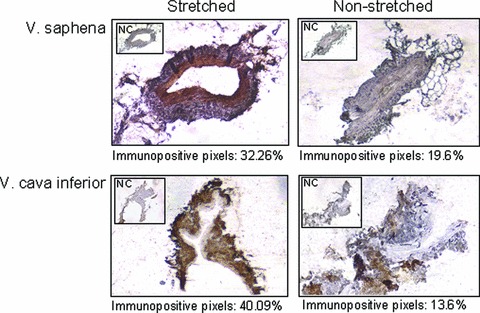
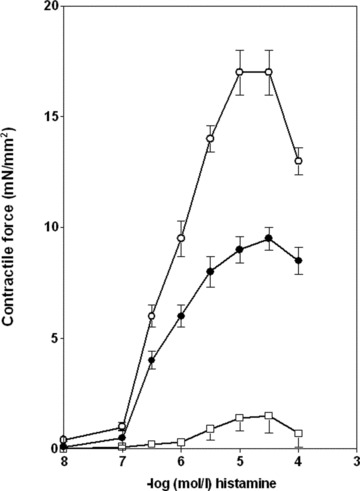
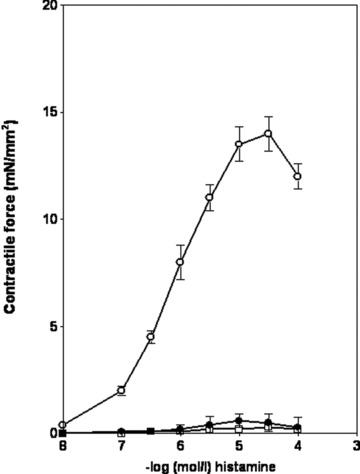
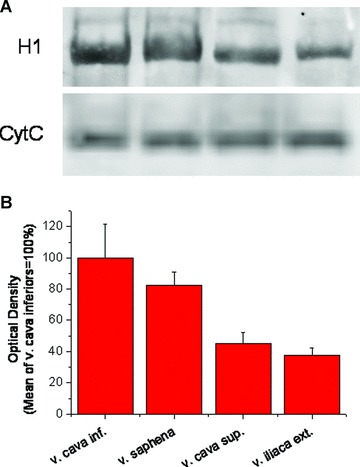
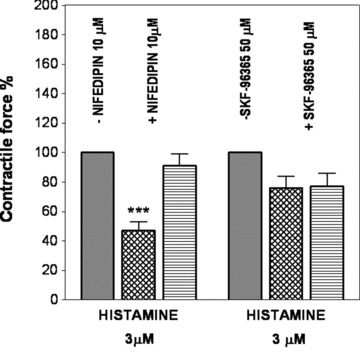
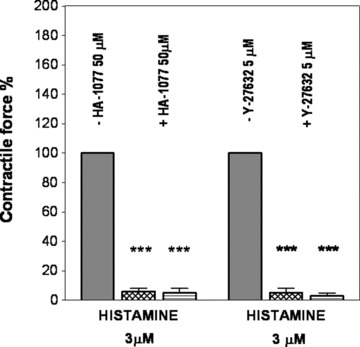
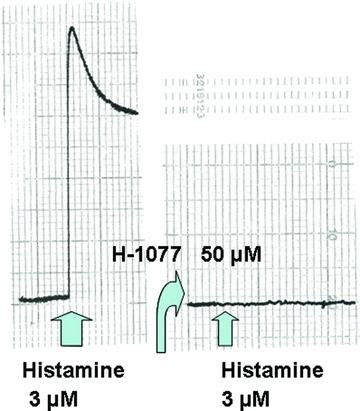
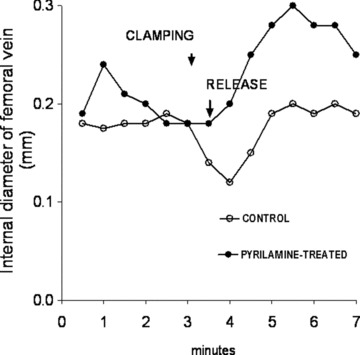
The study has analysed the action of histamine in the rabbit venous system and evaluated its potential role in contraction during increased venous pressure. We have found that a great variety exists in histamine sensitivity and H(1) -histamine receptor expression in various types of rabbit veins. Veins of the extremities (saphenous vein, femoral vein, axillary vein) and abdomen (common iliac vein, inferior vena cava) responded to histamine by a prominent, concentration-dependent force generation, whereas great thoracic veins (subclavian vein, superior vena cavas, intrathoracic part of inferior vena cava) and a pelvic vein (external iliac vein) exhibited slight sensitivity to exogenous histamine. The lack of reactivity to histamine was not due to increased activity of nitric oxide synthase (NOS) or heme oxygenase-1. H(1) -histamine receptor expression of veins correlated well with the histamine-induced contractions. Voltage-dependent calcium channels mediated mainly the histamine-induced force generation of saphenous vein, whereas it did not act in the inferior vena cava. In contrast, the receptor-operated channels were not involved in this response in either vein. Tyrosine phosphorylation occurred markedly in response to histamine in the saphenous vein, but not in the inferior vena cava. Histamine induced a prominent ρ kinase activation in both vessels. Protein kinase C and mitogen-activated protein kinase (MAPK) were not implicated in the histamine-induced intracellular calcium sensitization. Importantly, transient clamping of the femoral vein in animals caused a short-term constriction, which was inhibited by H(1) -histamine receptor antagonist in vivo. Furthermore, a significantly greater histamine immunopositivity was detected in veins after stretching compared to the resting state. We conclude that histamine receptor density adapts to the actual requirements of the circulation, and histamine liberated by the venous wall during increased venous pressure contributes to the contraction of vessels, providing a force for the venous return.
这项研究分析了组胺在兔静脉系统中的作用,并评估了其在静脉压升高时收缩中的潜在作用。我们发现,在各种类型的兔静脉中,组胺的敏感性和 H(1)-组胺受体表达存在很大差异。四肢(大隐静脉、股静脉、腋静脉)和腹部(髂总静脉、下腔静脉)的静脉对组胺的反应是明显的、浓度依赖性的力产生,而大胸静脉(锁骨下静脉、上腔静脉、下腔静脉胸内段)和盆腔静脉(髂外静脉)对外源性组胺的敏感性较低。对组胺无反应不是由于一氧化氮合酶(NOS)或血红素加氧酶-1活性增加所致。静脉 H(1)-组胺受体表达与组胺诱导的收缩密切相关。电压依赖性钙通道主要介导大隐静脉的组胺诱导力产生,而下腔静脉则不起作用。相反,在这两种静脉中,受体操纵通道都不参与这种反应。酪氨酸磷酸化在大隐静脉中对组胺反应明显,但在下腔静脉中则没有。组胺在两种血管中均引起显著的 ρ 激酶激活。蛋白激酶 C 和丝裂原活化蛋白激酶(MAPK)未参与组胺诱导的细胞内钙敏化。重要的是,在动物中短暂夹闭股静脉会引起短期收缩,这种收缩可被体内 H(1)-组胺受体拮抗剂抑制。此外,与静息状态相比,拉伸后静脉中检测到的组胺免疫阳性明显增加。我们得出结论,组胺受体密度适应循环的实际需要,静脉壁在静脉压升高时释放的组胺有助于血管收缩,为静脉回流提供力量。