Department of Laboratory Medicine, Clinical Research Center, Lund University, Skåne University Hospital, Malmö, Sweden.
PLoS One. 2010 Dec 28;5(12):e14439. doi: 10.1371/journal.pone.0014439.
Leukotriene D(4) (LTD(4)) belongs to the bioactive lipid group known as eicosanoids and has implications in pathological processes such as inflammation and cancer. Leukotriene D(4) exerts its effects mainly through two different G-protein-coupled receptors, CysLT(1) and CysLT(2). The high affinity LTD(4) receptor CysLT(1)R exhibits tumor-promoting properties by triggering cell proliferation, survival, and migration in intestinal epithelial cells. In addition, increased expression and nuclear localization of CysLT(1)R correlates with a poorer prognosis for patients with colon cancer.
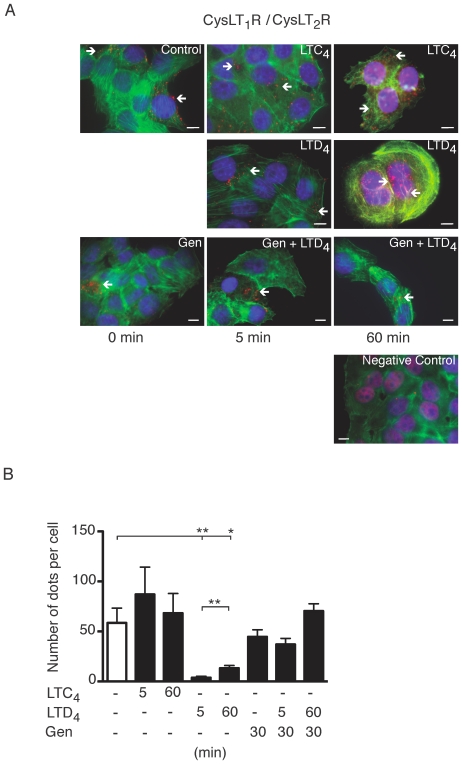
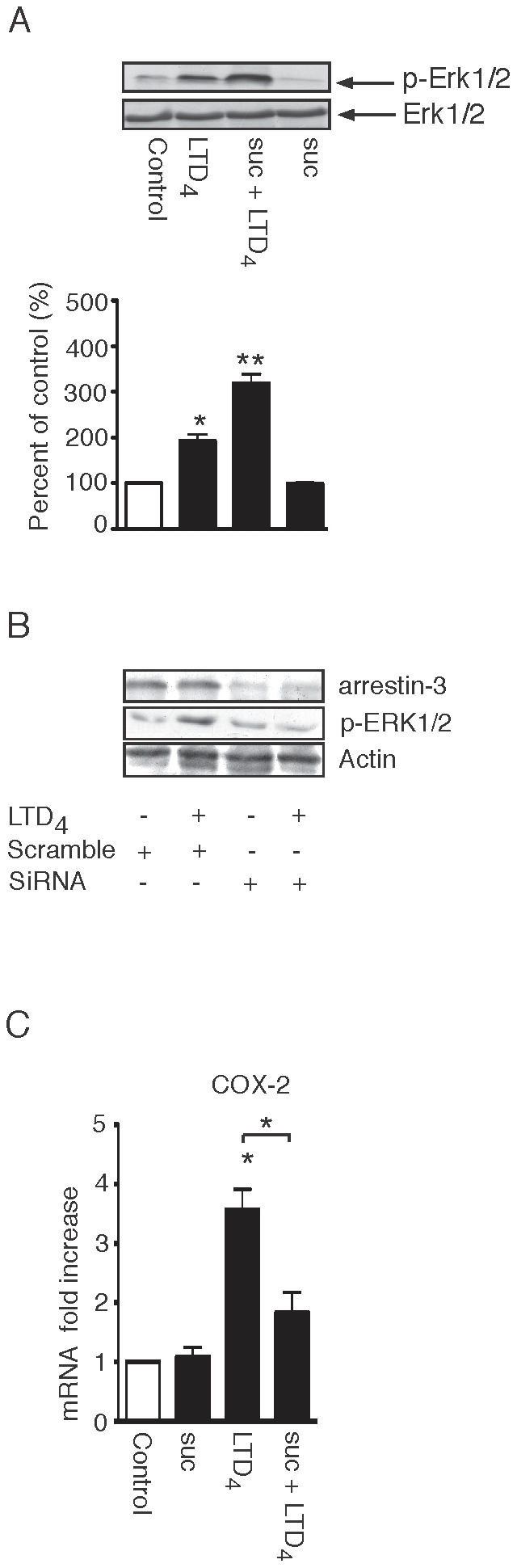
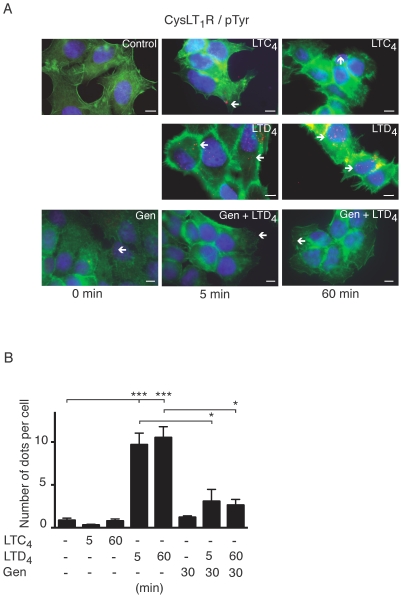
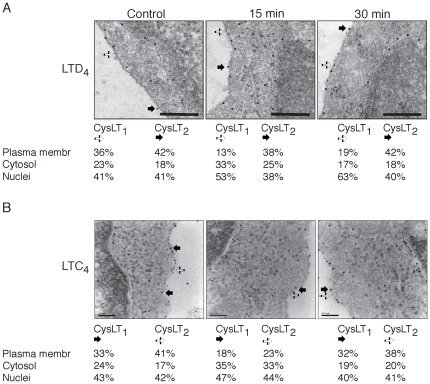
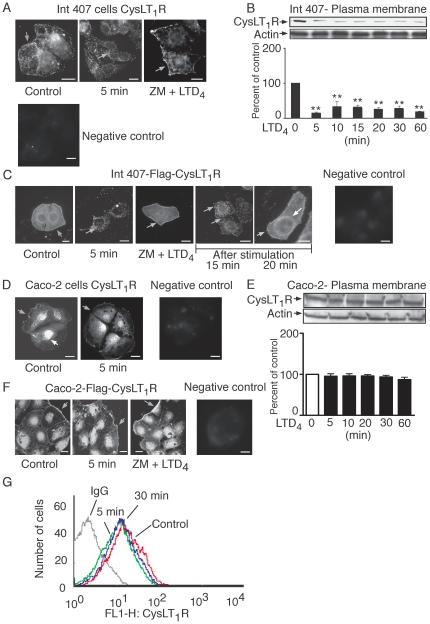
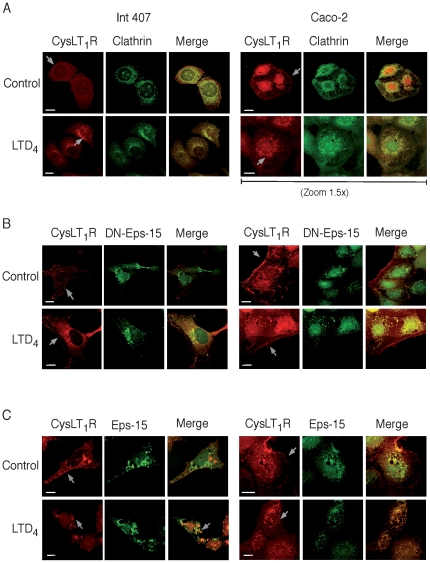
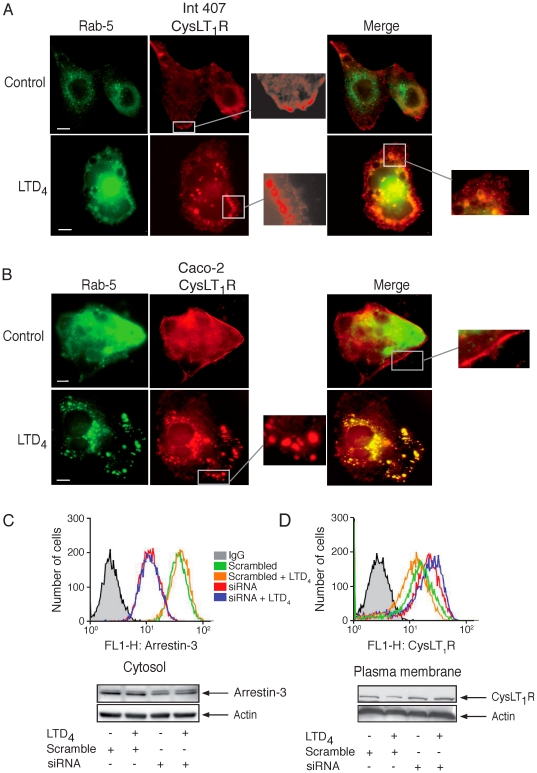
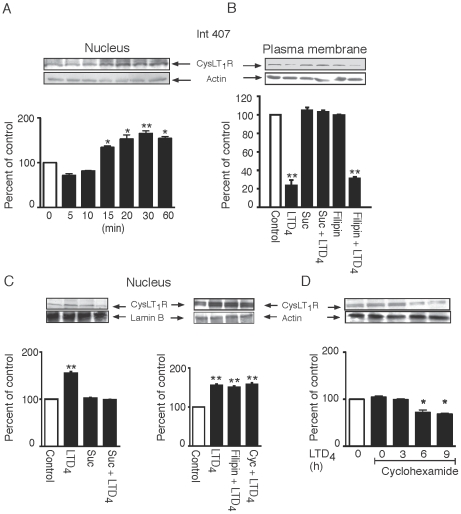
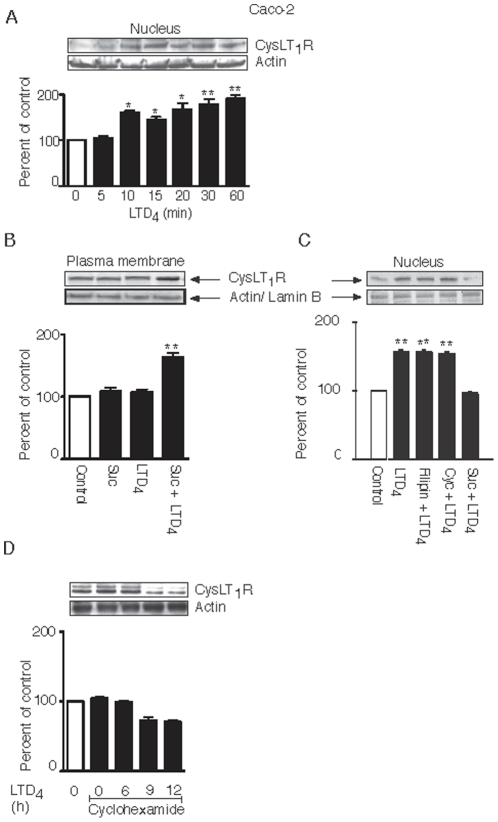
METHODOLOGY/PRINCIPAL FINDINGS: Using a proximity ligation assay and immunoprecipitation, this study showed that endogenous CysLT(1)R formed heterodimers with its counter-receptor CysLT(2)R under basal conditions and that LTD(4) triggers reduced dimerization of CysLTRs in intestinal epithelial cells. This effect was dependent upon a parallel LTD(4)-induced increase in CysLT(1)R tyrosine phosphorylation. Leukotriene D(4) also led to elevated internalization of CysLT(1)Rs from the plasma membrane and a simultaneous increase at the nucleus. Using sucrose, a clathrin endocytic inhibitor, dominant-negative constructs, and siRNA against arrestin-3, we suggest that a clathrin-, arrestin-3, and Rab-5-dependent process mediated the internalization of CysLT(1)R. Altering the CysLT(1)R internalization process at either the clathrin or the arrestin-3 stage led to disruption of LTD(4)-induced Erk1/2 activation and up-regulation of COX-2 mRNA levels.
CONCLUSIONS/SIGNIFICANCE: Our data suggests that upon ligand activation, CysLT(1)R is tyrosine-phosphorylated and released from heterodimers with CysLT(2)R and, subsequently, internalizes from the plasma membrane to the nuclear membrane in a clathrin-, arrestin-3-, and Rab-5-dependent manner, thus, enabling Erk1/2 signaling and downstream transcription of the COX-2 gene.
白三烯 D4(LTD4)属于生物活性脂质组,称为类二十烷酸,在炎症和癌症等病理过程中具有重要作用。白三烯 D4 主要通过两种不同的 G 蛋白偶联受体 CysLT1 和 CysLT2 发挥作用。高亲和力 LTD4 受体 CysLT1R 通过触发肠上皮细胞的增殖、存活和迁移,具有促进肿瘤的特性。此外,CysLT1R 的表达增加和核定位与结肠癌患者的预后较差相关。
方法/主要发现:本研究使用邻近连接分析和免疫沉淀法表明,内源性 CysLT1R 在基础条件下与其对应受体 CysLT2R 形成异二聚体,并且 LTD4 触发肠上皮细胞中 CysLTRs 的二聚化减少。这种作用依赖于 LTD4 诱导的 CysLT1R 酪氨酸磷酸化的平行增加。白三烯 D4 还导致 CysLT1R 从质膜内化,并同时在核内增加。使用蔗糖(网格蛋白内吞抑制剂)、显性负构建体和针对 arrestin-3 的 siRNA,我们提出了一种网格蛋白、arrestin-3 和 Rab-5 依赖性过程介导 CysLT1R 的内化。在网格蛋白或 arrestin-3 阶段改变 CysLT1R 的内化过程会导致 LTD4 诱导的 Erk1/2 激活和 COX-2 mRNA 水平的上调中断。
结论/意义:我们的数据表明,配体激活后,CysLT1R 酪氨酸磷酸化并从与 CysLT2R 的异二聚体中释放,并随后以网格蛋白、arrestin-3 和 Rab-5 依赖的方式从质膜内化到核膜,从而使 Erk1/2 信号转导和下游 COX-2 基因的转录。