Cell and Experimental Pathology, Department of Laboratory Medicine, Lund University, Skånes University Hospital, Malmö, Sweden.
PLoS One. 2011;6(12):e29060. doi: 10.1371/journal.pone.0029060. Epub 2011 Dec 15.
The cysteinyl leukotrienes receptors (CysLTRs) are implicated in many different pathological conditions, such as inflammation and cancer. We have previously shown that colon cancer patients with high CysLT(1)R and low CysLT(2)R expression demonstrate poor prognosis. Therefore, we wanted to investigate ways for the transcriptional regulation of CysLT(2)R, which still remains to be poorly understood.
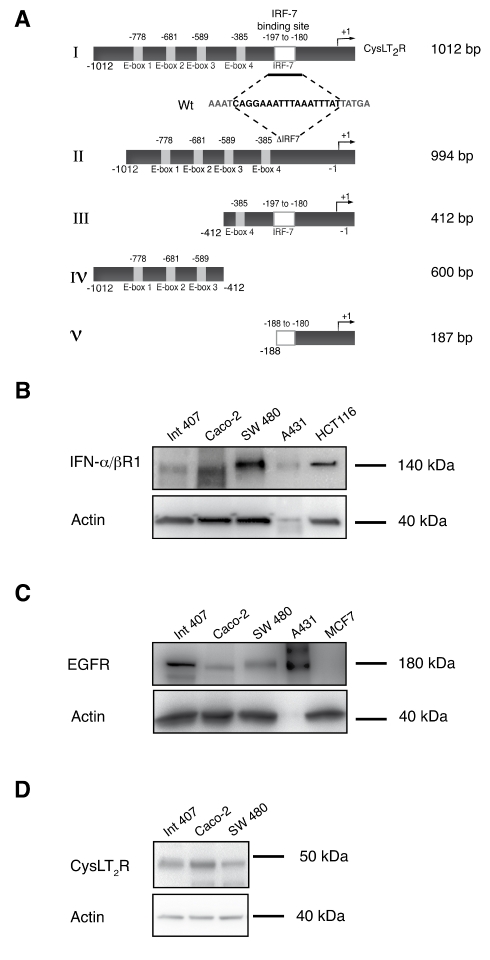
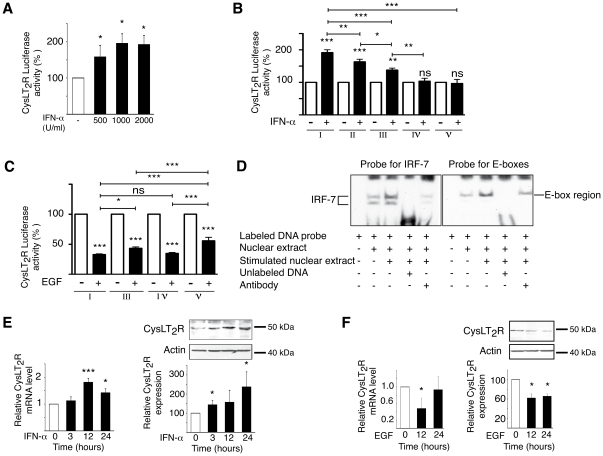
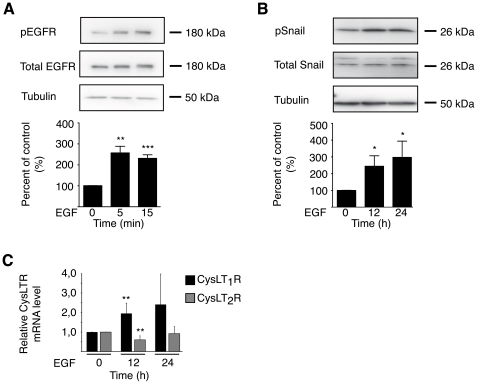
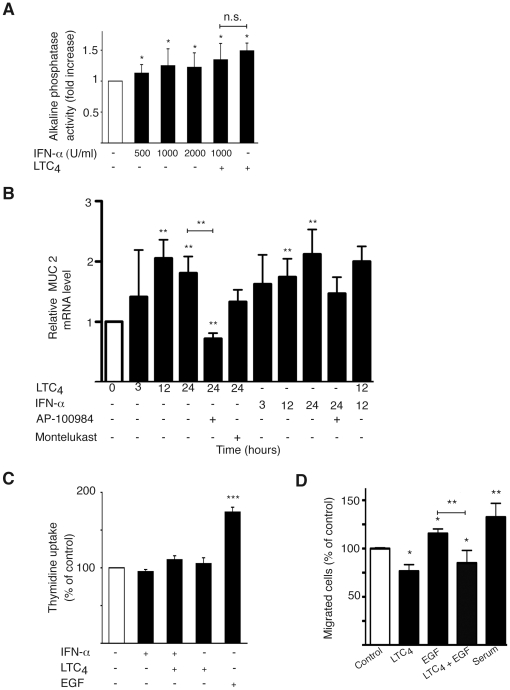
METHODOLOGY/PRINCIPAL FINDINGS: We investigated the potential role of the anti-tumorigenic interferon α (IFN-α) and the mitogenic epidermal growth factor (EGF) on CysLT(2)R regulation using non-transformed intestinal epithelial cell lines and colon cancer cells to elucidate the effects on the CysLT(2)R expression and regulation. This was done using Western blot, qPCR, luciferase reporter assay and a colon cancer patient array. We found a binding site for the transcription factor IRF-7 in the putative promoter region of CysLT(2)R. This site was involved in the IFN-α induced activity of the CysLT(2)R luciferase reporter assay. In addition, IFN-α induced the activity of the differentiation marker alkaline phosphatase along with the expression of mucin-2, which protects the epithelial layer from damage. Interestingly, EGF suppressed both the expression and promoter activity of the CysLT(2)R. E-boxes present in the CysLT(2)R putative promoter region were involved in the suppressing effect. CysLT(2)R signaling was able to suppress cell migration that was induced by EGF signaling.
CONCLUSIONS/SIGNIFICANCE: The patient array showed that aggressive tumors generally expressed less IFN-α receptor and more EGFR. Interestingly, there was a negative correlation between CysLT(2)R and EGFR expression. Our data strengthens the idea that there is a protective role against tumor progression for CysLT(2)R and that it highlights new possibilities to regulate the CysLT(2)R.
半胱氨酰白三烯受体(CysLTRs)与许多不同的病理状况有关,如炎症和癌症。我们之前已经表明,高 CysLT(1)R 和低 CysLT(2)R 表达的结肠癌患者预后不良。因此,我们希望研究 CysLT(2)R 的转录调控方式,而这方面的研究还很不完善。
方法/主要发现:我们使用非转化肠上皮细胞系和结肠癌细胞,研究了抗肿瘤干扰素 α(IFN-α)和有丝分裂表皮生长因子(EGF)对 CysLT(2)R 调节的潜在作用,以阐明其对 CysLT(2)R 表达和调节的影响。这是通过 Western blot、qPCR、荧光素酶报告基因检测和结肠癌患者阵列来完成的。我们在 CysLT(2)R 的推定启动子区域发现了转录因子 IRF-7 的结合位点。该位点参与了 IFN-α 诱导的 CysLT(2)R 荧光素酶报告基因检测的活性。此外,IFN-α 诱导碱性磷酸酶的活性以及粘蛋白-2的表达,这可以保护上皮层免受损伤。有趣的是,EGF 抑制了 CysLT(2)R 的表达和启动子活性。CysLT(2)R 假定启动子区域存在的 E-盒参与了抑制作用。CysLT(2)R 信号能够抑制 EGF 信号诱导的细胞迁移。
结论/意义:患者阵列显示,侵袭性肿瘤通常表达较少的 IFN-α 受体和更多的 EGFR。有趣的是,CysLT(2)R 与 EGFR 表达呈负相关。我们的数据加强了这样一种观点,即 CysLT(2)R 对肿瘤进展具有保护作用,并为调节 CysLT(2)R 提供了新的可能性。