Department of Pharmacology, Toxicology, and Therapeutics, University of Kansas Medical Center, Kansas City, KS 66160, USA.
Pharmacol Res. 2011 Apr;63(4):259-65. doi: 10.1016/j.phrs.2010.12.018. Epub 2011 Jan 4.
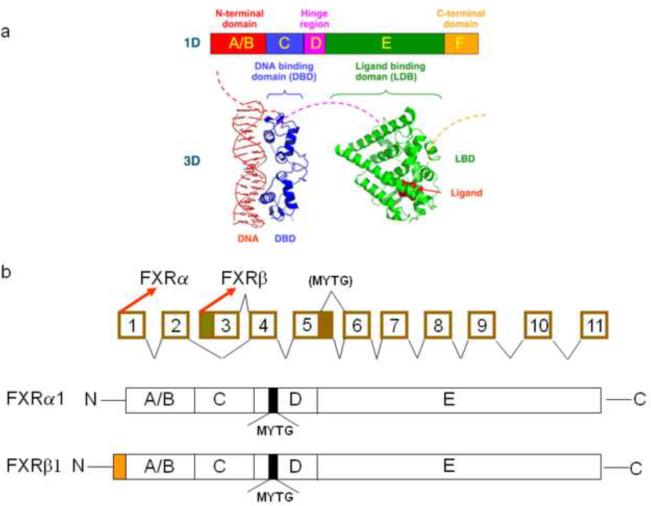
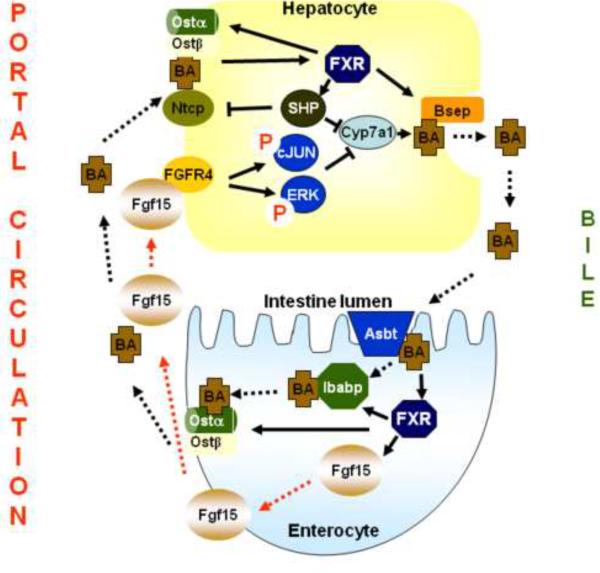
Nuclear receptors (NRs) are ligand-activated transcriptional factors that are involved in various physiological, developmental, and toxicological processes. Farnesoid X receptor (FXR) is a NR that belongs to the NR superfamily. The endogenous ligands of FXR are bile acids. FXR is essential in regulating a network of genes involved in maintaining bile acid and lipid homeostasis. It is clear that FXR is critical for liver and intestinal function. In mice FXR deficiency leads to the development of cholestasis, gallstone disease, nonalcoholic steatohepatitis, liver tumor, and colon tumor. Using mouse models where FXR is deleted either in the whole-body, or selectively in hepatocytes or enterocytes, we start to reveal the importance of tissue-specific FXR function in regulating bile acid and lipid homeostasis. However, a great challenge exists for developing tissue-specific FXR modulators to prevent and treat diseases associated with bile acid or lipid disorders. With further understanding of FXR function in both rodents and humans, this nuclear receptor may emerge as a novel target to prevent and treat liver, gastrointestinal and systemic diseases.
核受体(NRs)是配体激活的转录因子,参与各种生理、发育和毒理学过程。法尼醇 X 受体(FXR)是属于 NR 超家族的 NR。FXR 的内源性配体是胆汁酸。FXR 对于维持胆汁酸和脂质动态平衡的基因网络的调节至关重要。很明显,FXR 对肝脏和肠道功能至关重要。在小鼠中,FXR 缺乏会导致胆汁淤积、胆结石病、非酒精性脂肪性肝炎、肝肿瘤和结肠肿瘤的发生。利用 FXR 在全身、或在肝细胞或肠细胞中选择性缺失的小鼠模型,我们开始揭示组织特异性 FXR 功能在调节胆汁酸和脂质动态平衡中的重要性。然而,开发组织特异性 FXR 调节剂以预防和治疗与胆汁酸或脂质紊乱相关的疾病存在巨大挑战。随着对 FXR 在啮齿动物和人类中的功能的进一步了解,这个核受体可能成为预防和治疗肝脏、胃肠道和全身性疾病的新靶点。