Elmezzi Graduate School of Molecular Medicine and Center and for Oncology and Cell Biology, the Feinstein Institute for Medical Research, Manhasset, NY 11030, USA.
J Exp Med. 2011 Jan 17;208(1):67-80. doi: 10.1084/jem.20101499. Epub 2011 Jan 10.
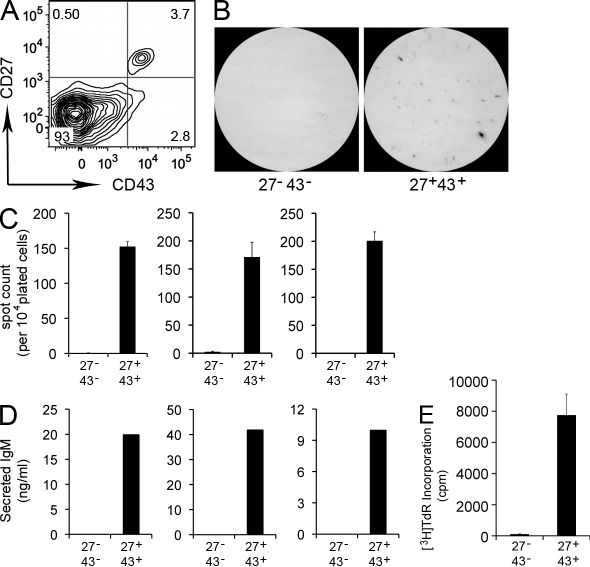
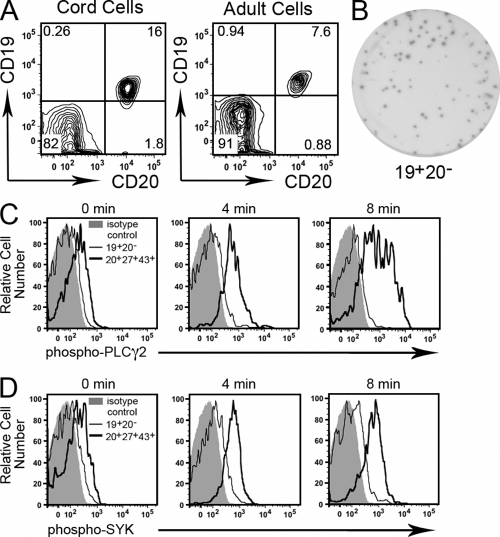
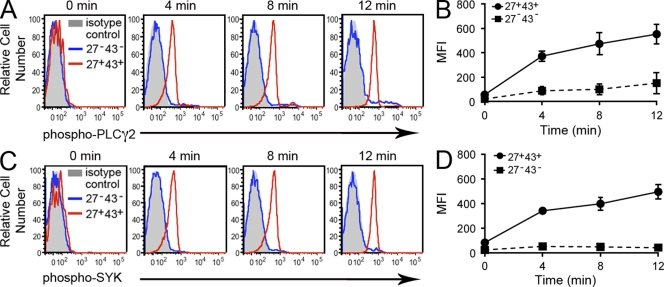
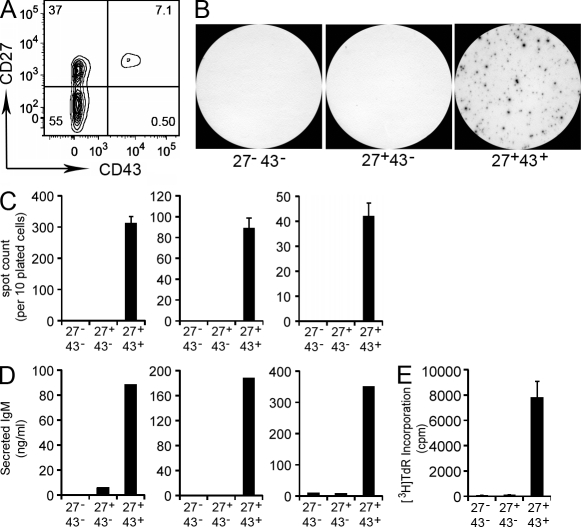
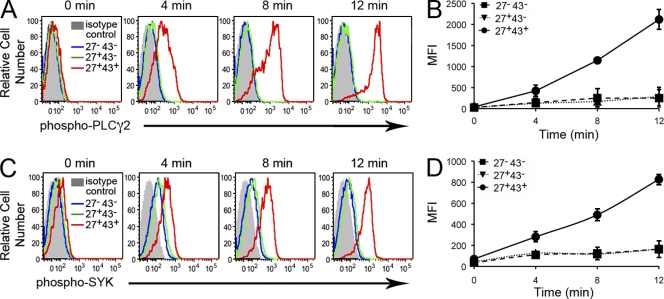
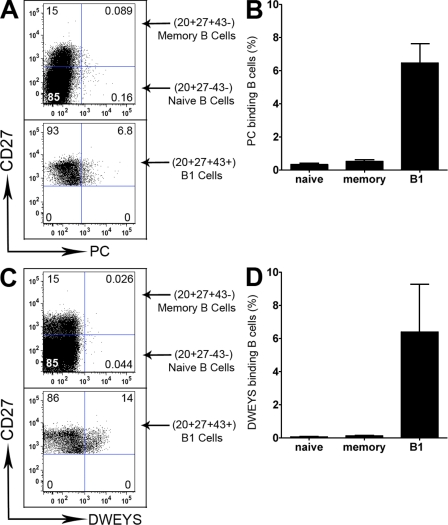
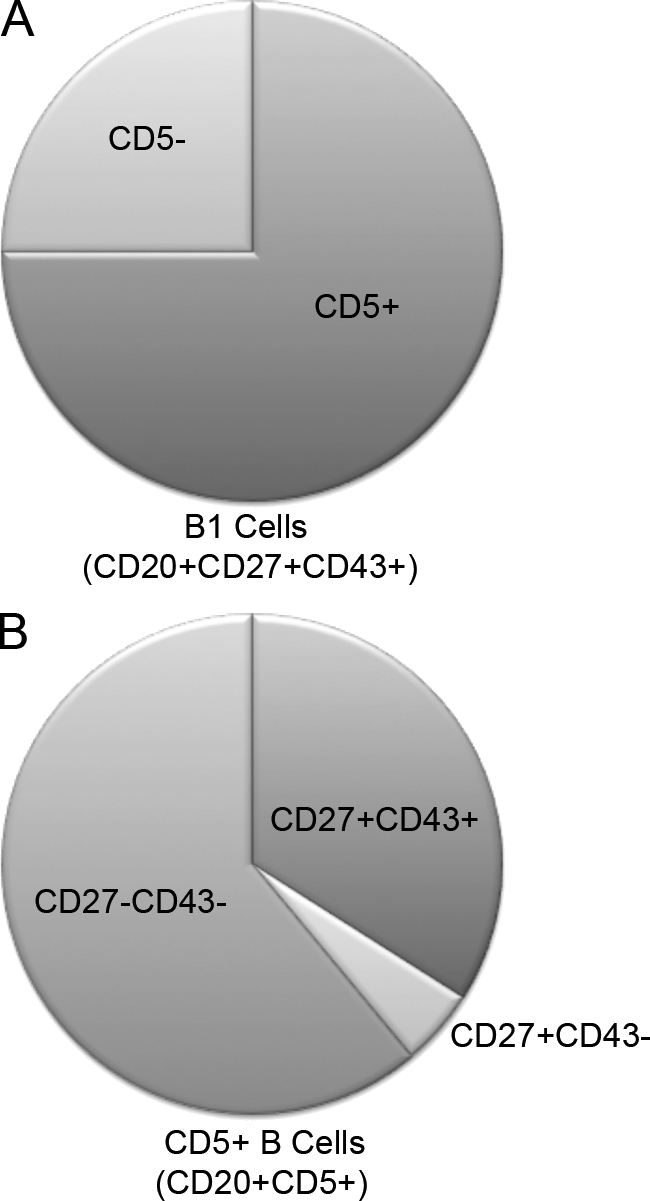
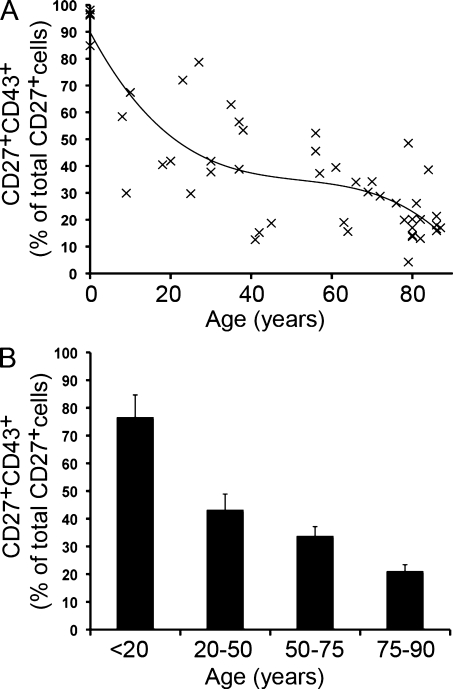
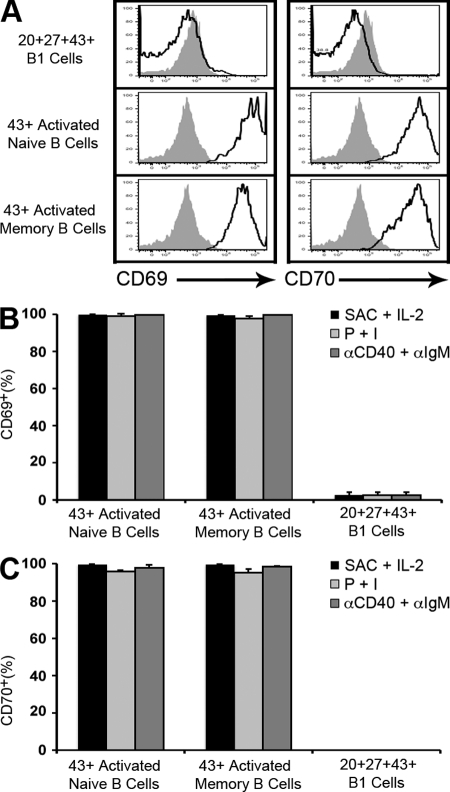
B1 cells differ in many ways from conventional B cells, most prominently in the production of natural immunoglobulin, which is vitally important for protection against pathogens. B1 cells have also been implicated in the pathogenesis of autoimmune dyscrasias and malignant diseases. It has been impossible to accurately study B1 cells during health and illness because the nature of human B1 cells has not been successfully defined. This has produced controversy regarding the existence of human B1 cells. Here, we determined the phenotype of human B1 cells by testing sort-purified B cell fractions for three fundamental B1 cell functions based on mouse studies: spontaneous IgM secretion, efficient T cell stimulation, and tonic intracellular signaling. We found that a small population of CD20(+)CD27(+)CD43(+) cells present in both umbilical cord and adult peripheral blood fulfilled these criteria and expressed a skewed B cell receptor repertoire. These B cells express little or no surface CD69 and CD70, both of which are markedly up-regulated after activation of CD20(+)CD27(-)CD43(-) (naive) and CD20(+)CD27(+)CD43(-) (memory) B cells. This work identifies human B1 cells as CD20(+)CD27(+)CD43(+)CD70(-). We determined that the proportion of B1 cells declines with age, which may contribute to disease susceptibility. Identification of human B1 cells provides a foundation for future studies on the nature and role of these cells in human disease.
B1 细胞在许多方面不同于传统 B 细胞,最显著的是自然免疫球蛋白的产生,这对于抵御病原体至关重要。B1 细胞也与自身免疫功能紊乱和恶性疾病的发病机制有关。由于未能成功定义人类 B1 细胞的性质,因此无法在健康和疾病期间准确研究 B1 细胞。这导致了关于人类 B1 细胞是否存在的争议。在这里,我们通过基于小鼠研究的三种基本 B1 细胞功能(自发 IgM 分泌、有效刺激 T 细胞和细胞内信号的持续作用),对分选纯化的 B 细胞进行测试,从而确定了人类 B1 细胞的表型。我们发现,脐带血和成人外周血中存在的一小部分 CD20(+)CD27(+)CD43(+)细胞符合这些标准,并表达了偏向性的 B 细胞受体库。这些 B 细胞表达很少或不表达表面 CD69 和 CD70,而这两者在 CD20(+)CD27(-)CD43(-)(幼稚)和 CD20(+)CD27(+)CD43(-)(记忆)B 细胞激活后显著上调。这项工作将人类 B1 细胞鉴定为 CD20(+)CD27(+)CD43(+)CD70(-)。我们确定 B1 细胞的比例随年龄的增长而下降,这可能导致疾病易感性。人类 B1 细胞的鉴定为未来研究这些细胞在人类疾病中的性质和作用提供了基础。