Division of Regenerative Medicine and Therapeutics, Institute of Regenerative Medicine and Biofunction, Tottori University Graduate School of Medical Science, Yonago, Japan.
Br J Pharmacol. 2011 Apr;162(8):1832-42. doi: 10.1111/j.1476-5381.2011.01204.x.
The expression of voltage-dependent K(+) channels (K(v) ) 1.5 is regulated by members of the heat shock protein (Hsp) family. We examined whether the heat shock transcription factor 1 (HSF-1) and its inducer geranylgeranylacetone (GGA) could affect the expression of K(v) 1.5 channels and its anchoring protein, synapse associated protein 97 (SAP97).
Transfected mouse atrial cardiomyocytes (HL-1 cells) and COS7 cells were subjected to luciferase reporter gene assay and whole-cell patch clamp. Protein and mRNA extracts were subjected to Western blot and quantitative real-time polymerase chain reaction.
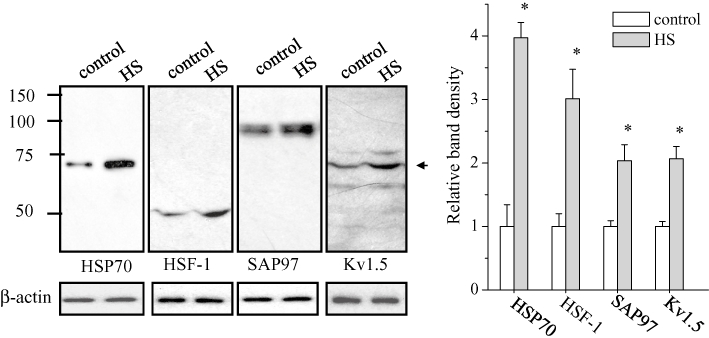
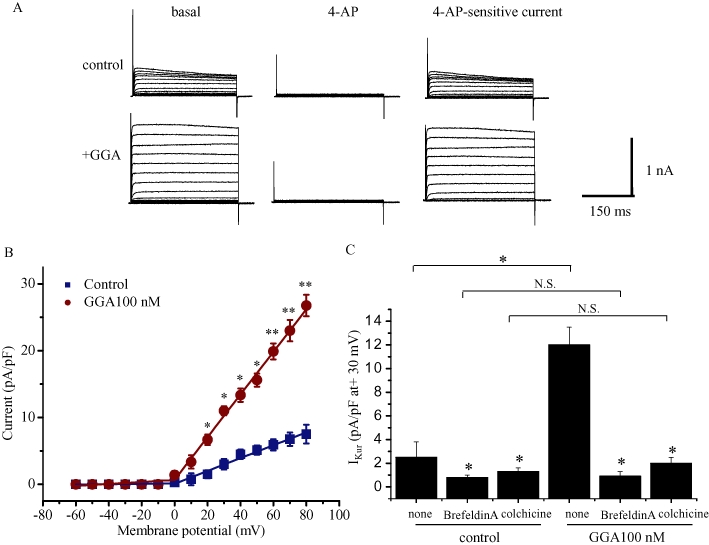
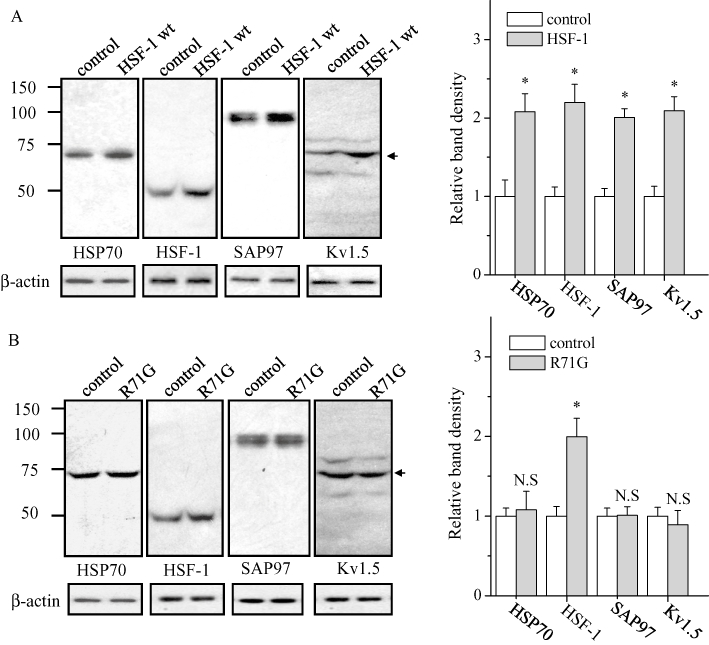
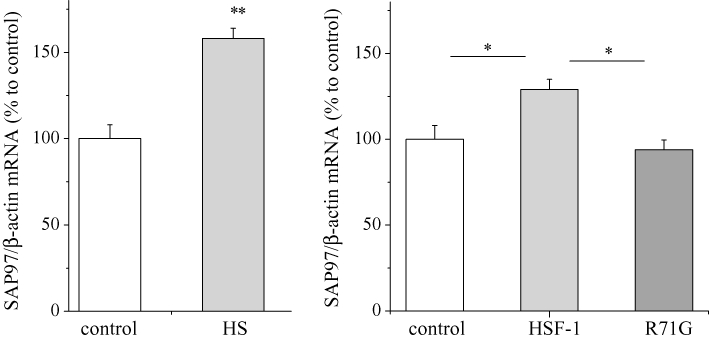
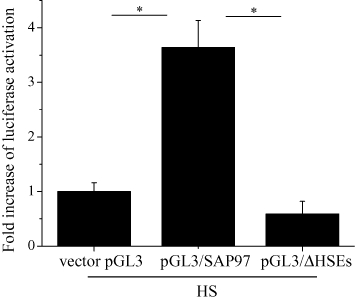
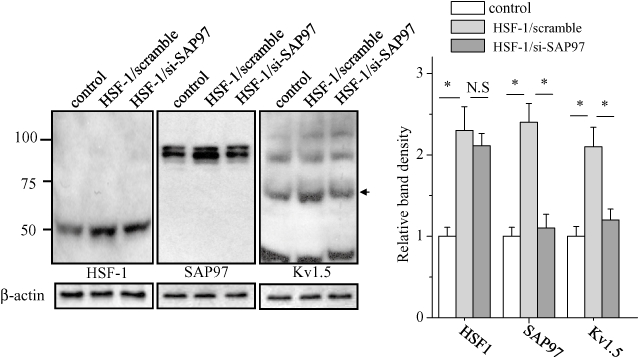
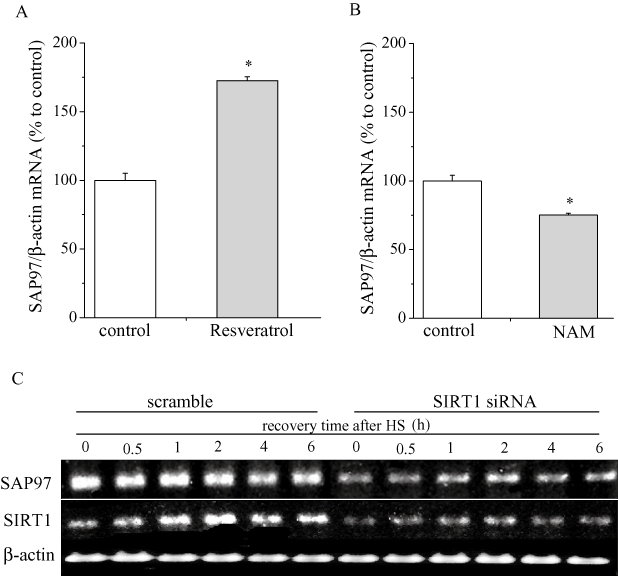
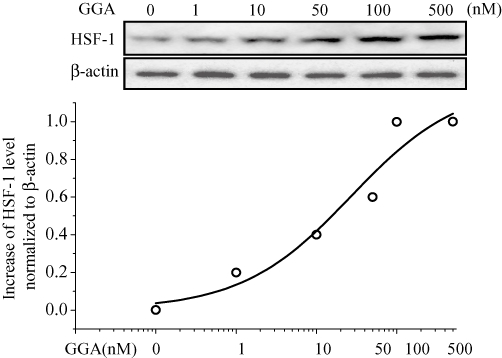
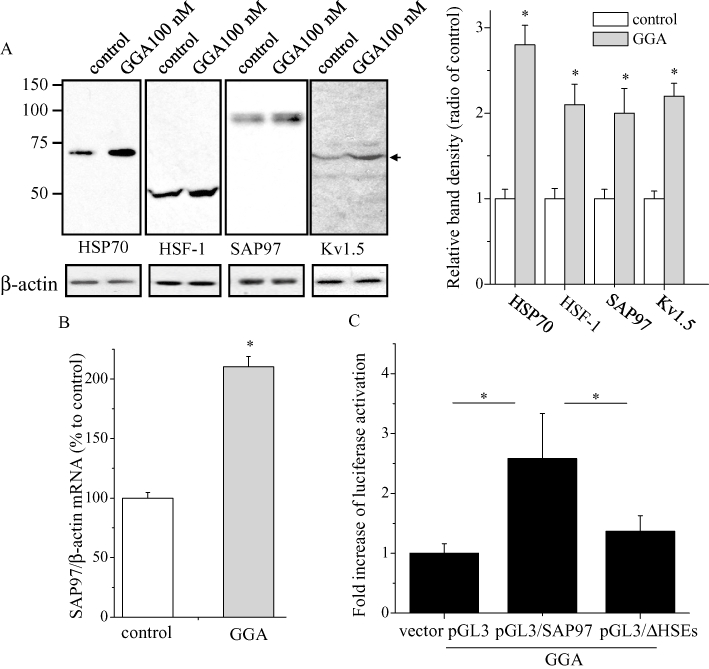
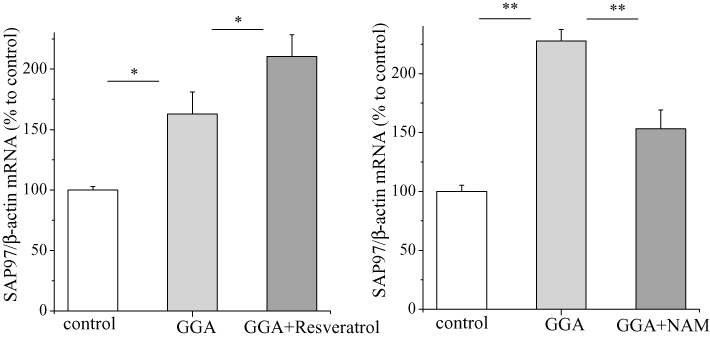
Heat shock of HL-1 cells induced expression of Hsp70, HSF-1, SAP97 and K(v) 1.5 proteins. These effects were reproduced by wild-type HSF-1. Both heat shock and expression of HSF-1, but not the R71G mutant, increased the SAP97 mRNA level. Small interfering RNA (siRNA) against SAP97 abolished HSF-1-induced increase of K(v) 1.5 and SAP97 proteins. A luciferase reporter gene assay revealed that the SAP97 promoter region (from -919 to -740) that contains heat shock elements (HSEs) was required for this induction. Suppression of SIRT1 function either by nicotinamide or siRNA decreased the level of SAP97 mRNA. SIRT1 activation by resveratrol had opposing effects. A treatment of the cells with GGA increased the level of SAP97 mRNA, K(v) 1.5 proteins and I(Kur) current, which could be modified with either resveratrol or nicotinamide.
HSF-1 induced transcription of SAP97 through SIRT1-dependent interaction with HSEs; the increase in SAP97 resulted in stabilization of K(v)1.5 channels. These effects were mimicked by GGA.
电压门控钾通道(Kv)1.5 的表达受热休克蛋白(Hsp)家族成员调节。我们研究了热休克转录因子 1(HSF-1)及其诱导剂香叶基丙酮(GGA)是否可以影响 Kv1.5 通道及其锚定蛋白突触相关蛋白 97(SAP97)的表达。
转染的鼠心房心肌细胞(HL-1 细胞)和 COS7 细胞进行荧光素酶报告基因检测和全细胞膜片钳。蛋白质和 mRNA 提取物进行 Western blot 和实时定量聚合酶链反应。
HL-1 细胞的热休克诱导了 Hsp70、HSF-1、SAP97 和 Kv1.5 蛋白的表达。野生型 HSF-1 重现了这些效应。热休克和 HSF-1 的表达(而不是 R71G 突变体)均增加了 SAP97 mRNA 水平。针对 SAP97 的小干扰 RNA(siRNA)消除了 HSF-1 诱导的 Kv1.5 和 SAP97 蛋白增加。荧光素酶报告基因实验表明,包含热休克元件(HSEs)的 SAP97 启动子区域(-919 至-740)对于这种诱导是必需的。烟酰胺或 siRNA 抑制 SIRT1 功能降低了 SAP97 mRNA 水平。白藜芦醇激活 SIRT1 则有相反的作用。细胞用 GGA 处理增加了 SAP97 mRNA、Kv1.5 蛋白和 I(Kur)电流的水平,这可以通过白藜芦醇或烟酰胺来调节。
HSF-1 通过 SIRT1 依赖性与 HSE 的相互作用诱导 SAP97 的转录;SAP97 的增加导致 Kv1.5 通道的稳定性增加。GGA 模拟了这些效应。