Cardiovascular Research Institute, University of California San Francisco, San Francisco, California, United States of America.
PLoS One. 2011 Jan 4;6(1):e16004. doi: 10.1371/journal.pone.0016004.
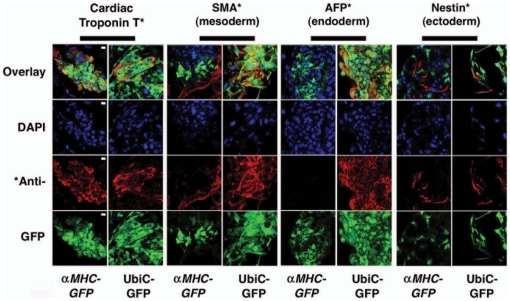
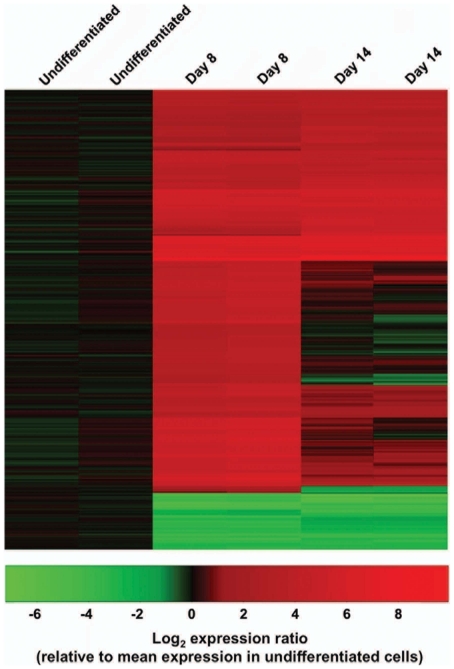
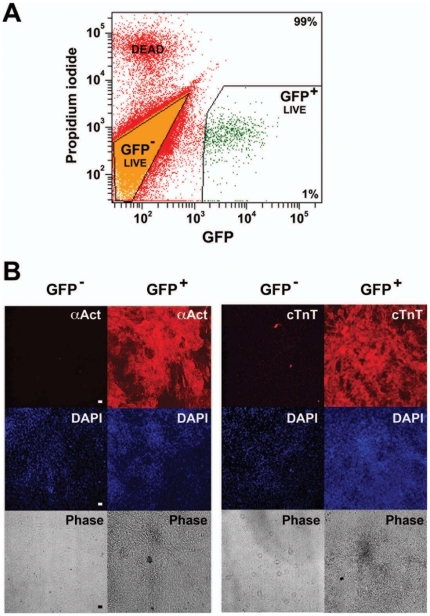
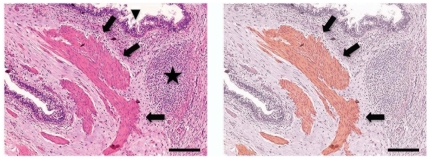
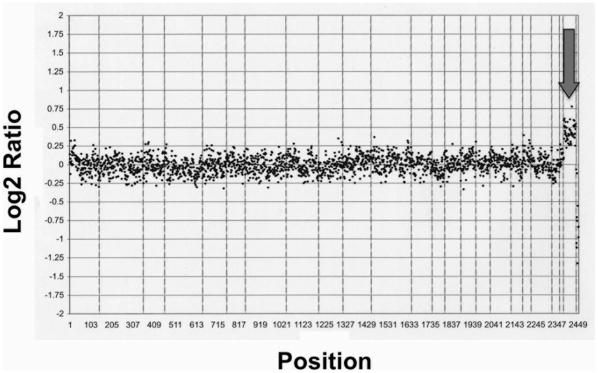
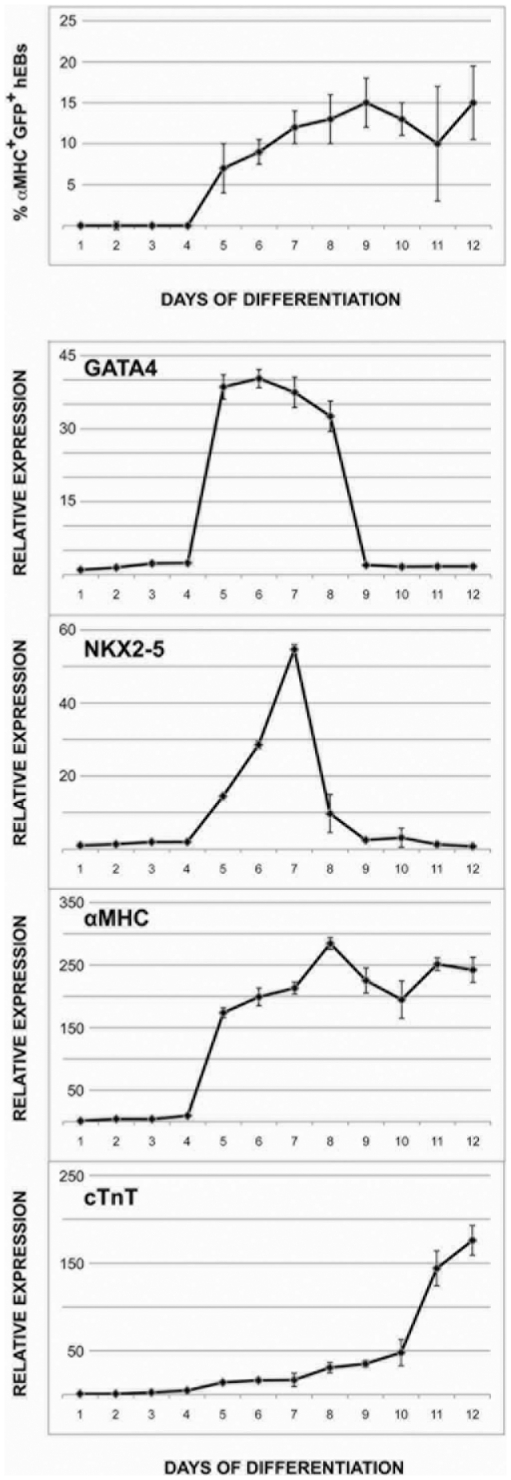
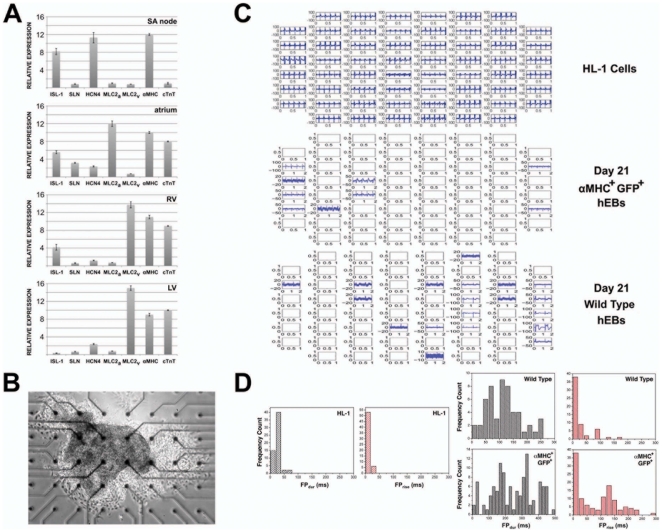
Unlike some organs, the heart is unable to repair itself after injury. Human embryonic stem cells (hESCs) grow and divide indefinitely while maintaining the potential to develop into many tissues of the body. As such, they provide an unprecedented opportunity to treat human diseases characterized by tissue loss. We have identified early myocardial precursors derived from hESCs (hMPs) using an α-myosin heavy chain (αMHC)-GFP reporter line. We have demonstrated by immunocytochemistry and quantitative real-time PCR (qPCR) that reporter activation is restricted to hESC-derived cardiomyocytes (CMs) differentiated in vitro, and that hMPs give rise exclusively to muscle in an in vivo teratoma formation assay. We also demonstrate that the reporter does not interfere with hESC genomic stability. Importantly, we show that hMPs give rise to atrial, ventricular and specialized conduction CM subtypes by qPCR and microelectrode array analysis. Expression profiling of hMPs over the course of differentiation implicate Wnt and transforming growth factor-β signaling pathways in CM development. The identification of hMPs using this αMHC-GFP reporter line will provide important insight into the pathways regulating human myocardial development, and may provide a novel therapeutic reagent for the treatment of cardiac disease.
与其他一些器官不同,心脏在受伤后无法自我修复。人类胚胎干细胞(hESC)在保持发育成身体多种组织的潜能的同时,可以无限生长和分裂。因此,它们为治疗以组织丧失为特征的人类疾病提供了前所未有的机会。我们使用α-肌球蛋白重链(αMHC)-GFP 报告基因系从 hESC 中鉴定出早期心肌前体细胞(hMP)。我们通过免疫细胞化学和实时定量 PCR(qPCR)证明,报告基因的激活仅限于体外分化的 hESC 衍生的心肌细胞(CM),并且 hMP 仅在体内畸胎瘤形成测定中产生肌肉。我们还证明报告基因不会干扰 hESC 的基因组稳定性。重要的是,我们通过 qPCR 和微电极阵列分析表明,hMP 产生了心房、心室和特化的传导 CM 亚型。在分化过程中对 hMP 的表达谱分析表明,Wnt 和转化生长因子-β信号通路参与了 CM 的发育。使用这种 αMHC-GFP 报告基因系鉴定 hMP 将为调节人类心肌发育的途径提供重要的见解,并可能为心脏疾病的治疗提供新的治疗试剂。