Seher Axel, Nickel Joachim, Mueller Thomas D, Kneitz Susanne, Gebhardt Susanne, ter Vehn Tobias Meyer, Schlunck Guenther, Sebald Walter
Universitätsklinikum Würzburg, Abteilung für Molekulare Innere Medizin, Würzburg, Germany.
Mol Vis. 2011 Jan 8;17:53-62.
The biologic relevance of human connective tissue growth factor (hCTGF) for primary human tenon fibroblasts (HTFs) was investigated by RNA expression profiling using affymetrix(TM) oligonucleotide array technology to identify genes that are regulated by hCTGF.
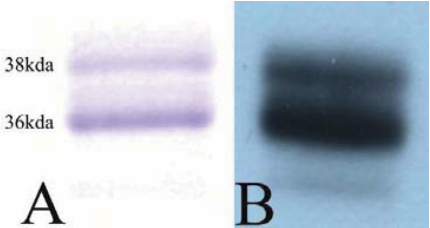
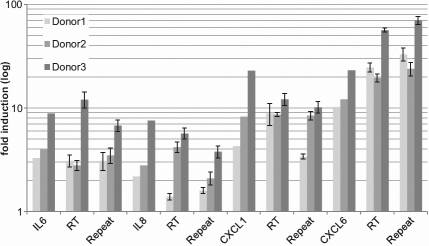
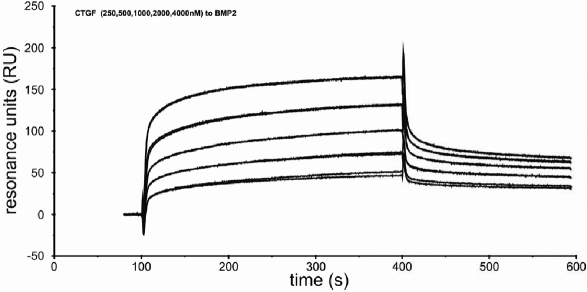
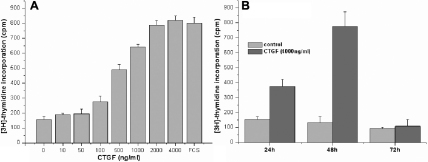
Recombinant hCTGF was expressed in HEK293T cells and purified by affinity and gel chromatography. Specificity and biologic activity of hCTGF was confirmed by biosensor interaction analysis and proliferation assays. For RNA expression profiling HTFs were stimulated with hCTGF for 48h and analyzed using affymetrix(TM) oligonucleotide array technology. Results were validated by real time RT-PCR.
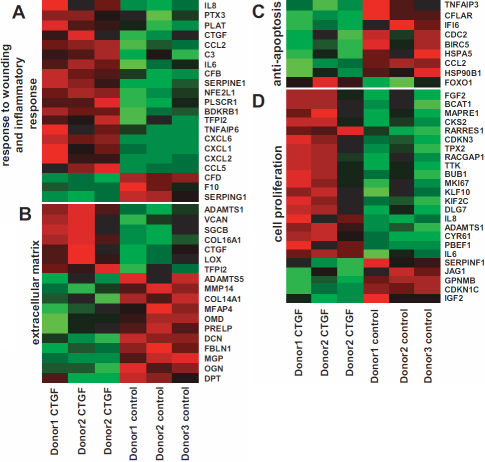
hCTGF induces various groups of genes responsible for a wound healing and inflammatory response in HTFs. A new subset of CTGF inducible inflammatory genes was discovered (e.g., chemokine [C-X-C motif] ligand 1 [CXCL1], chemokine [C-X-C motif] ligand 6 [CXCL6], interleukin 6 [IL6], and interleukin 8 [IL8]). We also identified genes that can transmit the known biologic functions initiated by CTGF such as proliferation and extracellular matrix remodelling. Of special interest is a group of genes, e.g., osteoglycin (OGN) and osteomodulin (OMD), which are known to play a key role in osteoblast biology.
This study specifies the important role of hCTGF for primary tenon fibroblast function. The RNA expression profile yields new insights into the relevance of hCTGF in influencing biologic processes like wound healing, inflammation, proliferation, and extracellular matrix remodelling in vitro via transcriptional regulation of specific genes. The results suggest that CTGF potentially acts as a modulating factor in inflammatory and wound healing response in fibroblasts of the human eye.
通过使用Affymetrix™寡核苷酸阵列技术进行RNA表达谱分析,研究人结缔组织生长因子(hCTGF)对原代人Tenon成纤维细胞(HTFs)的生物学相关性,以鉴定受hCTGF调控的基因。
重组hCTGF在HEK293T细胞中表达,并通过亲和层析和凝胶层析进行纯化。通过生物传感器相互作用分析和增殖试验确认hCTGF的特异性和生物学活性。对于RNA表达谱分析,用hCTGF刺激HTFs 48小时,并使用Affymetrix™寡核苷酸阵列技术进行分析。结果通过实时RT-PCR进行验证。
hCTGF诱导HTFs中负责伤口愈合和炎症反应的各类基因。发现了一组新的CTGF诱导性炎症基因(例如,趋化因子[C-X-C基序]配体1[CXCL1]、趋化因子[C-X-C基序]配体6[CXCL6]、白细胞介素6[IL6]和白细胞介素8[IL8])。我们还鉴定了能够传递由CTGF引发的已知生物学功能(如增殖和细胞外基质重塑)的基因。特别有趣的是一组基因,例如骨形成素(OGN)和骨调节蛋白(OMD),它们在成骨细胞生物学中起关键作用。
本研究明确了hCTGF对原代Tenon成纤维细胞功能的重要作用。RNA表达谱为hCTGF通过特定基因的转录调控影响体外伤口愈合、炎症、增殖和细胞外基质重塑等生物学过程的相关性提供了新的见解。结果表明,CTGF可能是人眼成纤维细胞炎症和伤口愈合反应中的调节因子。