Department of Pharmacology, Aarhus University, Aarhus, Denmark.
PLoS One. 2011 Jan 5;6(1):e15859. doi: 10.1371/journal.pone.0015859.
The present study investigated whether changes in gene expression in the right ventricle following pulmonary hypertension can be attributed to hypoxia or pressure loading.
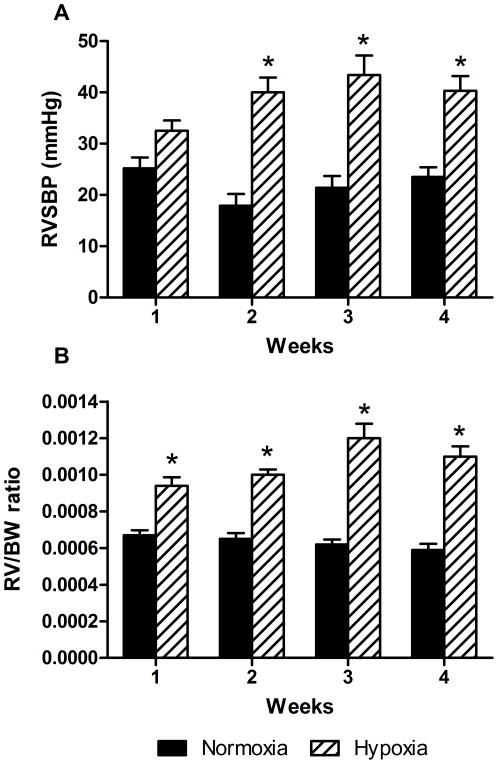
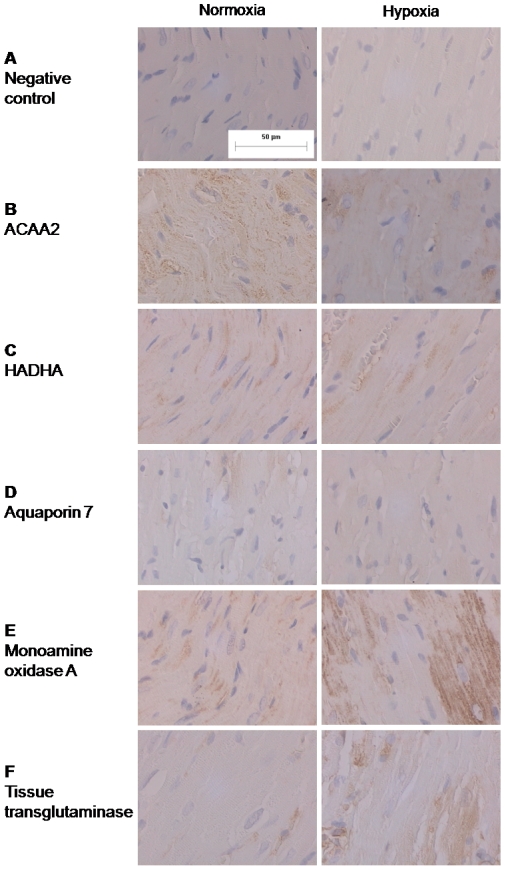
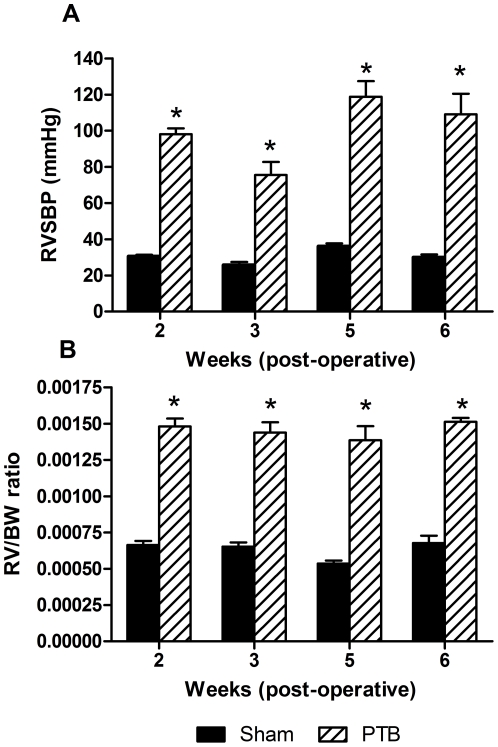
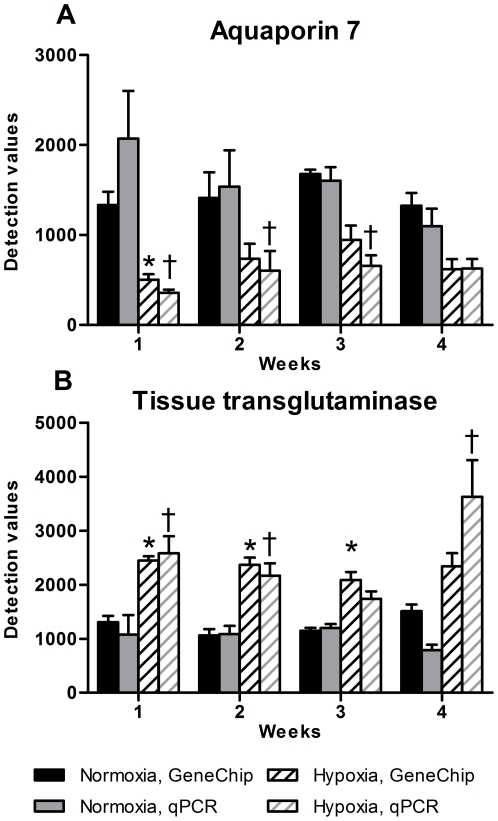
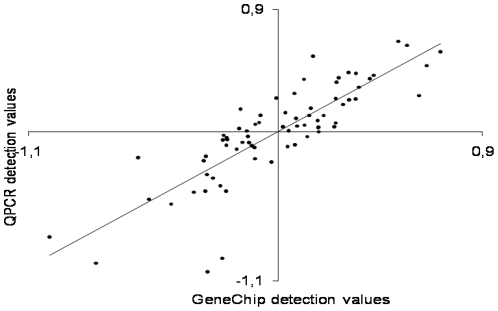
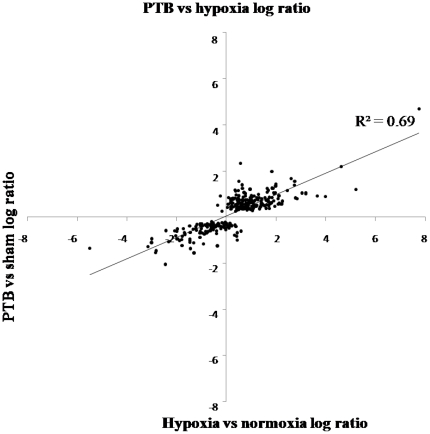
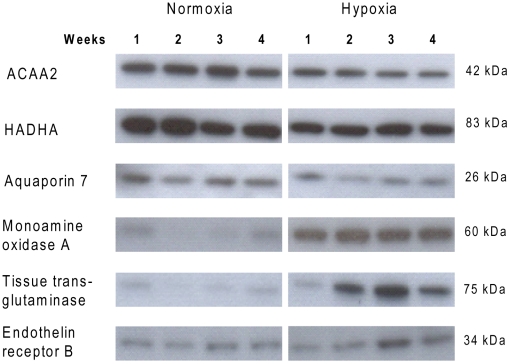
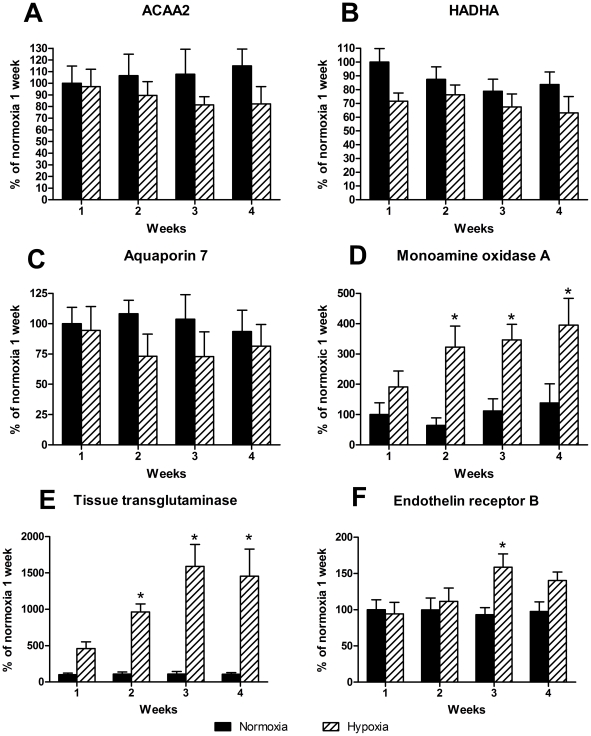
METHODOLOGY/PRINCIPAL FINDINGS: To distinguish hypoxia from pressure-induced alterations, a group of rats underwent banding of the pulmonary trunk (PTB), sham operation, or the rats were exposed to normoxia or chronic, hypobaric hypoxia. Pressure measurements were performed and the right ventricle was analyzed by Affymetrix GeneChip, and selected genes were confirmed by quantitative PCR and immunoblotting. Right ventricular systolic blood pressure and right ventricle to body weight ratio were elevated in the PTB and the hypoxic rats. Expression of the same 172 genes was altered in the chronic hypoxic and PTB rats. Thus, gene expression of enzymes participating in fatty acid oxidation and the glycerol channel were downregulated. mRNA expression of aquaporin 7 was downregulated, but this was not the case for the protein expression. In contrast, monoamine oxidase A and tissue transglutaminase were upregulated both at gene and protein levels. 11 genes (e.g. insulin-like growth factor binding protein) were upregulated in the PTB experiment and downregulated in the hypoxic experiment, and 3 genes (e.g. c-kit tyrosine kinase) were downregulated in the PTB and upregulated in the hypoxic experiment.
CONCLUSION/SIGNIFICANCE: Pressure load of the right ventricle induces a marked shift in the gene expression, which in case of the metabolic genes appears compensated at the protein level, while both expression of genes and proteins of importance for myocardial function and remodelling are altered by the increased pressure load of the right ventricle. These findings imply that treatment of pulmonary hypertension should also aim at reducing right ventricular pressure.
本研究旨在探讨肺动脉高压后右心室基因表达的变化是否归因于缺氧或压力负荷。
方法/主要发现:为了区分缺氧和压力诱导的改变,一组大鼠接受肺动脉干(PTB)缩窄、假手术或暴露于常氧或慢性低压缺氧。进行压力测量,并通过 Affymetrix GeneChip 分析右心室,通过定量 PCR 和免疫印迹法确认选定基因。PTB 和低氧大鼠的右心室收缩压和右心室与体重比升高。慢性低氧和 PTB 大鼠的 172 个基因表达改变。因此,参与脂肪酸氧化和甘油通道的酶的基因表达下调。水通道蛋白 7 的 mRNA 表达下调,但蛋白表达并非如此。相反,单胺氧化酶 A 和组织转谷氨酰胺酶在基因和蛋白水平上均上调。11 个基因(如胰岛素样生长因子结合蛋白)在 PTB 实验中上调,在低氧实验中下调,3 个基因(如 c-kit 酪氨酸激酶)在 PTB 中下调,在低氧实验中上调。
结论/意义:右心室的压力负荷引起明显的基因表达改变,在代谢基因的情况下,蛋白水平似乎得到代偿,而右心室压力负荷增加会改变与心肌功能和重塑相关的基因和蛋白的表达。这些发现意味着治疗肺动脉高压还应旨在降低右心室压力。