Department of Pathology, Karmanos Cancer Institute, Wayne State University, Detroit, Michigan, United States of America.
PLoS One. 2011 Jan 13;6(1):e16068. doi: 10.1371/journal.pone.0016068.
Lung cancer, especially non-small cell lung cancer (NSCLC) is the major cause of cancer-related deaths in the United States. The aggressiveness of NSCLC has been shown to be associated with the acquisition of epithelial-to-mesenchymal transition (EMT). The acquisition of EMT phenotype induced by TGF-β1in several cancer cells has been implicated in tumor aggressiveness and resistance to conventional therapeutics; however, the molecular mechanism of EMT and tumor aggressiveness in NSCLC remains unknown.
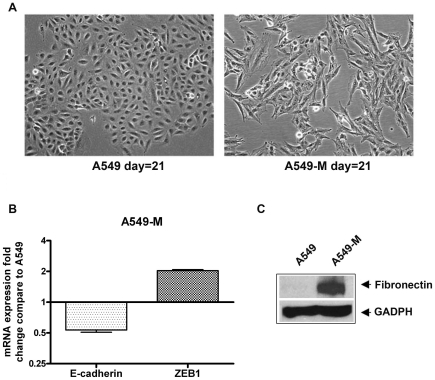
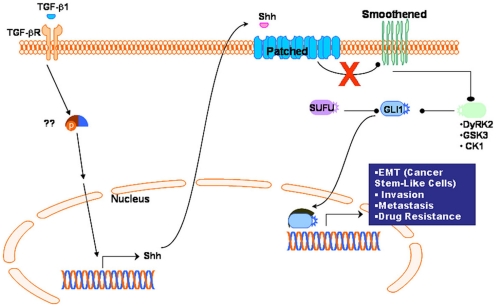
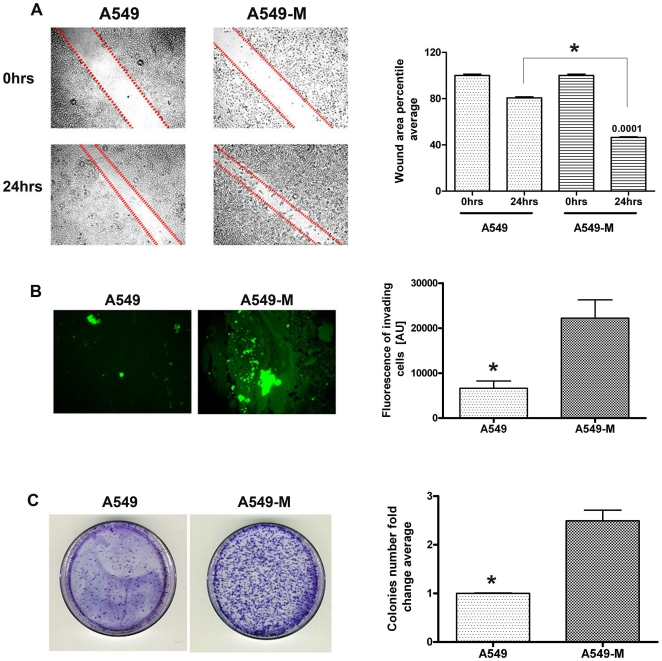
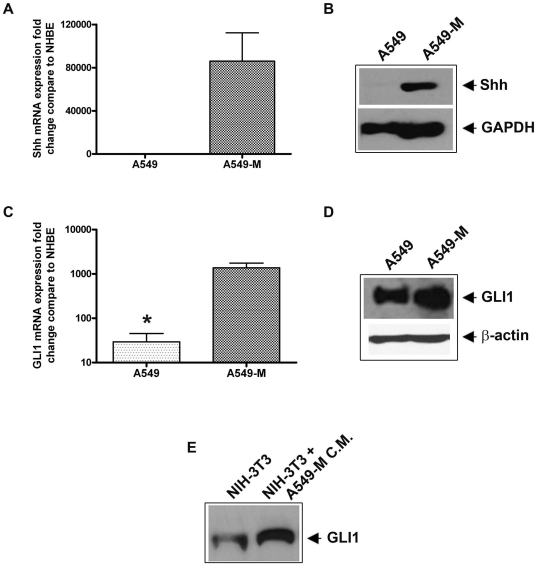
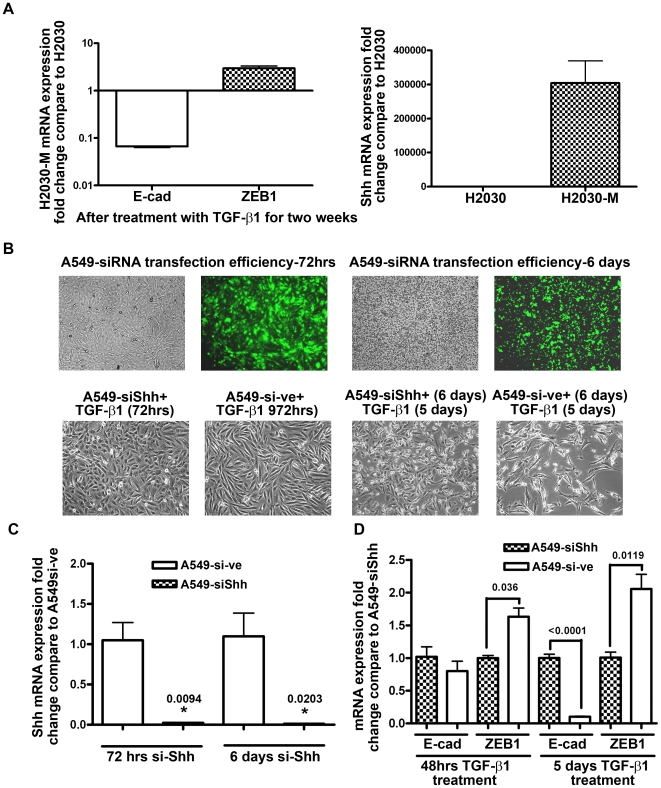
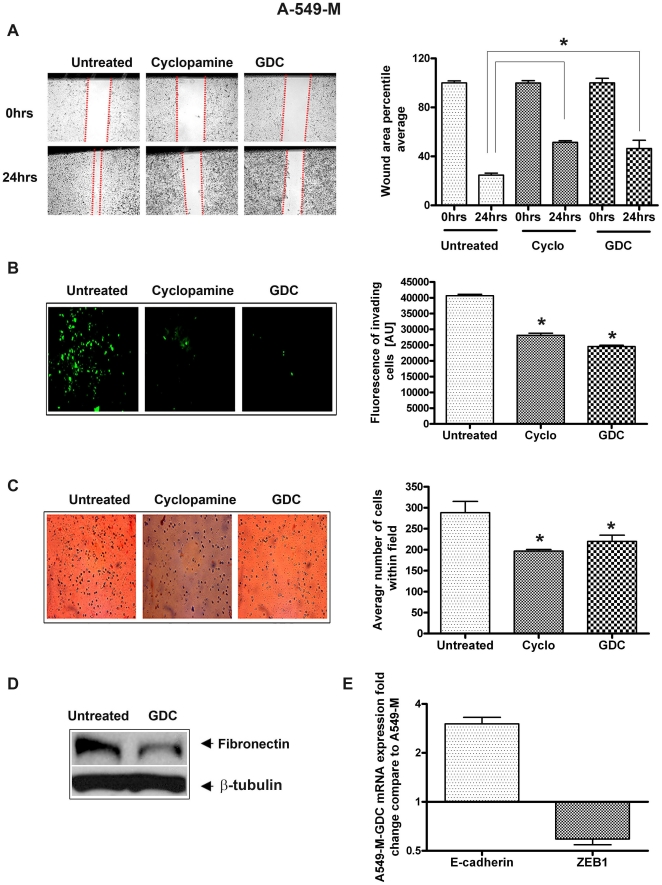
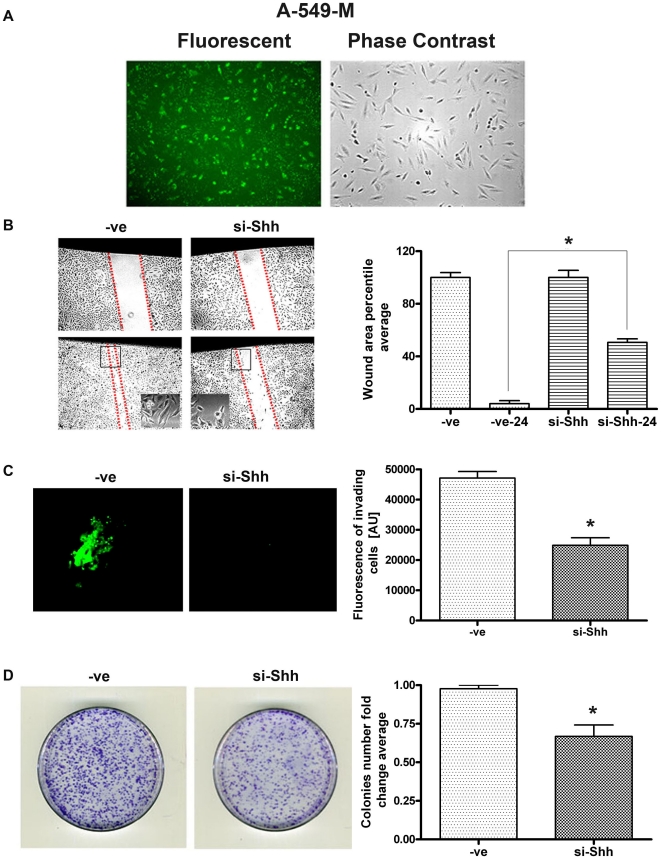
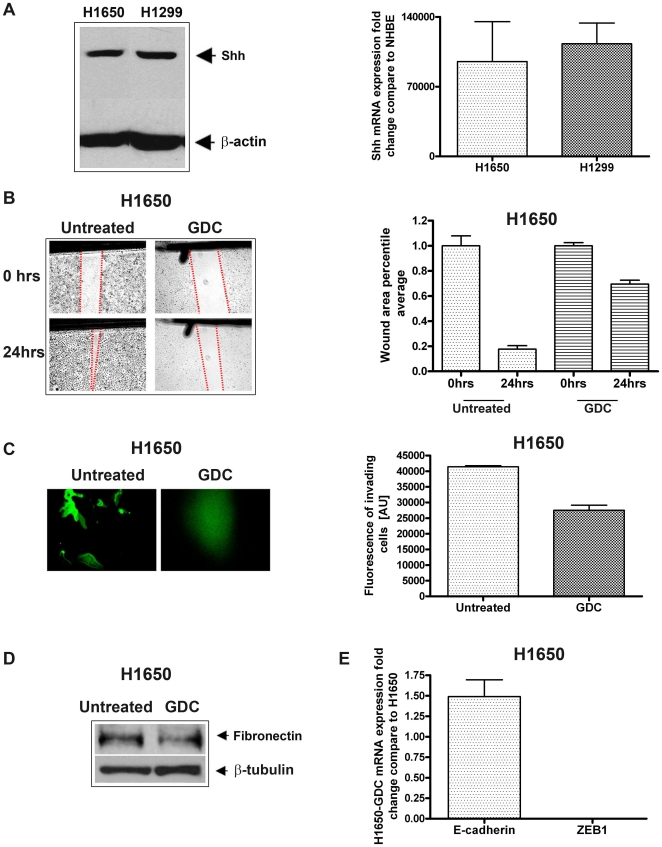
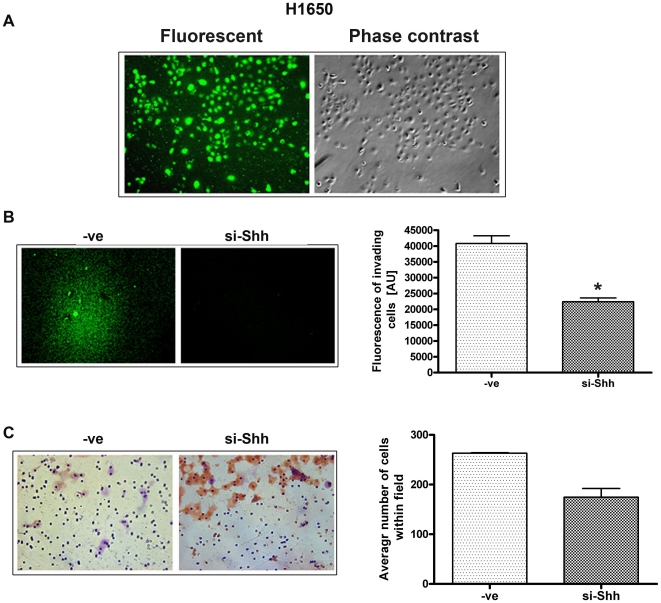
METHODOLOGY/PRINCIPAL FINDINGS: In this study we found for the first time that the induction of EMT by chronic exposure of A549 NSCLC cells to TGF-β1 (A549-M cells) led to the up-regulation of sonic hedgehog (Shh) both at the mRNA and protein levels causing activation of hedgehog signaling. These results were also reproduced in another NSCLC cell line (H2030). Induction of EMT was found to be consistent with aggressive characteristics such as increased clonogenic growth, cell motility and invasion. The aggressiveness of these cells was attenuated by the treatment of A549-M cells with pharmacological inhibitors of Hh signaling in addition to Shh knock-down by siRNA. The inhibition of Hh signaling by pharmacological inhibitors led to the reversal of EMT phenotype as confirmed by the reduction of mesenchymal markers such as ZEB1 and Fibronectin, and induction of epithelial marker E-cadherin. In addition, knock-down of Shh by siRNA significantly attenuated EMT induction by TGF-β1.
CONCLUSIONS/SIGNIFICANCE: Our results show for the first time the transcriptional up-regulation of Shh by TGF-β1, which is mechanistically associated with TGF-β1 induced EMT phenotype and aggressive behavior of NSCLC cells. Thus the inhibitors of Shh signaling could be useful for the reversal of EMT phenotype, which would inhibit the metastatic potential of NSCLC cells and also make these tumors more sensitive to conventional therapeutics.
肺癌,尤其是非小细胞肺癌(NSCLC),是导致美国癌症相关死亡的主要原因。NSCLC 的侵袭性已被证明与上皮-间充质转化(EMT)的获得有关。TGF-β1 在几种癌细胞中诱导 EMT 表型已被牵连到肿瘤侵袭性和对常规治疗的耐药性中;然而,NSCLC 中 EMT 和肿瘤侵袭性的分子机制仍不清楚。
方法/主要发现:在这项研究中,我们首次发现,A549 NSCLC 细胞在 TGF-β1 慢性暴露下(A549-M 细胞)诱导 EMT,导致 sonic hedgehog(Shh)在 mRNA 和蛋白质水平上调,从而激活 hedgehog 信号通路。这些结果在另一种 NSCLC 细胞系(H2030)中也得到了重现。EMT 的诱导与增加的集落形成生长、细胞迁移和侵袭等侵袭性特征一致。用 hedgehog 信号通路的药理学抑制剂处理 A549-M 细胞,以及用 siRNA 敲低 Shh,可减弱这些细胞的侵袭性。用药理学抑制剂抑制 Hh 信号通路可使 EMT 表型逆转,这一点可通过减少间充质标志物如 ZEB1 和纤维连接蛋白,并诱导上皮标志物 E-钙黏蛋白来证实。此外,用 siRNA 敲低 Shh 可显著减弱 TGF-β1 诱导的 EMT 。
结论/意义:我们的研究结果首次表明,TGF-β1 可使 Shh 转录上调,这与 TGF-β1 诱导的 EMT 表型和 NSCLC 细胞的侵袭行为在机制上有关。因此,Shh 信号通路的抑制剂可用于 EMT 表型的逆转,这将抑制 NSCLC 细胞的转移潜力,也使这些肿瘤对常规治疗更敏感。