Perambakam Supriya, Xie Hui, Edassery Seby, Peace David J
Section of Hematology and Oncology, Department of Medicine, College of Medicine Research Building, University of Illinois at Chicago, 909 South Wolcott Avenue, Chicago, IL 60612, USA.
Clin Dev Immunol. 2010;2010:473453. doi: 10.1155/2010/473453. Epub 2011 Jan 5.
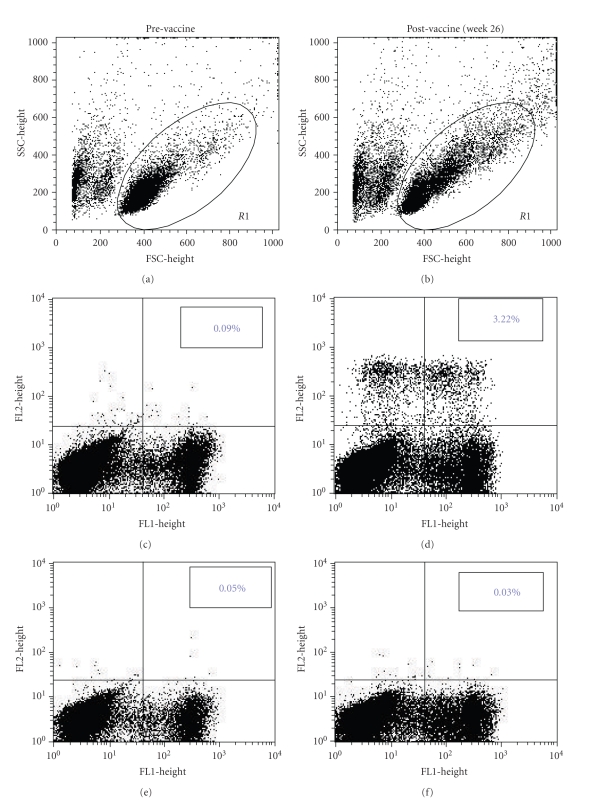
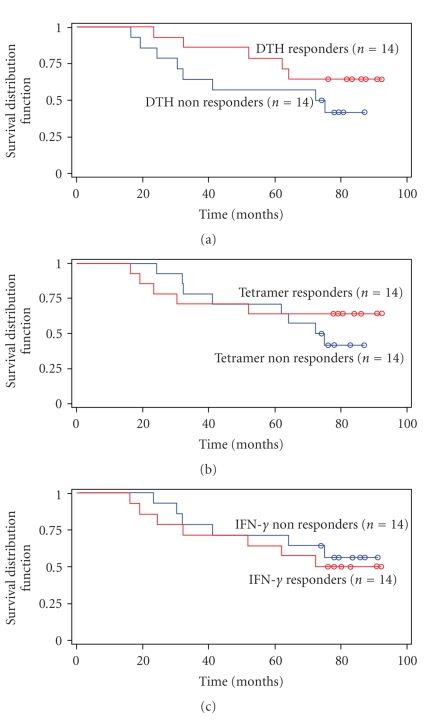
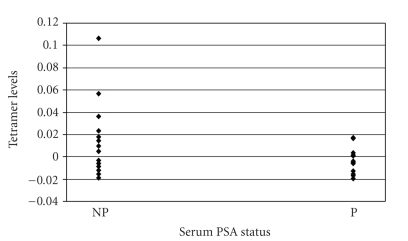
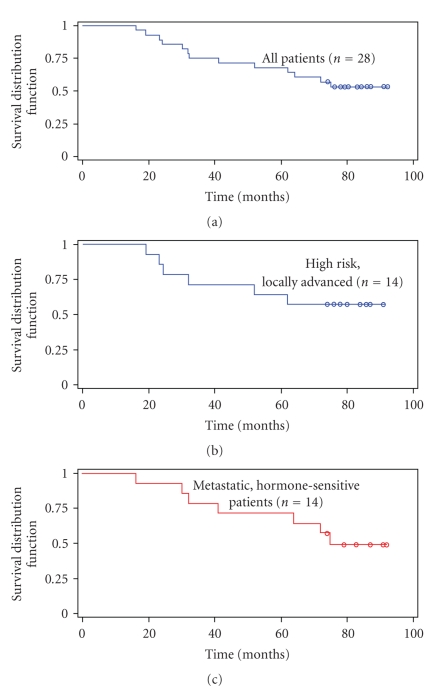
Twenty-eight HLA-A2+ patients with high-risk, locally advanced or metastatic, hormone-sensitive prostate cancer were immunized with a peptide homologue of prostate-specific antigen, PSA146-154, between July 2002 and September 2004 and monitored for clinical and immune responses. Fifty percent of the patients developed strong PSA146-154-peptide-specific delayed-type hypersensitivity skin responses, tetramer and/or IFN-γ responses within one year. Thirteen patients had stable or declining serum levels of PSA one year post-vaccination. A decreased risk of biochemical progression was observed in patients who developed augmented tetramer responses at six months compared to pre-vaccination levels (P = .02). Thirteen patients have died while 15 patients remain alive with a mean overall survival of 60 months (95% CI, 51 to 68 months) per Kaplan-Meier analysis. A trend towards greater overall survival was detected in men with high-risk, hormone-sensitive CaP who developed specific T-cell immunity following vaccination with PSA146-154 peptide.
2002年7月至2004年9月期间,28例高危、局部晚期或转移性激素敏感性前列腺癌的HLA-A2+患者用前列腺特异性抗原的肽类似物PSA146-154进行免疫,并监测临床和免疫反应。50%的患者在一年内出现了强烈的PSA146-154肽特异性迟发型超敏皮肤反应、四聚体和/或IFN-γ反应。13例患者在接种疫苗一年后血清PSA水平稳定或下降。与接种前水平相比,在六个月时出现增强的四聚体反应的患者中观察到生化进展风险降低(P = 0.02)。13例患者死亡,15例患者仍存活,根据Kaplan-Meier分析,平均总生存期为60个月(95%可信区间,51至68个月)。在用PSA146-154肽接种疫苗后产生特异性T细胞免疫的高危、激素敏感性CaP男性中检测到总生存期延长的趋势。