Department of Microbiology, University of Pennsylvania, Philadelphia, Pennsylvania, United States of America.
PLoS Pathog. 2011 Jan 6;7(1):e1001247. doi: 10.1371/journal.ppat.1001247.
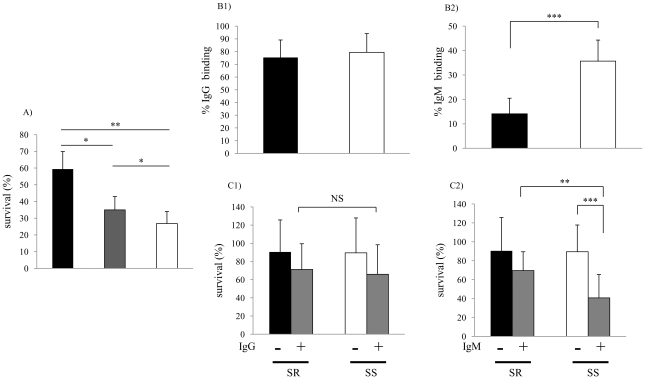
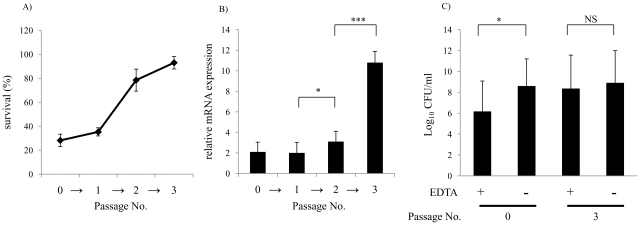
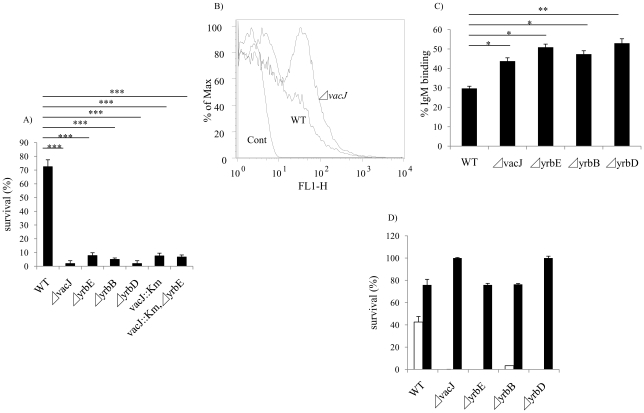
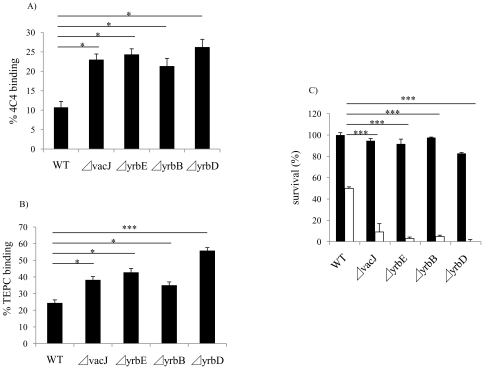
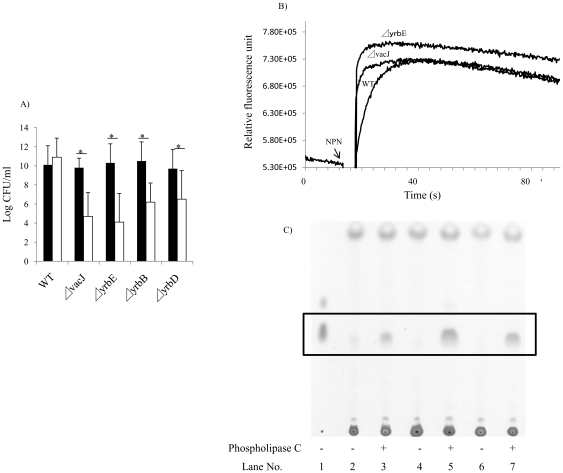
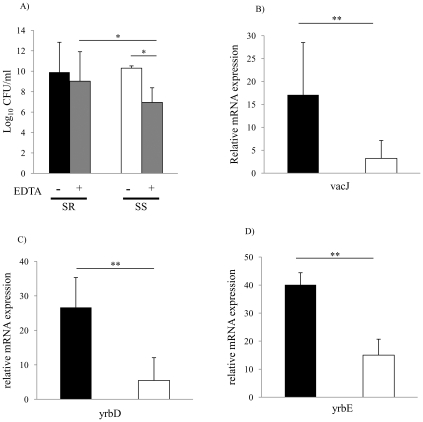
Non-typeable Haemophilus influenzae (NTHi), a common commensal of the human pharynx, is also an opportunistic pathogen if it becomes established in the lower respiratory tract (LRT). In comparison to colonizing isolates from the upper airway, LRT isolates, especially those associated with exacerbations of chronic obstructive pulmonary disease, have increased resistance to the complement- and antibody-dependent, bactericidal effect of serum. To define the molecular basis of this resistance, mutants constructed in a serum resistant strain using the mariner transposon were screened for loss of survival in normal human serum. The loci required for serum resistance contribute to the structure of the exposed surface of the bacterial outer membrane. These included loci involved in biosynthesis of the oligosaccharide component of lipooligosaccharide (LOS), and vacJ, which functions with an ABC transporter encoded by yrb genes in retrograde trafficking of phospholipids from the outer to inner leaflet of the cell envelope. Mutations in vacJ and yrb genes reduced the stability of the outer membrane and were associated with increased cell surface hyrophobicity and phospholipid content. Loss of serum resistance in vacJ and yrb mutants correlated with increased binding of natural immunoglobulin M in serum as well as anti-oligosaccharide mAbs. Expression of vacJ and the yrb genes was positively correlated with serum resistance among clinical isolates. Our findings suggest that NTHi adapts to inflammation encountered during infection of the LRT by modulation of its outer leaflet through increased expression of vacJ and yrb genes to minimize recognition by bactericidal anti-oligosaccharide antibodies.
不可分型流感嗜血杆菌(NTHi)是人类咽喉的常见共生菌,如果它在下呼吸道(LRT)中定植,也会成为机会性病原体。与上呼吸道定植的分离株相比,LRT 分离株,特别是与慢性阻塞性肺疾病加重相关的分离株,对补体和抗体依赖的杀菌作用的血清具有更高的抵抗力。为了确定这种耐药性的分子基础,使用 mariner 转座子在血清耐药株中构建的突变体被筛选以丧失在正常人类血清中的存活能力。对血清耐药性所必需的基因座有助于细菌外膜暴露表面的结构。这些基因座包括参与脂寡糖(LOS)寡糖成分生物合成的基因座,以及 vacJ 基因,它与 yrb 基因编码的 ABC 转运蛋白一起作用,将磷脂从细胞包膜的外叶向内叶反向转运。vacJ 和 yrb 基因突变降低了外膜的稳定性,并与细胞表面疏水性和磷脂含量的增加有关。在 vacJ 和 yrb 突变体中丧失血清耐药性与血清中天然免疫球蛋白 M 以及抗寡糖 mAb 的结合增加有关。vacJ 和 yrb 基因的表达与临床分离株的血清耐药性呈正相关。我们的发现表明,NTHi 通过增加 vacJ 和 yrb 基因的表达来调节其外叶,从而适应 LRT 感染期间遇到的炎症,以最大程度地减少杀菌性抗寡糖抗体的识别。