Department of Psychology, University of Texas-Arlington, Arlington, TX 75069-19528, USA.
J Cogn Neurosci. 2011 Sep;23(9):2533-43. doi: 10.1162/jocn.2011.21611. Epub 2011 Jan 21.
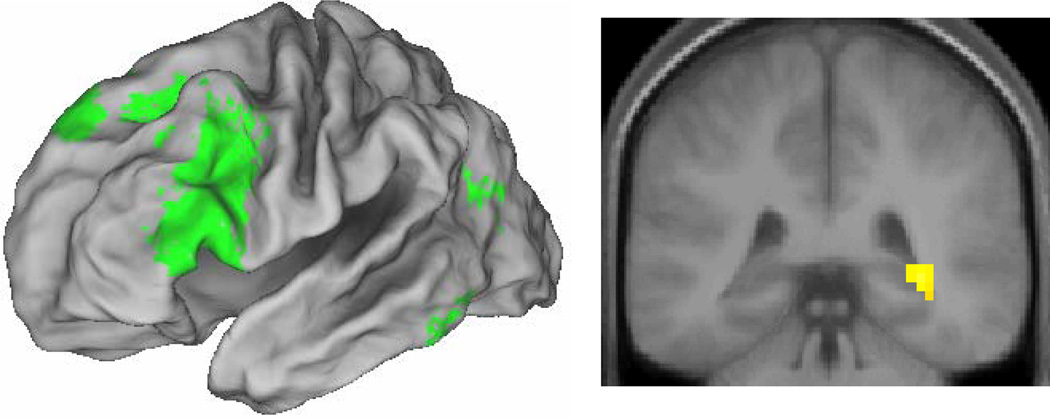
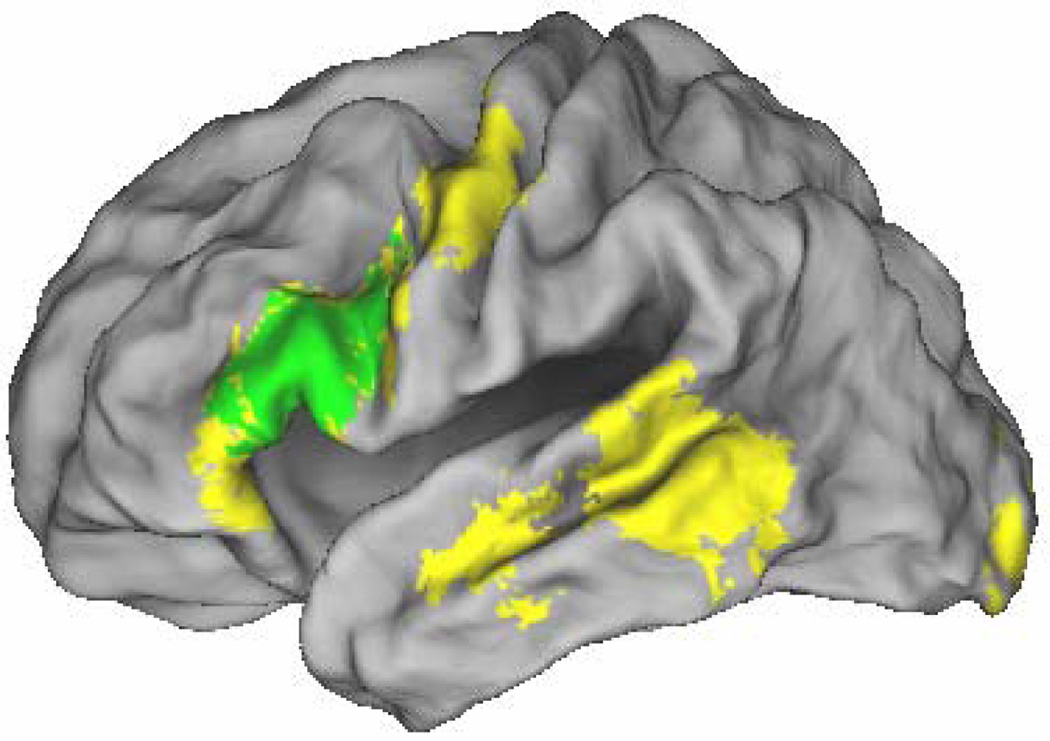
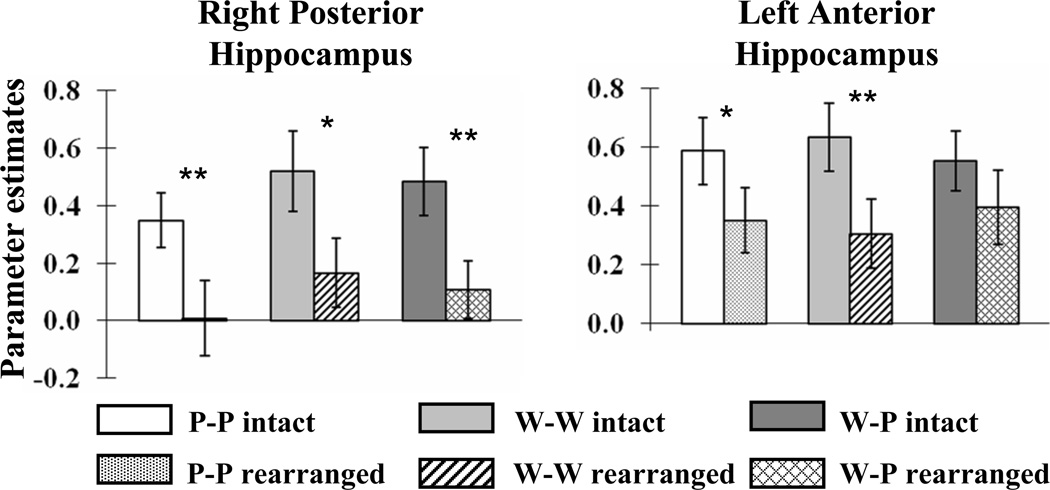
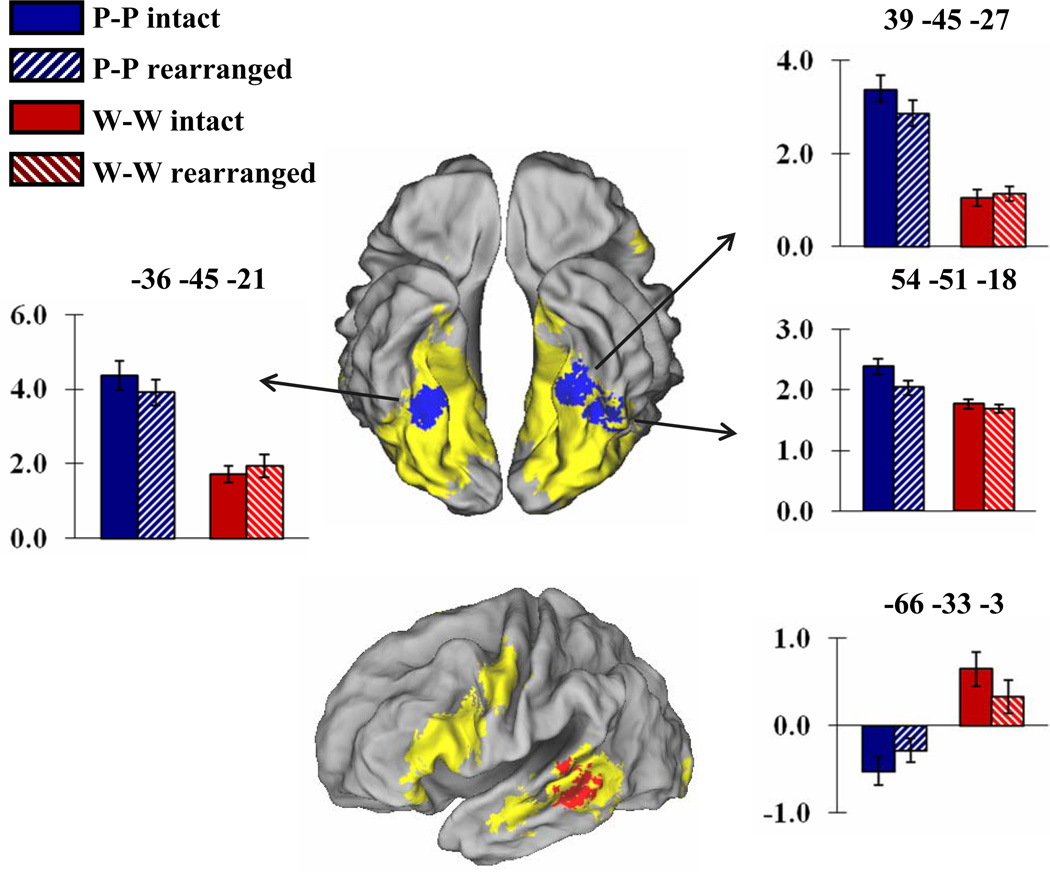
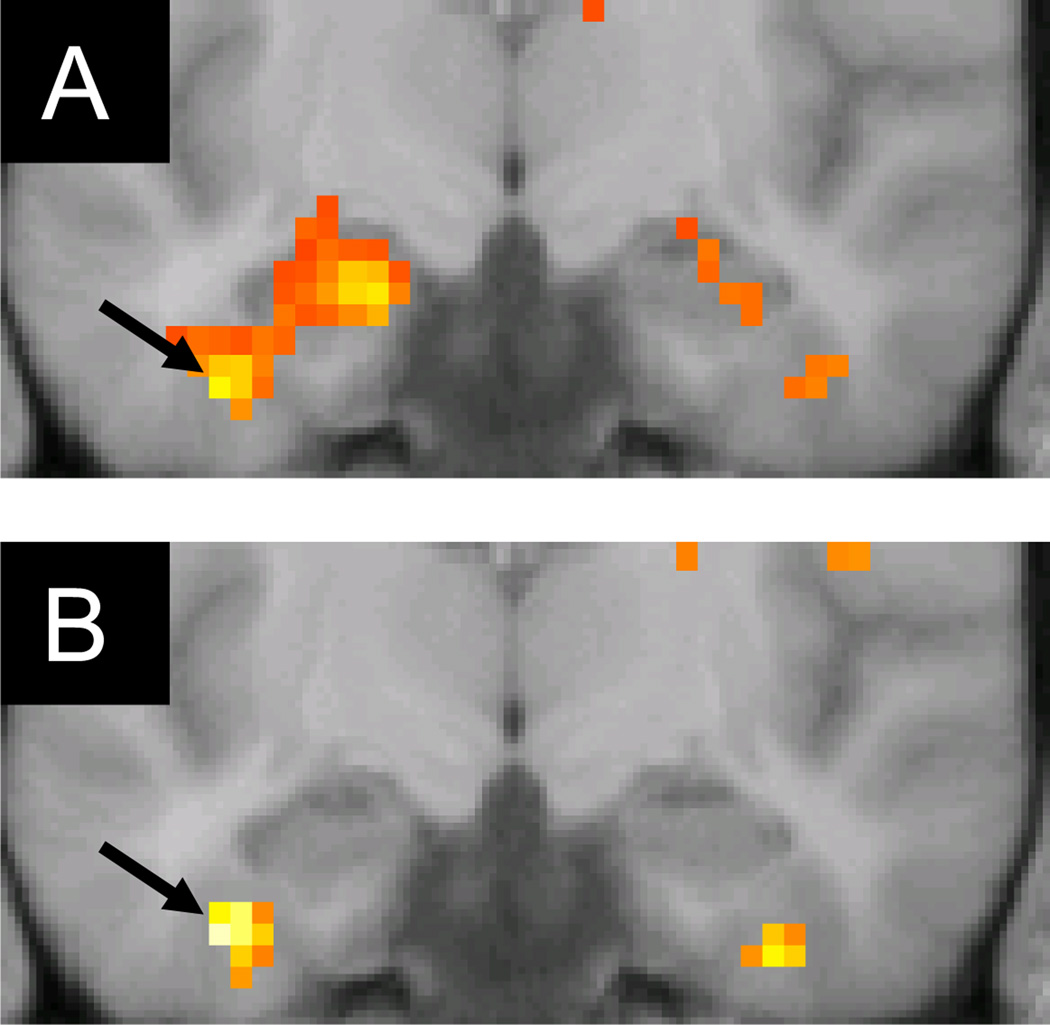
The neural correlates of the encoding of associations between pairs of words, pairs of pictures, and word-picture pairs were compared. The aims were to determine, first, whether the neural correlates of associative encoding vary according to study material and, second, whether encoding of across- versus within-material item pairs is associated with dissociable patterns of hippocampal and perirhinal activity, as predicted by the "domain dichotomy" hypothesis of medial temporal lobe function. While undergoing fMRI scanning, subjects (n = 24) were presented with the three classes of study pairs, judging which of the denoted objects fit into the other. Outside of the scanner, subjects then undertook an associative recognition task, discriminating between intact study pairs, rearranged pairs comprising items that had been presented on different study trials, and unstudied item pairs. The neural correlates of successful associative encoding--subsequent associative memory effects--were operationalized as the difference in activity between study pairs correctly judged intact versus pairs incorrectly judged rearranged on the subsequent memory test. Pair type-independent subsequent memory effects were evident in the left inferior frontal gyrus (IFG) and the hippocampus. Picture-picture pairs elicited material-selective effects in regions of fusiform cortex that were also activated to a greater extent on picture trials than on word trials, whereas word-word pairs elicited material-selective subsequent memory effects in left lateral temporal cortex. Contrary to the domain-dichotomy hypothesis, neither hippocampal nor perirhinal subsequent memory effects differed depending on whether they were elicited by within- versus across-material study pairs. It is proposed that the left IFG plays a domain-general role in associative encoding, that associative encoding can also be facilitated by enhanced processing in material-selective cortical regions, and that the hippocampus and perirhinal cortex contribute equally to the formation of inter-item associations, regardless of whether the items belong to the same or to different processing domains.
比较了对单词对、图片对以及词-图对进行联想编码的神经关联。目的是首先确定联想编码的神经关联是否因学习材料而异,其次确定跨材料和同材料项目对的编码是否与海马体和旁海马区活动的分离模式相关,这是内侧颞叶功能的“领域二分法”假说所预测的。在进行 fMRI 扫描时,被试(n = 24)接受了三类学习对的呈现,判断所指定的对象中哪些适合其他对象。在扫描仪外部,被试随后进行了联想识别任务,辨别完整的学习对、由在不同学习试验中呈现的项目组成的重新排列的对以及未学习的项目对。成功联想编码的神经关联——随后的联想记忆效应——是通过在随后的记忆测试中正确判断为完整的研究对与错误判断为重新排列的研究对之间的活动差异来操作的。在左侧额下回(IFG)和海马体中,存在与对类型无关的后续记忆效应。图片-图片对在梭状回区域引起了材料选择性的影响,这些区域在图片试验中比在单词试验中激活程度更高,而单词-单词对在左侧颞叶外侧引起了材料选择性的后续记忆效应。与领域二分法假说相反,无论是通过跨材料还是同材料的研究对引发的,海马体和旁海马体的后续记忆效应都没有差异。提出左侧 IFG 在联想编码中起一般领域的作用,联想编码也可以通过增强材料选择性皮质区域的处理来促进,并且海马体和旁海马体对项目之间的关联形成贡献相等,而与项目是否属于相同或不同的处理域无关。