Neurobiology Program, Institute for Biological Sciences, National Research Council of Canada, Ottawa, Ontario, K1A 0R6, Canada.
Mol Neurodegener. 2011 Jan 21;6(1):9. doi: 10.1186/1750-1326-6-9.
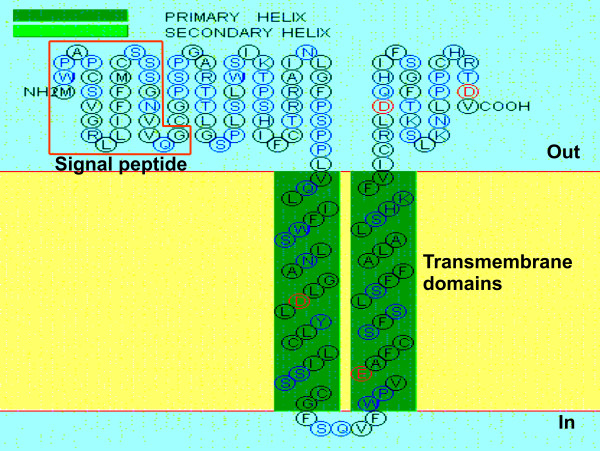
Molecular changes in multiple biological processes contribute to the development of chronic neurodegeneration such as late onset Alzheimer's disease (LOAD). To discover how these changes are reflected at the level of gene expression, we used a subtractive transcription-based amplification of mRNA procedure to identify novel genes that have altered expression levels in the brains of Alzheimer's disease (AD) patients. Among the genes altered in expression level in AD brains was a transcript encoding a novel protein, SDIM1, that contains 146 amino acids, including a typical signal peptide and two transmembrane domains. Here we examined its biochemical properties and putative roles in neuroprotection/neurodegeneration.
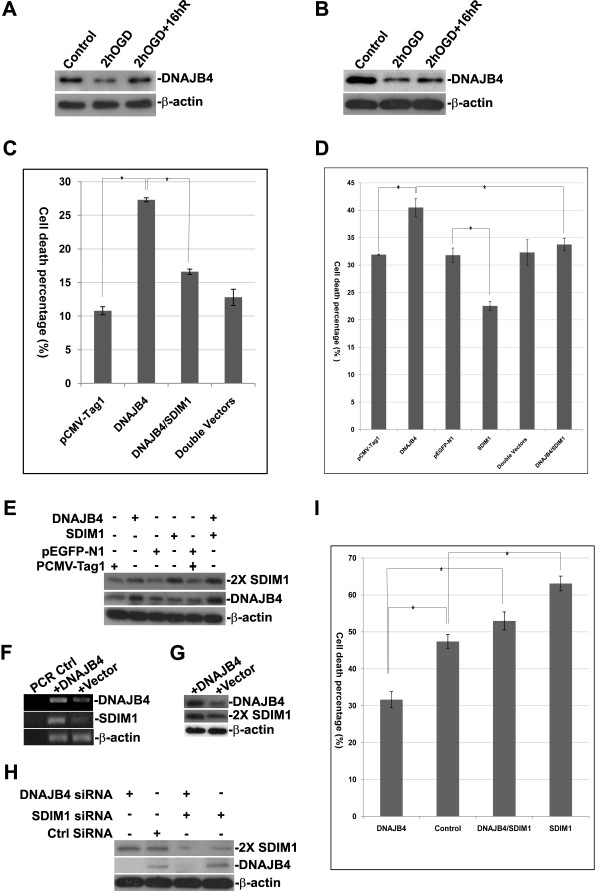
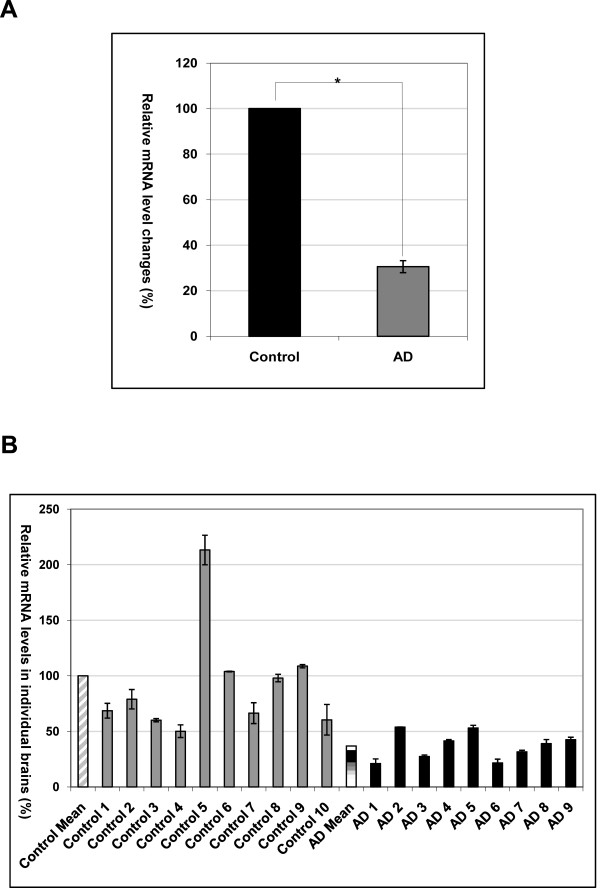
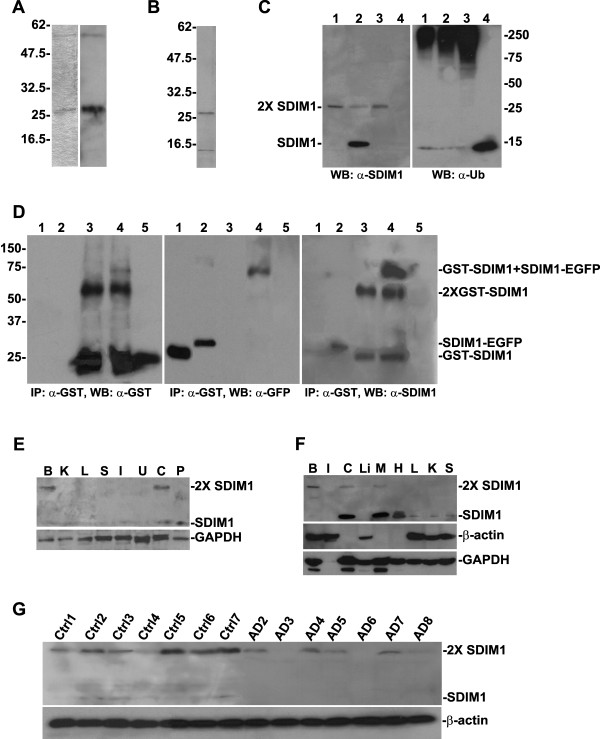
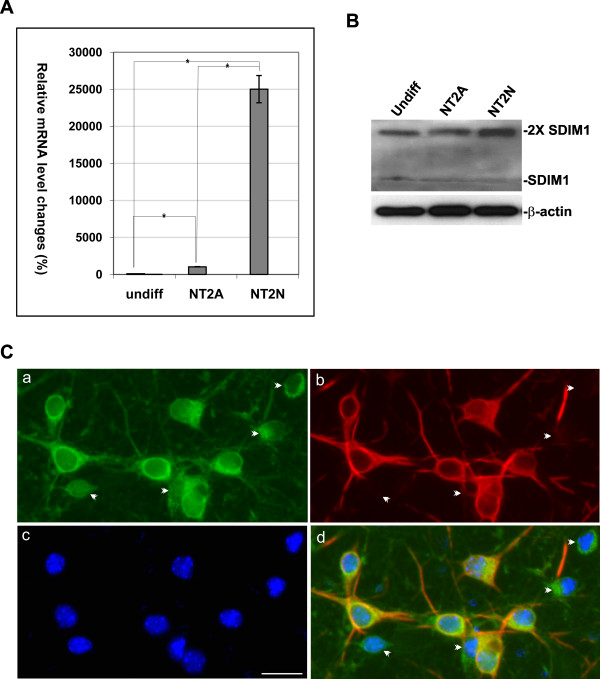
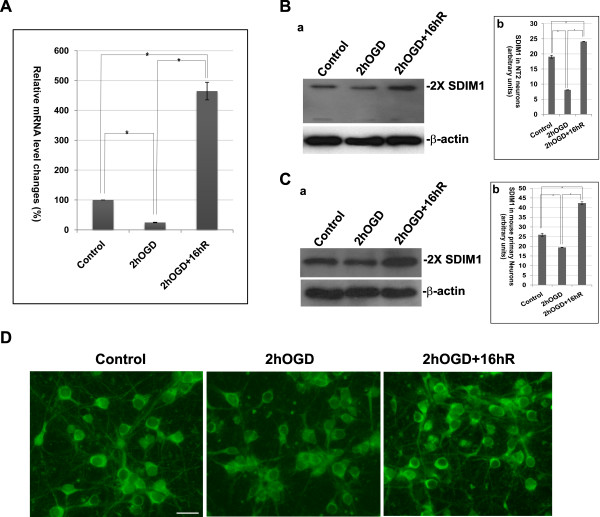
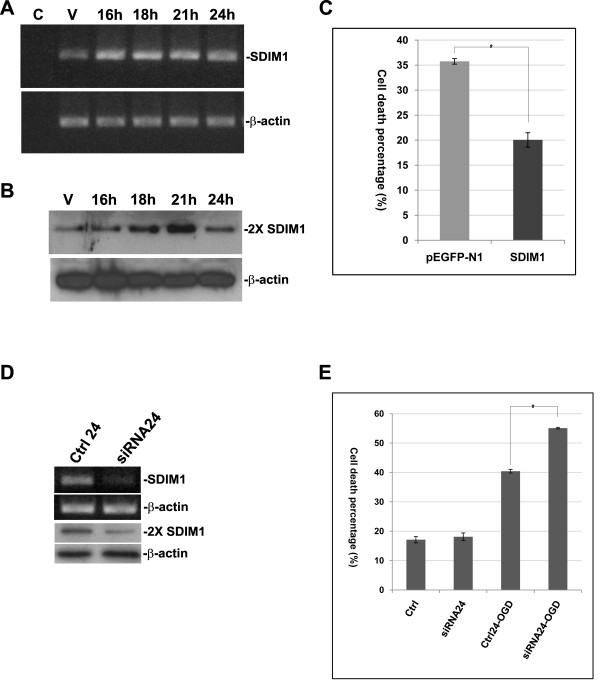
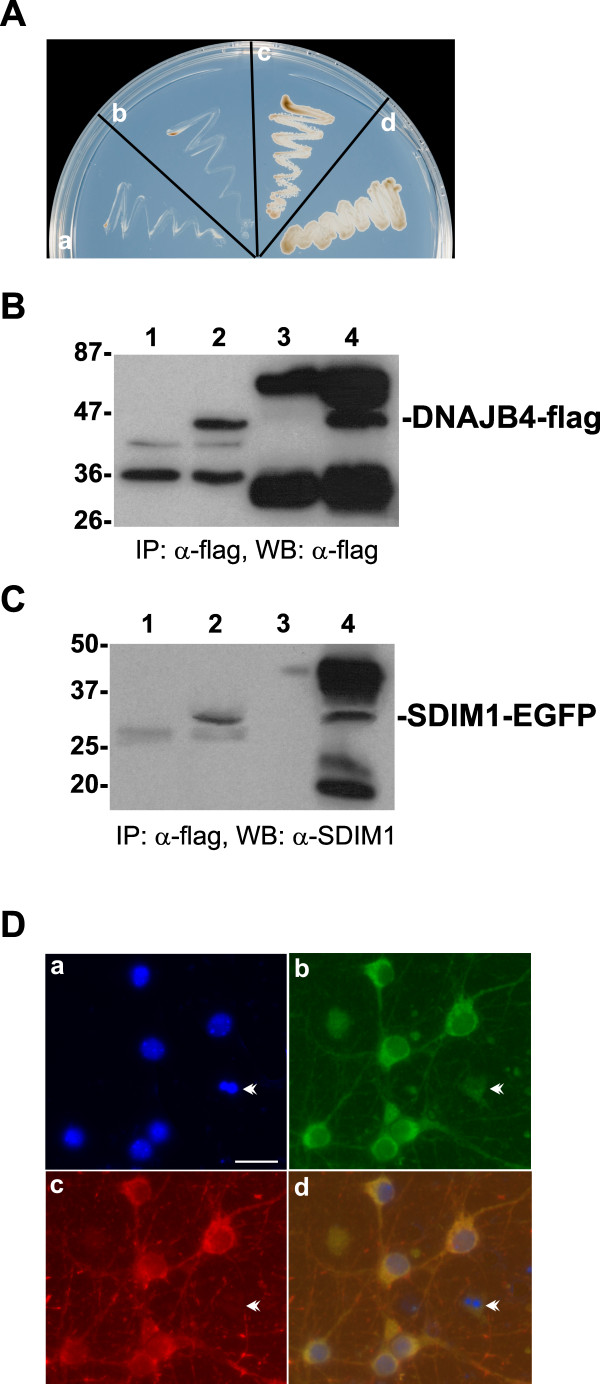
QRT-PCR analysis of additional AD and control post-mortem human brains showed that the SDIM1 transcript was indeed significantly down regulated in all AD brains. SDIM1 is more abundant in NT2 neurons than astrocytes and present throughout the cytoplasm and neural processes, but not in the nuclei. In NT2 neurons, it is highly responsive to stress conditions mimicking insults that may cause neurodegeneration in AD brains. For example, SDIM1 was significantly down regulated 2 h after oxygen-glucose deprivation (OGD), though had recovered 16 h later, and also appeared significantly up regulated compared to untreated NT2 neurons. Overexpression of SDIM1 in neuro-progenitor cells improved cells' ability to survive after injurious insults and its downregulation accelerated cell death induced by OGD. Yeast two-hybrid screening and co-immunoprecipitation approaches revealed, both in vitro and in vivo, an interaction between SDIM1 and DNAJB4, a heat shock protein hsp40 homolog, recently known as an enhancer of apoptosis that also interacts with the mu opioid receptor in human brain. Overexpression of DNAJB4 alone significantly reduced cell viability and SDIM1 co-overexpression was capable of attenuating the cell death caused DNAJB4, suggesting that the binding of SDIM1 to DNAJB4 might sequester DNAJB4, thus increasing cell viability.
Taken together, we have identified a small membrane protein, which is down regulated in AD brains and neuronal cells exposed to injurious insults. Its ability to promote survival and its interaction with DNAJB4 suggest that it may play a very specific role in brain cell survival and/or receptor trafficking.
多种生物过程的分子变化导致慢性神经退行性疾病(如迟发性阿尔茨海默病)的发生。为了发现这些变化在基因表达水平上的反映,我们使用基于 mRNA 的差减转录扩增程序来鉴定在阿尔茨海默病(AD)患者大脑中表达水平改变的新基因。在 AD 大脑中表达水平改变的基因中,有一种编码新型蛋白质 SDIM1 的转录本,该蛋白质包含 146 个氨基酸,包括典型的信号肽和两个跨膜结构域。在此,我们研究了其生化特性及其在神经保护/神经退行性变中的潜在作用。
对额外的 AD 和对照死后人脑的 QRT-PCR 分析表明,SDIM1 转录本确实在所有 AD 脑中均显著下调。SDIM1 在 NT2 神经元中的含量高于星形胶质细胞,存在于细胞质和神经突中,但不存在于核中。在 NT2 神经元中,它对模拟 AD 脑中可能导致神经退行性变的损伤的应激条件高度敏感。例如,SDIM1 在氧葡萄糖剥夺(OGD)后 2 小时显著下调,但 16 小时后恢复,与未经处理的 NT2 神经元相比也明显上调。在神经祖细胞中过表达 SDIM1 可提高受损后细胞的存活能力,而 SDIM1 的下调则加速了 OGD 诱导的细胞死亡。酵母双杂交筛选和共免疫沉淀方法表明,SDIM1 与 DNAJB4(一种热休克蛋白 hsp40 同源物)在体外和体内均相互作用,最近被称为促进细胞凋亡的增强子,也与人类大脑中的μ阿片受体相互作用。单独过表达 DNAJB4 显著降低细胞活力,而 SDIM1 的共过表达能够减弱 DNAJB4 引起的细胞死亡,表明 SDIM1 与 DNAJB4 的结合可能使 DNAJB4 隔离,从而增加细胞活力。
综上所述,我们鉴定了一种在 AD 大脑和暴露于损伤性损伤的神经元细胞中下调的小膜蛋白。它促进存活的能力及其与 DNAJB4 的相互作用表明,它可能在脑细胞存活和/或受体运输中发挥非常特殊的作用。