Department of Infectious Diseases, Institute of Clinical Medicine, Aarhus University Hospital-Skejby, Aarhus N., Denmark.
Malar J. 2011 Jan 22;10:15. doi: 10.1186/1475-2875-10-15.
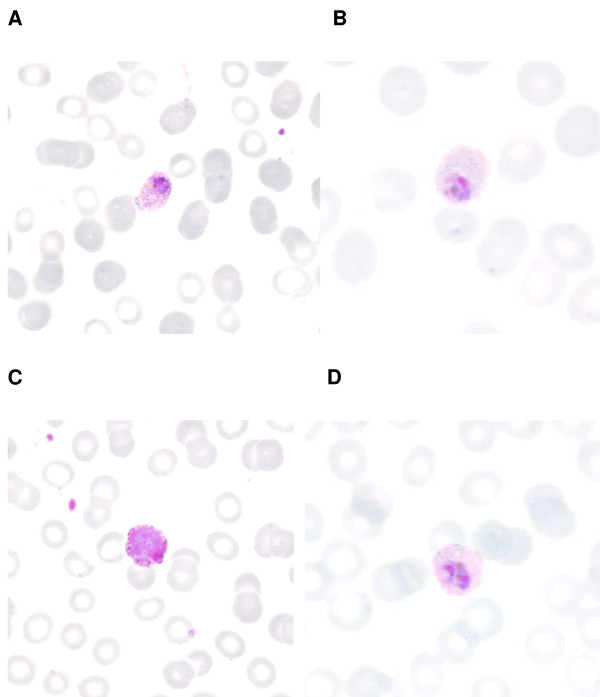
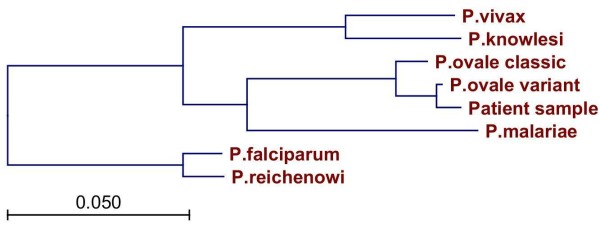
Recent data have found that Plasmodium ovale can be separated in two distinct species: classic and variant P. ovale based on multilocus typing of different genes. This study presents a P. ovale isolate from a patient infected in Ghana together with an analysis of the small subunit RNA, cytochrome b, cytochrome c oxidase I, cysteine protease and lactate dehydrogenase genes, which show that the sample is a variant P. ovale and identical or highly similar to variant P. ovale isolated from humans in South-East Asia and Africa, and from a chimpanzee in Cameroon. The split between the variant and classic P. ovale is estimated to have occurred 1.7 million years ago.
经典和变异卵形疟原虫,这是基于不同基因的多位点分型。本研究报告了来自加纳感染患者的卵形疟原虫分离株,并对小亚单位 RNA、细胞色素 b、细胞色素 c 氧化酶 I、半胱氨酸蛋白酶和乳酸脱氢酶基因进行了分析,结果表明该样本是变异卵形疟原虫,与从东南亚和非洲的人类以及喀麦隆的黑猩猩中分离的变异卵形疟原虫相同或高度相似。变异和经典卵形疟原虫的分化估计发生在 170 万年前。