Department of Psychology, Uppsala University, Box 1225, 75142 Uppsala, Sweden.
Exp Brain Res. 2011 Mar;209(2):225-33. doi: 10.1007/s00221-011-2538-x. Epub 2011 Jan 26.
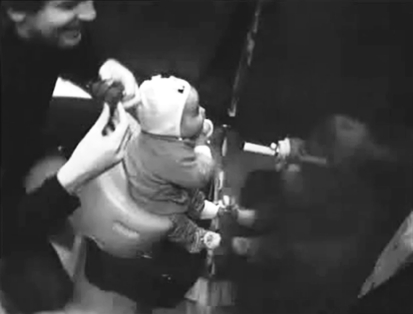
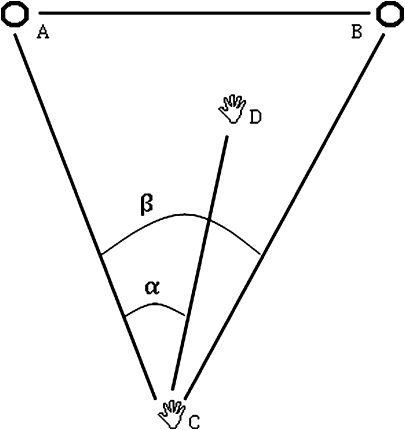
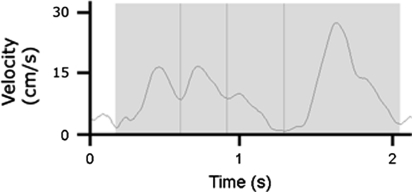
Reaching strategies and kinematics for a group of very preterm infants were investigated and compared with a group of full-term infants when reaching for a moving object. Eight-month-old (corrected-age) infants were presented with small toys moving on a semicircular path in the vertical plane. The trajectories of the target and the hands of the infants were measured using a 3D motion analysis system. No differences were found in how often the infants encountered the target. The very preterm group, however, used bimanual strategies more often and had more curved reaching paths than the full-term group. These results suggest that very preterm infants are equally successful as healthy full-term infants in catching a moving object but their reaching strategies are less efficient compared with full-term infants at 8 months (corrected age).
研究了一组极早产儿和一组足月婴儿在伸手够取移动目标时的伸手策略和运动学,并进行了比较。8 个月大(矫正月龄)的婴儿被呈现一个在垂直平面上沿半圆形路径移动的小玩具。使用 3D 运动分析系统测量目标和婴儿手的轨迹。两组婴儿遇到目标的频率没有差异。然而,极早产儿组比足月组更常使用双手策略,并且伸手路径更弯曲。这些结果表明,极早产儿在追赶移动目标方面与健康的足月婴儿同样成功,但与足月婴儿相比,他们的伸手策略在 8 个月(矫正月龄)时效率较低。