Hurt Richard D, Ebbert Jon O, Croghan Ivana T, Schroeder Darrell R, Sood Amit, Hays J Taylor
Nicotine Dependence Center, Mayo Clinic, 200 1st Street SW, Rochester, MN 55905, USA.
J Negat Results Biomed. 2011 Jan 28;10:1. doi: 10.1186/1477-5751-10-1.
Methylphenidate blocks the re-uptake of dopamine by binding to the dopamine transporter in the presynaptic cell membrane and increases extracellular dopamine levels. Similarities in neuropsychologic effects between nicotine and methylphenidate make it an intriguing potential therapeutic option. Previous research of methylphenidate in smokers has suggested a possible beneficial effect for the relief of nicotine withdrawal symptoms, but showed no efficacy in helping smokers with attention deficit hyperactivity disorder (ADHD) to stop smoking.
To investigate potential efficacy for relieving nicotine withdrawal symptoms and promoting smoking abstinence, we conducted a randomized, double-blind, placebo-controlled, phase II study of once-a-day osmotic-release oral system methylphenidate (OROS-MPH, Concerta®) at a target dose of 54-mg/day for 8 weeks compared with placebo in 80 adult cigarette smokers.
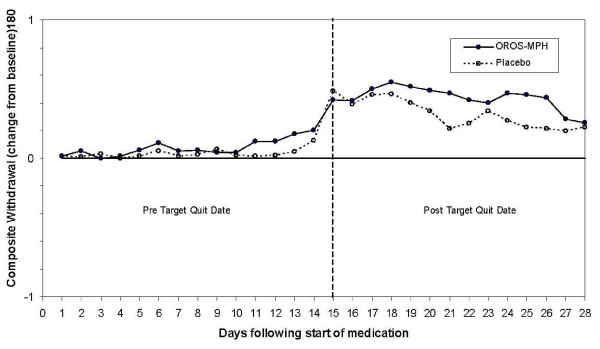
Of the 80 randomized subjects and median smoking rate was 20 cigarettes per day. At the end of the medication phase, the biochemically confirmed 7-day point prevalence smoking abstinence was 10% (4/40) for the placebo group and 2.5% (1/40) for the OROS-MPH group. Nicotine withdrawal was not found to differ significantly between treatment groups during the first 14 days following the start of medication prior to the target quit date (p = 0.464) or during the first 14 days following the target quit date (p = 0.786).
We observed no evidence of efficacy of OROS-MPH to aid smokers to stop smoking. Although there are biologically plausible hypotheses that support the use of OROS-MPH for treating tobacco dependence, we found no evidence to support such hypotheses. In addition to no increase in smoking abstinence, we saw no effect of OROS-MPH for tobacco withdrawal symptom relief and no change in smoking rates was observed in the OROS-MPH group compared to the placebo group.
哌甲酯通过与突触前细胞膜上的多巴胺转运体结合来阻止多巴胺的再摄取,并提高细胞外多巴胺水平。尼古丁和哌甲酯在神经心理效应上的相似性使其成为一个有趣的潜在治疗选择。先前对吸烟者使用哌甲酯的研究表明,它可能对缓解尼古丁戒断症状有有益作用,但在帮助患有注意力缺陷多动障碍(ADHD)的吸烟者戒烟方面没有显示出疗效。
为了研究缓解尼古丁戒断症状和促进戒烟的潜在疗效,我们进行了一项随机、双盲、安慰剂对照的II期研究,将80名成年吸烟者分为两组,一组每天服用一次目标剂量为54毫克/天的渗透释放口服系统哌甲酯(OROS-MPH,商品名:康奈达),共8周,另一组服用安慰剂。
80名随机分组的受试者,平均吸烟率为每天20支香烟。在用药阶段结束时,经生化确认的7天点患病率戒烟率,安慰剂组为10%(4/40),OROS-MPH组为2.5%(1/40)。在目标戒烟日期之前开始用药后的前14天内(p = 0.464)或目标戒烟日期之后的前14天内(p = 0.786),各治疗组之间的尼古丁戒断情况没有显著差异。
我们没有观察到OROS-MPH有助于吸烟者戒烟的疗效证据。尽管有生物学上合理的假设支持使用OROS-MPH治疗烟草依赖,但我们没有发现支持这些假设的证据。除了戒烟率没有增加外,我们还发现OROS-MPH对缓解烟草戒断症状没有效果,与安慰剂组相比,OROS-MPH组的吸烟率没有变化。