Department of Toxicogenetics, Leiden University Medical Center, 2333 RC Leiden, Netherlands.
J Cell Biol. 2011 Feb 7;192(3):401-15. doi: 10.1083/jcb.201006011. Epub 2011 Jan 31.
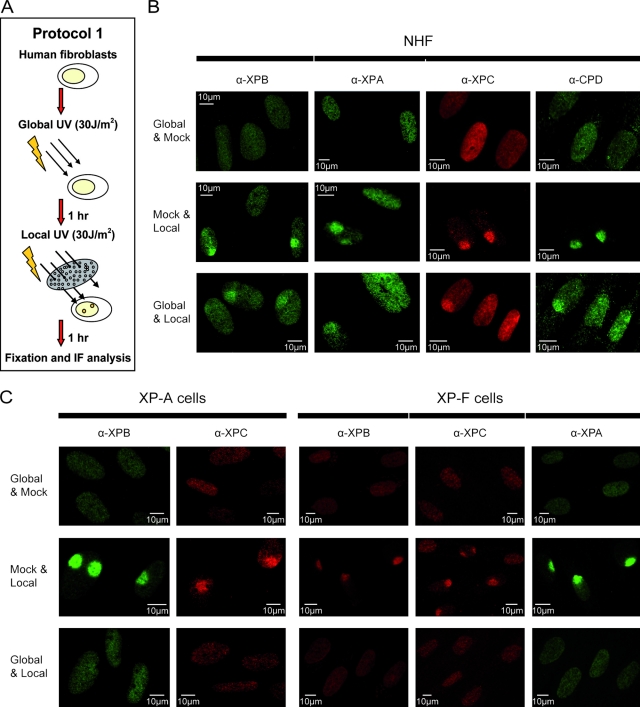
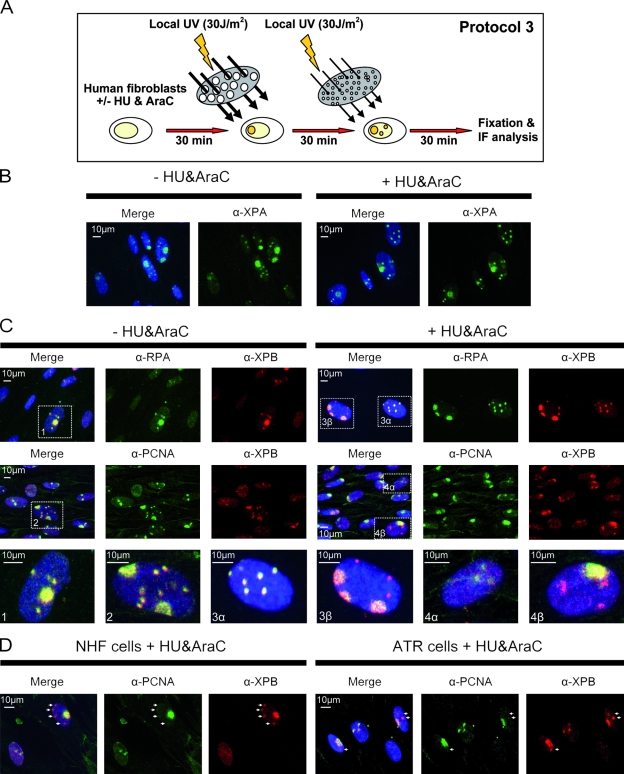
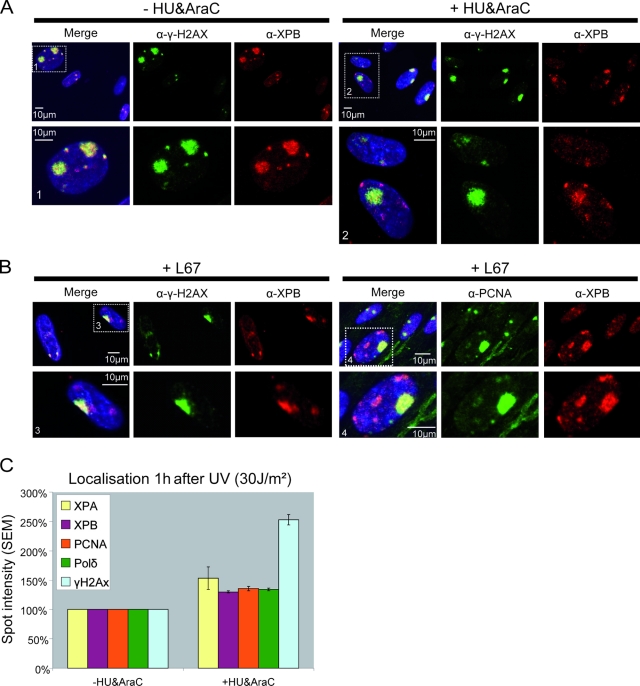
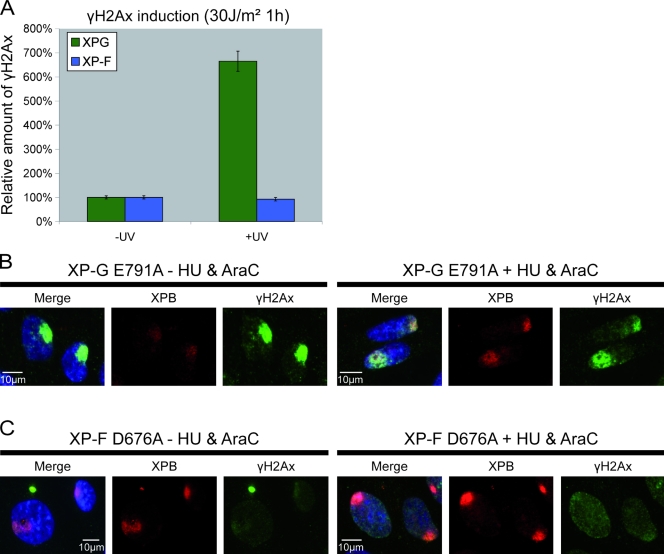
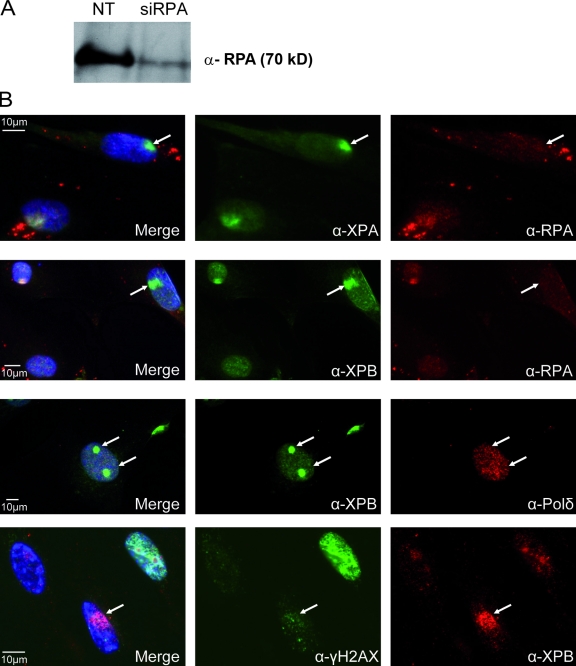
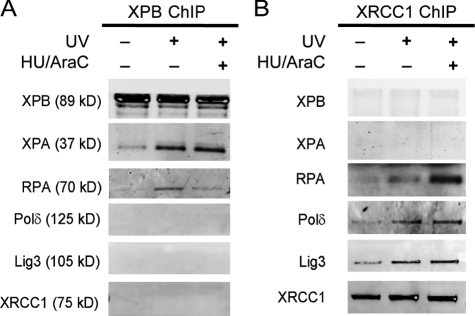
Single-stranded DNA gaps that might arise by futile repair processes can lead to mutagenic events and challenge genome integrity. Nucleotide excision repair (NER) is an evolutionarily conserved repair mechanism, essential for removal of helix-distorting DNA lesions. In the currently prevailing model, NER operates through coordinated assembly of repair factors into pre- and post-incision complexes; however, its regulation in vivo is poorly understood. Notably, the transition from dual incision to repair synthesis should be rigidly synchronized as it might lead to accumulation of unprocessed repair intermediates. We monitored NER regulatory events in vivo using sequential UV irradiations. Under conditions that allow incision yet prevent completion of repair synthesis or ligation, preincision factors can reassociate with new damage sites. In contrast, replication protein A remains at the incomplete NER sites and regulates a feedback loop from completion of DNA repair synthesis to subsequent damage recognition, independently of ATR signaling. Our data reveal an important function for replication protein A in averting further generation of DNA strand breaks that could lead to mutagenic and recombinogenic events.
单链 DNA 缺口可能是无效修复过程产生的,会导致诱变事件并挑战基因组完整性。核苷酸切除修复 (NER) 是一种进化上保守的修复机制,对去除扭曲螺旋的 DNA 损伤至关重要。在目前流行的模型中,NER 通过修复因子协调组装到预切口和后切口复合物中进行操作;然而,其体内调控机制仍知之甚少。值得注意的是,从双切口到修复合成的转变应该严格同步,因为这可能导致未处理的修复中间体积累。我们使用连续的 UV 照射在体内监测 NER 调节事件。在允许切口但防止修复合成或连接完成的条件下,预切口因子可以与新的损伤部位重新结合。相比之下,复制蛋白 A 仍留在未完成的 NER 部位,并调节从 DNA 修复合成完成到随后的损伤识别的反馈回路,独立于 ATR 信号传导。我们的数据揭示了复制蛋白 A 在避免进一步产生可能导致突变和重组事件的 DNA 链断裂方面的重要功能。