Institute of Biomechanics and Department of Biomedical Engineering, School of Bioscience and Bioengineering, South China University of Technology, Guangzhou, China.
PLoS One. 2011 Jan 24;6(1):e16441. doi: 10.1371/journal.pone.0016441.
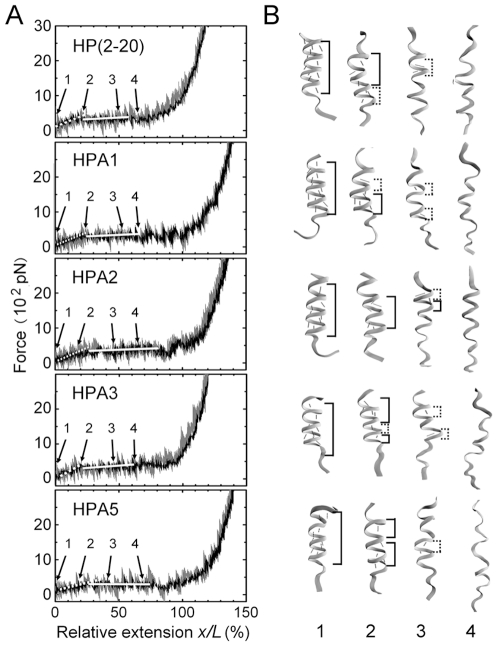
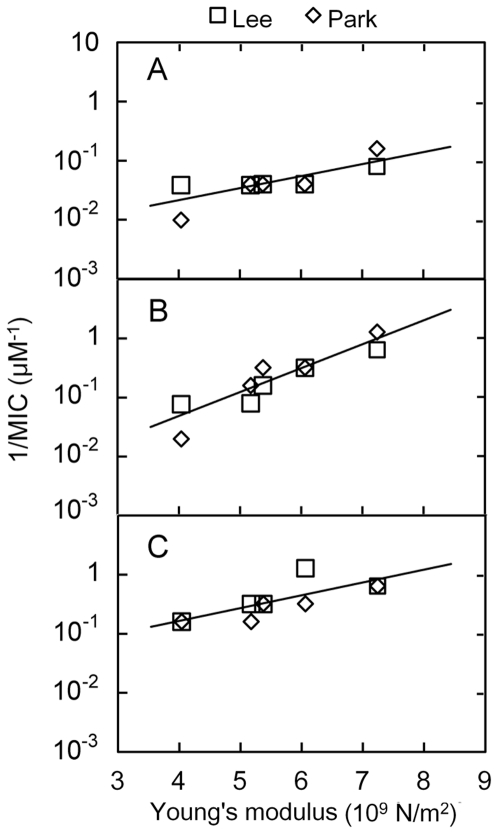
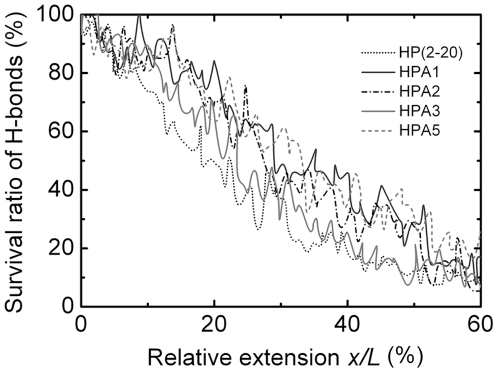
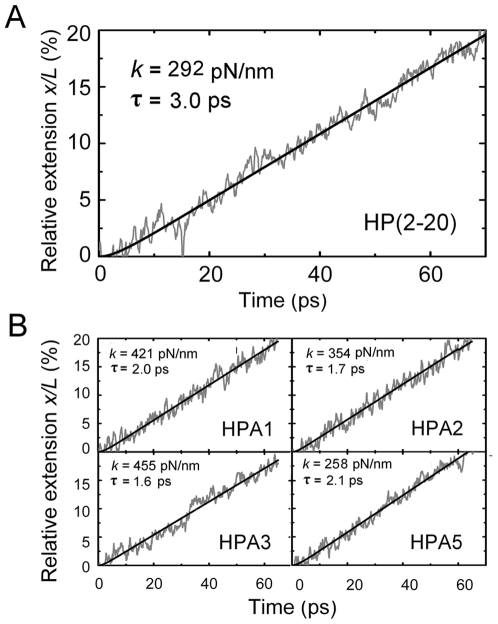
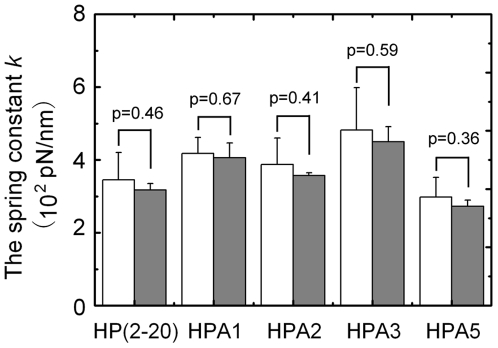
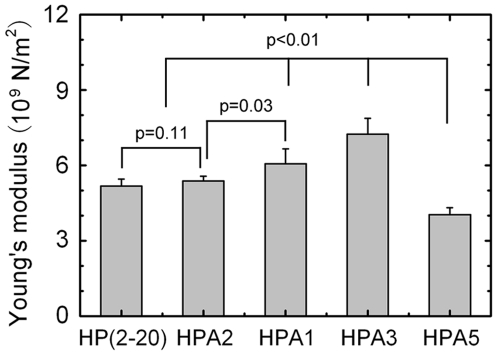
Linear cationic α-helical antimicrobial peptides are referred to as one of the most likely substitutes for common antibiotics, due to their relatively simple structures (≤ 40 residues) and various antimicrobial activities against a wide range of pathogens. Of those, HP(2-20) was isolated from Helicobacter pylori ribosomal protein. To reveal a mechanical determinant that may mediate the antimicrobial activities, we examined the mechanical properties and structural stabilities of HP(2-20) and its four analogues of same chain length by steered molecular dynamics simulation. The results indicated the following: the resistance of H-bonds to the tensile extension mediated the early extensive stage; with the loss of H-bonds, the tensile force was dispensed to prompt the conformational phase transition; and Young's moduli (N/m(2)) of the peptides were about 4 ∼ 8 × 10(9). These mechanical features were sensitive to the variation of the residue compositions. Furthermore, we found that the antimicrobial activity is rigidity-enhanced, that is, a harder peptide has stronger antimicrobial activity. It suggests that the molecular spring constant may be used to seek a new structure-activity relationship for different α-helical peptide groups. This exciting result was reasonably explained by a possible mechanical mechanism that regulates both the membrane pore formation and the peptide insertion.
线性阳离子α-螺旋抗菌肽被认为是最有可能替代普通抗生素的物质之一,这是由于它们具有相对简单的结构(≤40 个残基)和针对广泛病原体的各种抗菌活性。其中,HP(2-20)是从幽门螺杆菌核糖体蛋白中分离出来的。为了揭示可能介导抗菌活性的力学决定因素,我们通过定向分子动力学模拟研究了 HP(2-20)及其四个相同链长的类似物的力学性能和结构稳定性。结果表明:氢键对拉伸延伸的抵抗力介导了早期的广泛阶段;随着氢键的丧失,拉伸力被分配以促使构象相转变;肽的杨氏模量(N/m(2))约为 4∼8×10(9)。这些力学特性对残基组成的变化很敏感。此外,我们发现抗菌活性是刚性增强的,即刚性更强的肽具有更强的抗菌活性。这表明分子弹簧常数可用于寻找不同α-螺旋肽基团的新结构-活性关系。这一令人兴奋的结果可以通过一种可能的力学机制得到合理的解释,这种机制调节了膜孔的形成和肽的插入。