Department of Pharmacology, School of Medical Sciences, University of New South Wales, Sydney, New South Wales, Australia.
PLoS One. 2011 Jan 21;6(1):e16423. doi: 10.1371/journal.pone.0016423.
The vascular endothelium plays a critical role in the control of blood flow. Altered endothelium-mediated vasodilator and vasoconstrictor mechanisms underlie key aspects of cardiovascular disease, including those in obesity. Whilst the mechanism of nitric oxide (NO)-mediated vasodilation has been extensively studied in obesity, little is known about the impact of obesity on vasodilation to the endothelium-derived hyperpolarization (EDH) mechanism; which predominates in smaller resistance vessels and is characterized in this study.
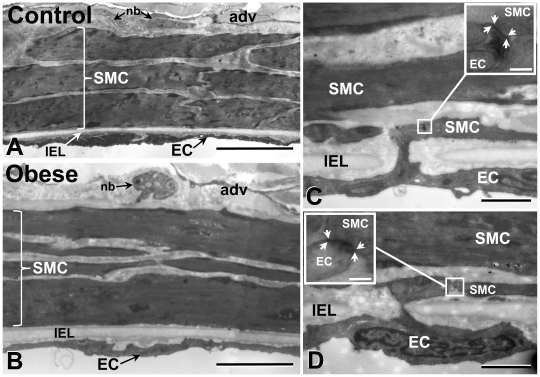
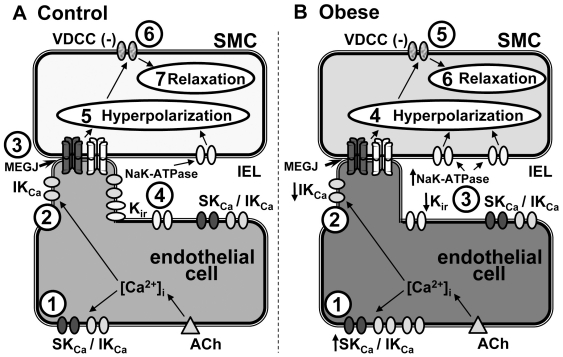
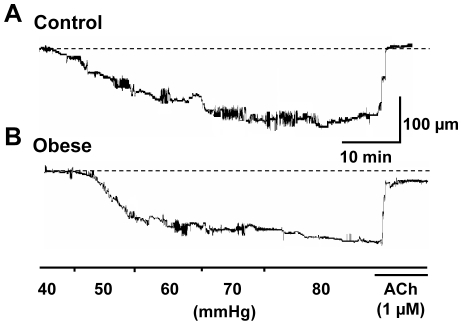
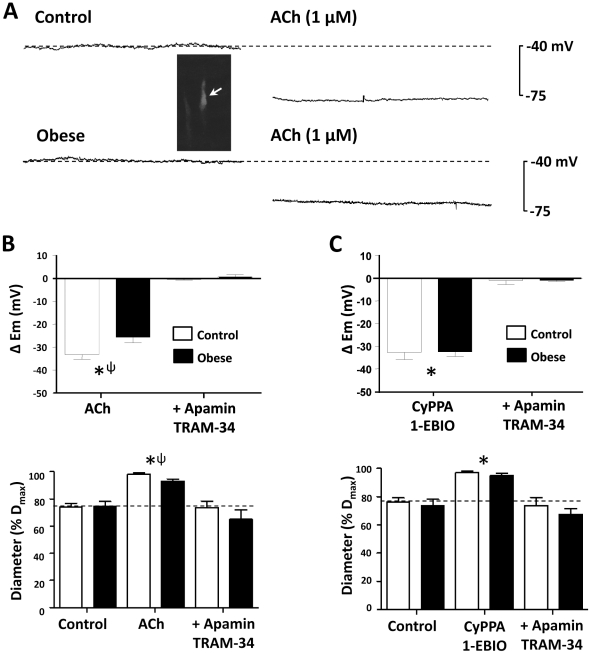
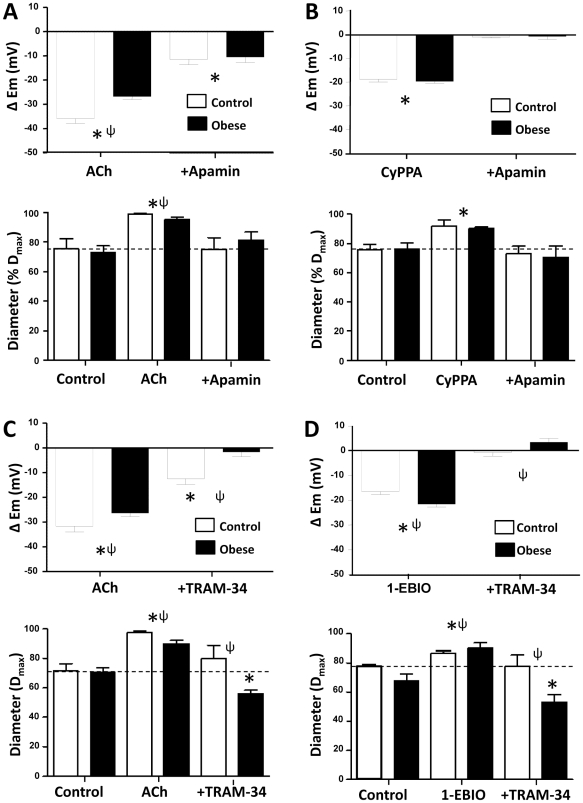
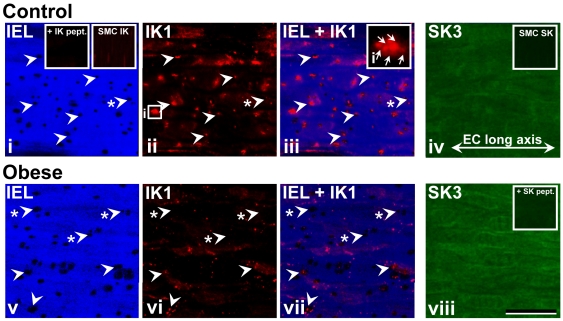
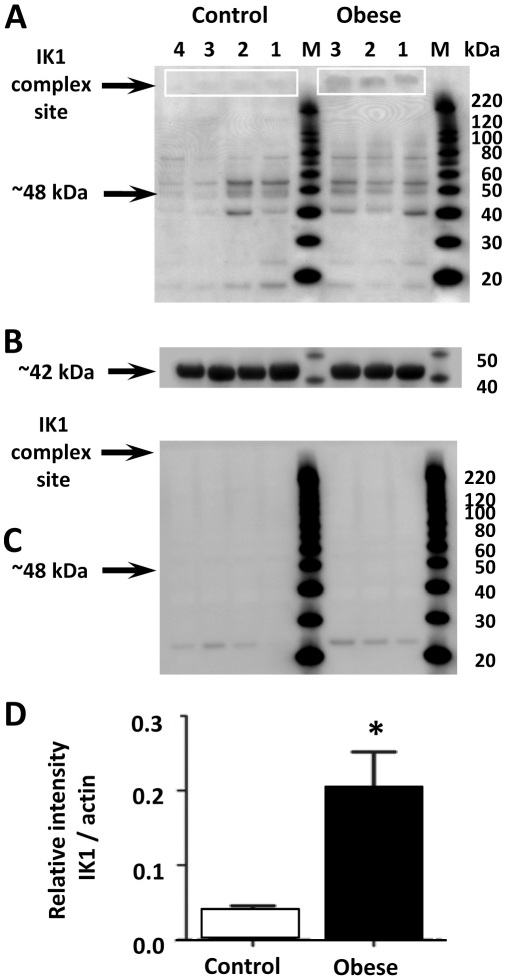
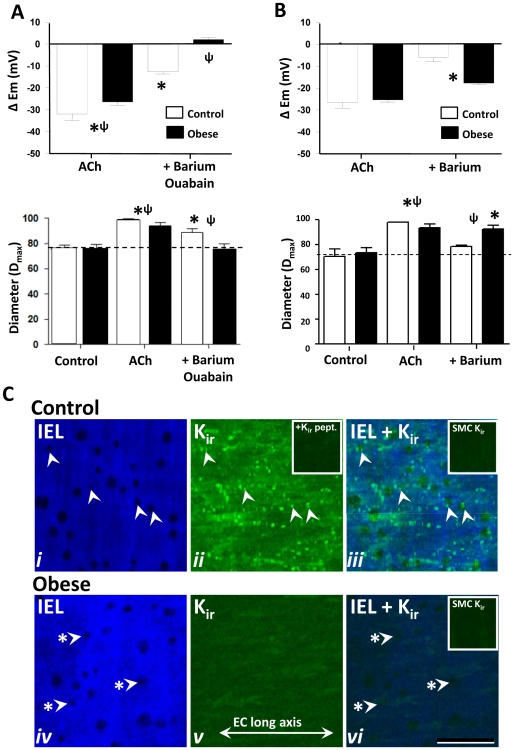
METHODOLOGY/PRINCIPAL FINDINGS: Membrane potential, vessel diameter and luminal pressure were recorded in 4(th) order mesenteric arteries with pressure-induced myogenic tone, in control and diet-induced obese rats. Obesity, reflecting that of human dietary etiology, was induced with a cafeteria-style diet (∼30 kJ, fat) over 16-20 weeks. Age and sexed matched controls received standard chow (∼12 kJ, fat). Channel protein distribution, expression and vessel morphology were determined using immunohistochemistry, Western blotting and ultrastructural techniques. In control and obese rat vessels, acetylcholine-mediated EDH was abolished by small and intermediate conductance calcium-activated potassium channel (SK(Ca)/IK(Ca)) inhibition; with such activity being impaired in obesity. SK(Ca)-IK(Ca) activation with cyclohexyl-[2-(3,5-dimethyl-pyrazol-1-yl)-6-methyl-pyrimidin-4-yl]-amine (CyPPA) and 1-ethyl-2-benzimidazolinone (1-EBIO), respectively, hyperpolarized and relaxed vessels from control and obese rats. IK(Ca)-mediated EDH contribution was increased in obesity, and associated with altered IK(Ca) distribution and elevated expression. In contrast, the SK(Ca)-dependent-EDH component was reduced in obesity. Inward-rectifying potassium channel (K(ir)) and Na(+)/K(+)-ATPase inhibition by barium/ouabain, respectively, attenuated and abolished EDH in arteries from control and obese rats, respectively; reflecting differential K(ir) expression and distribution. Although changes in medial properties occurred, obesity had no effect on myoendothelial gap junction density.
CONCLUSION/SIGNIFICANCE: In obese rats, vasodilation to EDH is impaired due to changes in the underlying potassium channel signaling mechanisms. Whilst myoendothelial gap junction density is unchanged in arteries of obese compared to control, increased IK(Ca) and Na(+)/K(+)-ATPase, and decreased K(ir) underlie changes in the EDH mechanism.
血管内皮在控制血流方面起着至关重要的作用。内皮介导的血管舒张和收缩机制的改变是心血管疾病的关键方面,包括肥胖症。虽然一氧化氮(NO)介导的血管舒张机制在肥胖症中得到了广泛研究,但对于肥胖症对内皮衍生的超极化(EDH)机制引起的血管舒张的影响知之甚少;EDH 机制在较小的阻力血管中占主导地位,本研究对此进行了描述。
方法/主要发现:在具有压力诱导的肌源性张力的第 4 级肠系膜动脉中,记录了对照和饮食诱导肥胖大鼠的膜电位、血管直径和管腔压力。肥胖反映了人类饮食病因,通过 cafeteria 式饮食(约 30 kJ,脂肪)诱导 16-20 周。年龄和性别匹配的对照动物接受标准饲料(约 12 kJ,脂肪)。使用免疫组织化学、Western blot 和超微结构技术确定通道蛋白分布、表达和血管形态。在对照和肥胖大鼠的血管中,乙酰胆碱介导的 EDH 被小和中等电导钙激活钾通道(SK(Ca)/IK(Ca))抑制所消除;而这种活性在肥胖症中受损。分别用环己基-[2-(3,5-二甲基-吡唑-1-基)-6-甲基-嘧啶-4-基]-胺(CyPPA)和 1-乙基-2-苯并咪唑啉酮(1-EBIO)激活 SK(Ca)-IK(Ca),使对照和肥胖大鼠的血管超极化和松弛。肥胖症中 IK(Ca)介导的 EDH 贡献增加,与 IK(Ca)分布改变和表达升高有关。相比之下,肥胖症中 SK(Ca)依赖性 EDH 成分减少。内向整流钾通道(K(ir))和钠/钾-ATP 酶的抑制分别由钡/哇巴因引起,分别减弱和消除了对照和肥胖大鼠的 EDH;反映了不同的 K(ir)表达和分布。尽管中膜特性发生了变化,但肥胖对血管的肌内皮缝隙连接密度没有影响。
结论/意义:在肥胖大鼠中,由于潜在钾通道信号机制的改变,导致 EDH 血管舒张受损。虽然与对照相比,肥胖大鼠动脉中的肌内皮缝隙连接密度没有变化,但 IK(Ca)和钠/钾-ATP 酶的增加以及 K(ir)的减少是 EDH 机制改变的基础。