Department of Microbiology, La Trobe University, Bundoora, Australia.
PLoS One. 2011 Jan 19;6(1):e14547. doi: 10.1371/journal.pone.0014547.
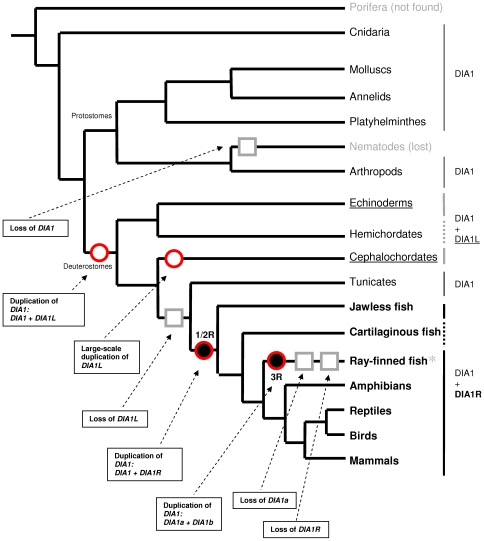
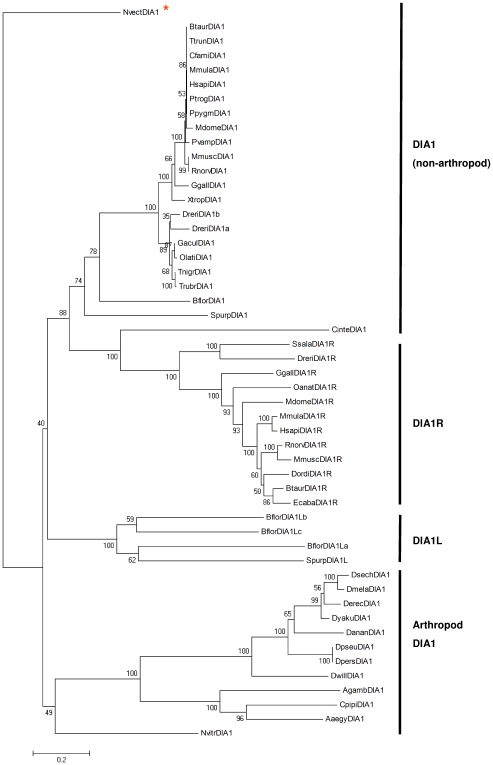
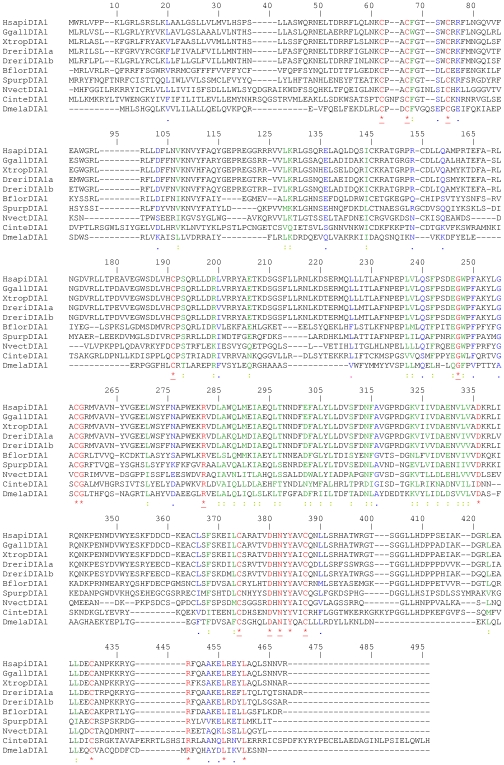
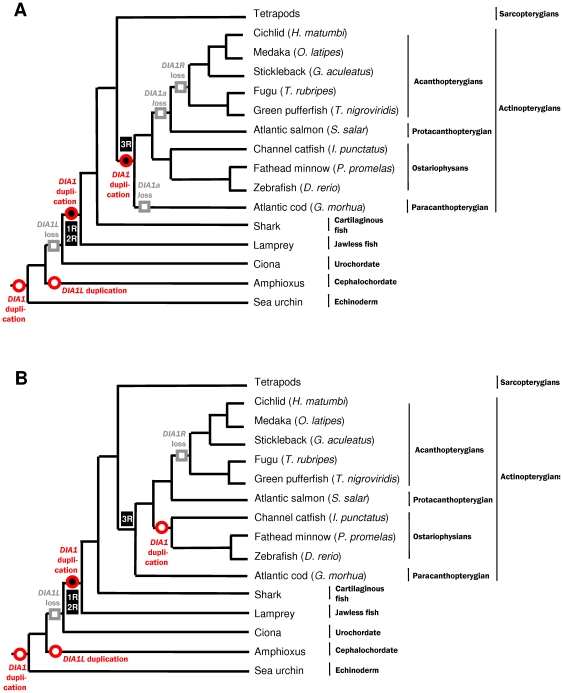
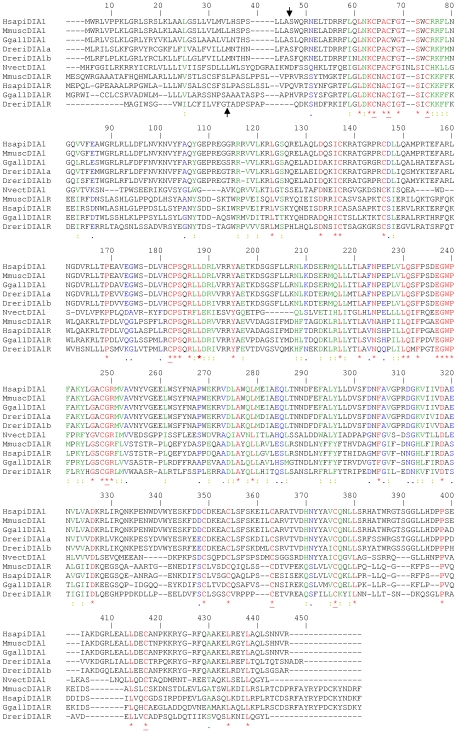
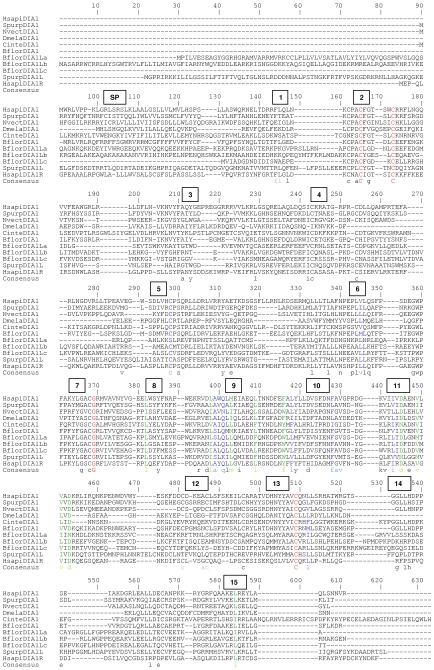
Autism spectrum disorders (ASDs) are a group of commonly occurring, highly-heritable developmental disabilities. Human genes c3orf58 or Deleted In Autism-1 (DIA1) and cXorf36 or Deleted in Autism-1 Related (DIA1R) are implicated in ASD and mental retardation. Both gene products encode signal peptides for targeting to the secretory pathway. As evolutionary medicine has emerged as a key tool for understanding increasing numbers of human diseases, we have used an evolutionary approach to study DIA1 and DIA1R. We found DIA1 conserved from cnidarians to humans, indicating DIA1 evolution coincided with the development of the first primitive synapses. Nematodes lack a DIA1 homologue, indicating Caenorhabditis elegans is not suitable for studying all aspects of ASD etiology, while zebrafish encode two DIA1 paralogues. By contrast to DIA1, DIA1R was found exclusively in vertebrates, with an origin coinciding with the whole-genome duplication events occurring early in the vertebrate lineage, and the evolution of the more complex vertebrate nervous system. Strikingly, DIA1R was present in schooling fish but absent in fish that have adopted a more solitary lifestyle. An additional DIA1-related gene we named DIA1-Like (DIA1L), lacks a signal peptide and is restricted to the genomes of the echinoderm Strongylocentrotus purpuratus and cephalochordate Branchiostoma floridae. Evidence for remarkable DIA1L gene expansion was found in B. floridae. Amino acid alignments of DIA1 family gene products revealed a potential Golgi-retention motif and a number of conserved motifs with unknown function. Furthermore, a glycine and three cysteine residues were absolutely conserved in all DIA1-family proteins, indicating a critical role in protein structure and/or function. We have therefore identified a new metazoan protein family, the DIA1-family, and understanding the biological roles of DIA1-family members will have implications for our understanding of autism and mental retardation.
自闭症谱系障碍 (ASD) 是一组常见的、高度遗传性的发育障碍。人类基因 c3orf58 或自闭症缺失 1 (DIA1) 和 cXorf36 或自闭症缺失 1 相关 (DIA1R) 与 ASD 和智力迟钝有关。这两个基因产物都编码用于靶向分泌途径的信号肽。随着进化医学作为理解越来越多人类疾病的关键工具的出现,我们已经使用进化方法研究了 DIA1 和 DIA1R。我们发现 DIA1 从刺胞动物到人类都是保守的,这表明 DIA1 的进化与第一个原始突触的发展同时发生。线虫缺乏 DIA1 同源物,这表明秀丽隐杆线虫不适合研究 ASD 病因的所有方面,而斑马鱼则编码两个 DIA1 旁系同源物。与 DIA1 相反,DIA1R 仅在脊椎动物中发现,其起源与脊椎动物谱系早期发生的全基因组复制事件以及更复杂的脊椎动物神经系统的进化同时发生。引人注目的是,DIA1R 存在于群居鱼类中,但不存在于采用更独居生活方式的鱼类中。我们命名为 DIA1-Like (DIA1L) 的另一个与 DIA1 相关的基因,缺乏信号肽,仅存在于棘皮动物 Strongylocentrotus purpuratus 和半索动物 Branchiostoma floridae 的基因组中。在 B. floridae 中发现了显著的 DIA1L 基因扩张的证据。DIA1 家族基因产物的氨基酸比对揭示了一个潜在的高尔基体保留基序和一些具有未知功能的保守基序。此外,所有 DIA1 家族蛋白中的甘氨酸和三个半胱氨酸残基绝对保守,表明在蛋白质结构和/或功能中具有关键作用。因此,我们鉴定了一个新的后生动物蛋白家族,即 DIA1 家族,并且理解 DIA1 家族成员的生物学作用将对我们理解自闭症和智力迟钝具有重要意义。