National Institute of Oceanography, Israel Oceanographic and Limnological Research, Tel-Shikmona, Haifa 31080, Israel.
BMC Genet. 2011 Feb 1;12:22. doi: 10.1186/1471-2156-12-22.
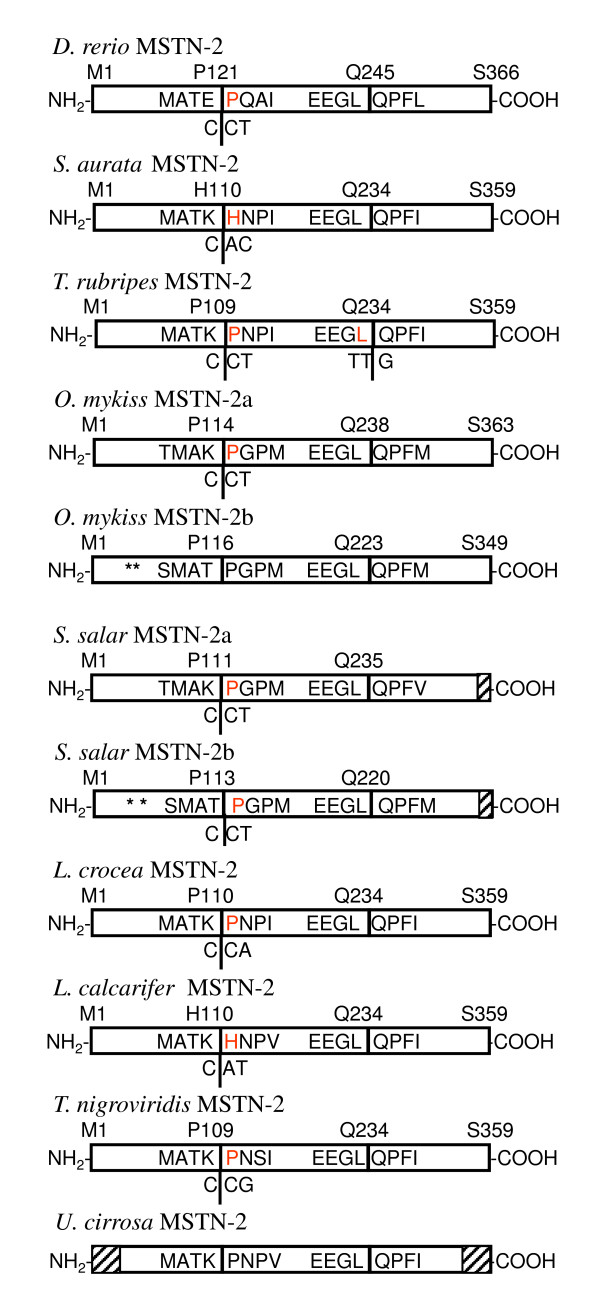
Myostatin (MSTN) is a member of the transforming growth factor-ß superfamily that functions as a negative regulator of skeletal muscle development and growth in mammals. Fish express at least two genes for MSTN: MSTN-1 and MSTN-2. To date, MSTN-2 promoters have been cloned only from salmonids and zebrafish.
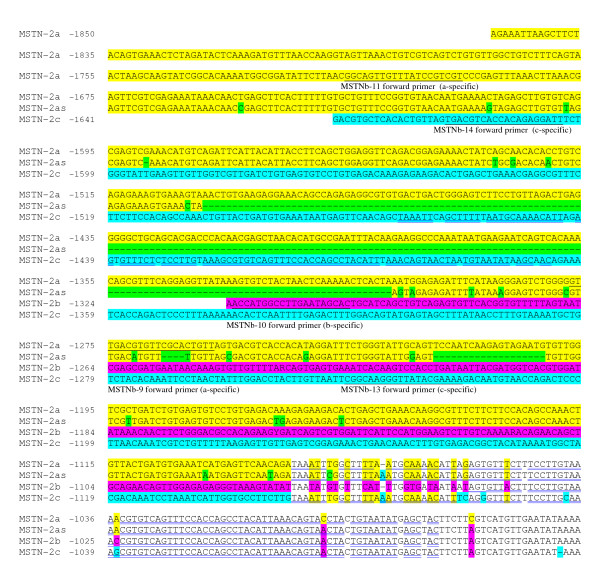
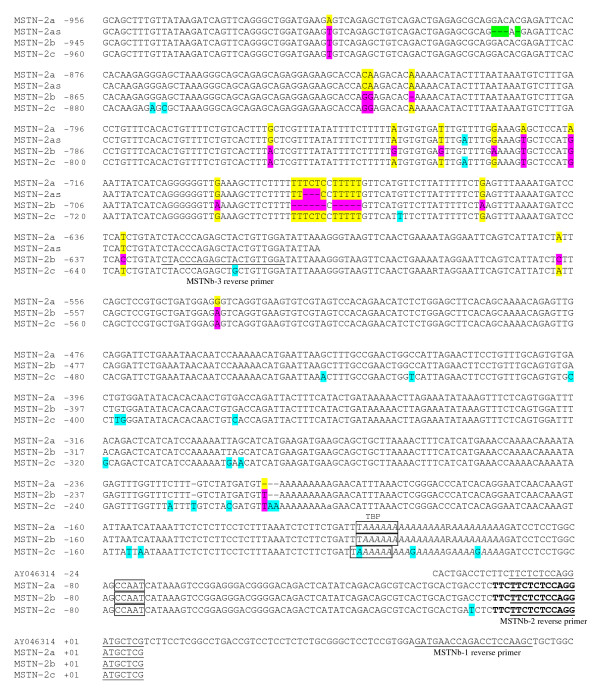
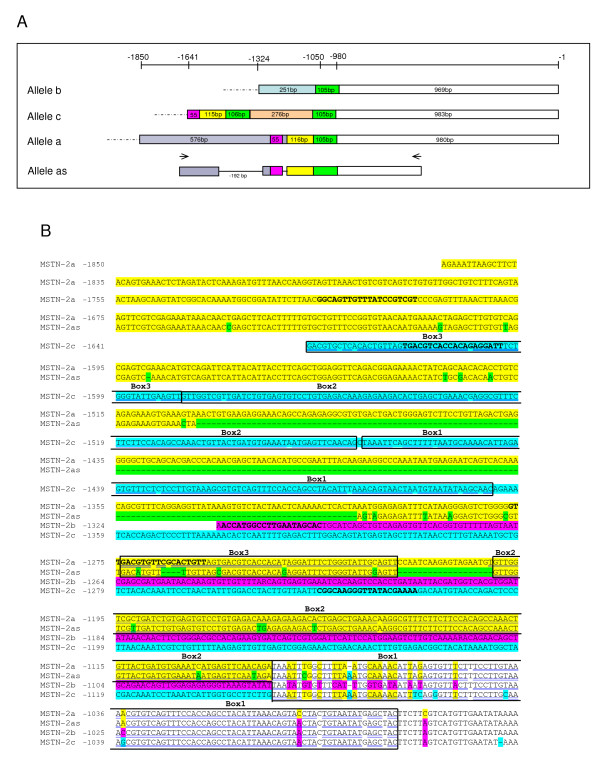
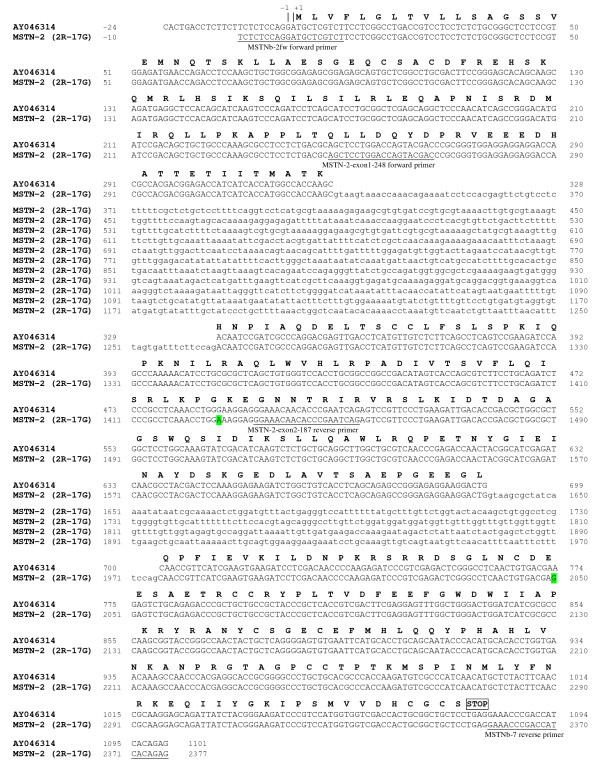
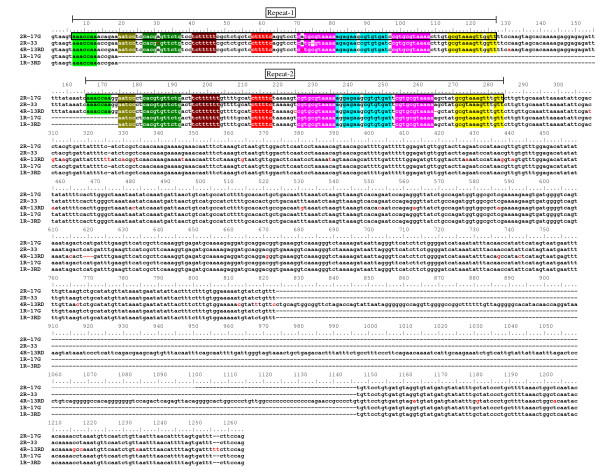
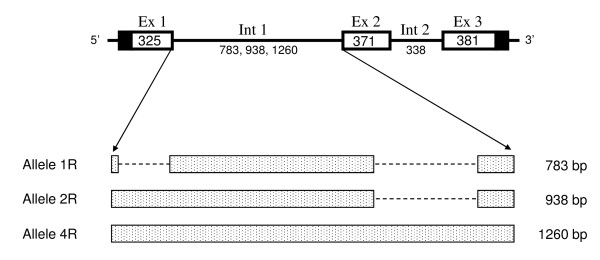
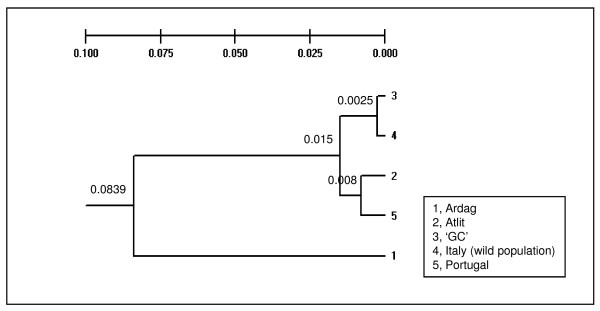
Here we described the cloning and sequence analysis of MSTN-2 gene and its 5' flanking region in the marine fish Sparus aurata (saMSTN-2). We demonstrate the existence of three alleles of the promoter and three alleles of the first intron. Sequence comparison of the promoter region in the three alleles revealed that although the sequences of the first 1050 bp upstream of the translation start site are almost identical in the three alleles, a substantial sequence divergence is seen further upstream. Careful sequence analysis of the region upstream of the first 1050 bp in the three alleles identified several elements that appear to be repeated in some or all sequences, at different positions. This suggests that the promoter region of saMSTN-2 has been subjected to various chromosomal rearrangements during the course of evolution, reflecting either insertion or deletion events. Screening of several genomic DNA collections indicated differences in allele frequency, with allele 'b' being the most abundant, followed by allele 'c', whereas allele 'a' is relatively rare. Sequence analysis of saMSTN-2 gene also revealed polymorphism in the first intron, identifying three alleles. The length difference in alleles '1R' and '2R' of the first intron is due to the presence of one or two copies of a repeated block of approximately 150 bp, located at the 5' end of the first intron. The third allele, '4R', has an additional insertion of 323 bp located 116 bp upstream of the 3' end of the first intron. Analysis of several DNA collections showed that the '2R' allele is the most common, followed by the '4R' allele, whereas the '1R' allele is relatively rare. Progeny analysis of a full-sib family showed a Mendelian mode of inheritance of the two genetic loci. No clear association was found between the two genetic markers and growth rate.
These results show for the first time a substantial degree of polymorphism in both the promoter and first intron of MSTN-2 gene in a perciform fish species which points to chromosomal rearrangements that took place during evolution.
肌肉生长抑制素(MSTN)是转化生长因子-β超家族的成员,在哺乳动物中作为骨骼肌肉发育和生长的负调控因子发挥作用。鱼类表达至少两种 MSTN 基因:MSTN-1 和 MSTN-2。迄今为止,仅从鲑鱼和斑马鱼中克隆了 MSTN-2 启动子。
本研究描述了海洋鱼类真鲷(saMSTN-2)MSTN-2 基因及其 5'侧翼区的克隆和序列分析。我们证明了启动子的三个等位基因和第一内含子的三个等位基因的存在。对三个等位基因启动子区域的序列比较表明,尽管翻译起始位点上游的前 1050bp 的序列在三个等位基因中几乎相同,但在更远的上游存在大量的序列差异。对三个等位基因中前 1050bp 上游区域的仔细序列分析确定了几个似乎在某些或所有序列中重复的元件,位于不同位置。这表明 saMSTN-2 的启动子区域在进化过程中经历了各种染色体重排,反映了插入或缺失事件。对几个基因组 DNA 集合的筛选表明等位基因频率存在差异,等位基因“b”最为丰富,其次是等位基因“c”,而等位基因“a”相对较少。saMSTN-2 基因的序列分析还揭示了第一内含子的多态性,确定了三个等位基因。第一内含子等位基因“1R”和“2R”的长度差异是由于大约 150bp 的重复块的存在,该重复块位于第一内含子的 5'端。第三个等位基因“4R”在第一内含子 3'端上游 116bp 处有一个额外的 323bp 插入。对几个 DNA 集合的分析表明,“2R”等位基因最为常见,其次是“4R”等位基因,而“1R”等位基因相对较少。一个全同胞家系的后代分析显示,这两个遗传位点的遗传方式呈孟德尔遗传。在这两个遗传标记和生长速度之间没有发现明显的关联。
这些结果首次表明,在一种鲈形目鱼类中,MSTN-2 基因的启动子和第一内含子都存在高度多态性,这表明在进化过程中发生了染色体重排。