Centre d'Investigation Clinique Epidémiologie Clinique Antilles Guyane CIC-EC CIE 802, Cayenne General Hospital, Cayenne, French Guiana.
Malar J. 2011 Feb 4;10:26. doi: 10.1186/1475-2875-10-26.
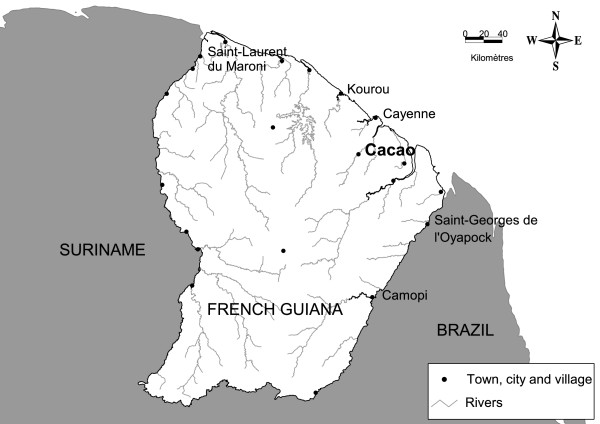
The epidemiological profiles of vector-borne diseases, such as malaria, are strongly associated with environmental conditions. An understanding of the effect of the climate on the occurrence of malaria may provide indirect insight into the anopheles mosquito vectors endemic to a particular region. The association between meteorological and hydrographical factors and the occurrence of malaria was studied in a village in French Guiana during an epidemic caused essentially by Plasmodium vivax.
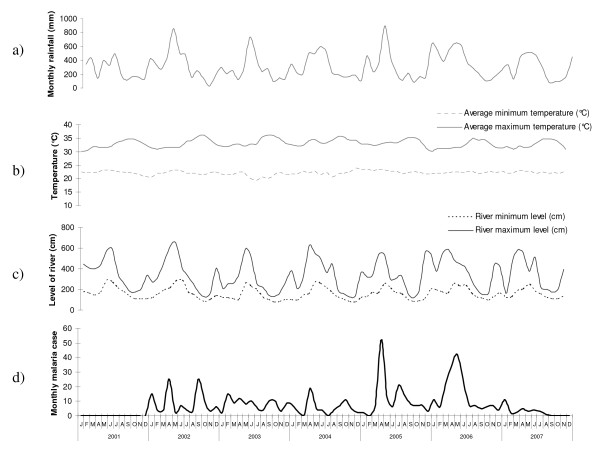
A cohort of confirmed cases of P. vivax malaria occurring between 2002 and 2007 was studied to search for an association between the number of new infection episodes occurring each month, mean, maximum and minimum monthly temperatures, cumulative rainfall for the month and the mean monthly height of the river bordering the village, with the aid of time series. Cross-correlation analysis revealed that these meteorological factors had large effects on the number of episodes, over a study period of 12 months.
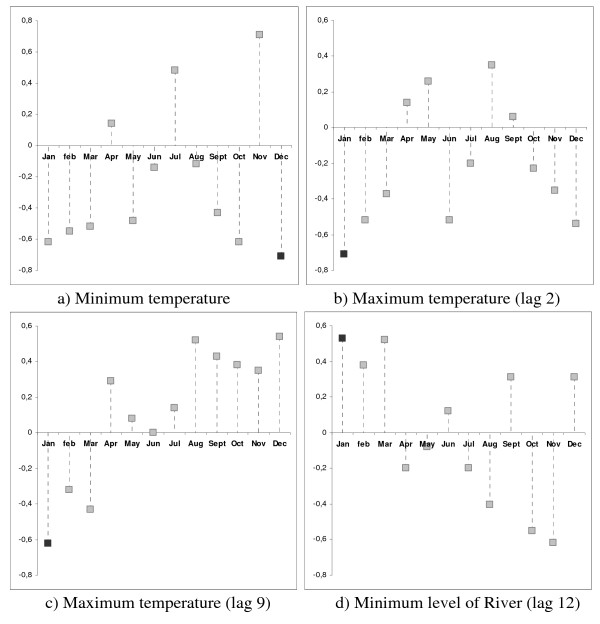
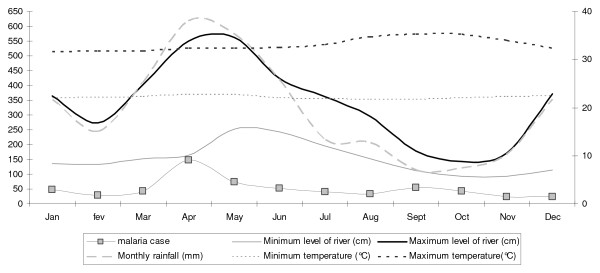
Climatic factors supporting the continuance of the epidemic were identified in the short-term (low minimum temperatures during the month), medium-term (low maximum temperatures two months before) and long-term (low maximum temperatures nine months before and high lowest level of the river 12 months before). Cross-correlation analysis showed that the effects of these factors were greatest at the beginning of the short rainy season.
The association between the river level and the number of malaria attacks provides clues to better understand the environment of malaria transmission and the ecological characteristics of the vectors in the region.
蚊媒疾病(如疟疾)的流行病学特征与环境条件密切相关。了解气候对疟疾发生的影响,可以间接了解特定地区疟蚊媒介的情况。在法属圭亚那的一个村庄,暴发了主要由间日疟原虫引起的疟疾疫情,本研究旨在探讨气象和水文因素与疟疾发生之间的关系。
对 2002 年至 2007 年间发生的间日疟确诊病例进行了队列研究,目的是寻找每月新感染病例数、月平均气温、月最高和最低气温、当月累计降雨量以及与村庄接壤的河流月平均水位之间的关联。采用时间序列分析进行了相关性分析。结果表明,在 12 个月的研究期间,这些气象因素对疟疾病例数有较大影响。
在短期(当月最低气温较低)、中期(两个月前最高气温较低)和长期(九个月前最高气温较低和 12 个月前河流最低水位较高)内,都发现了支持疫情持续的气候因素。相关性分析表明,这些因素的影响在短雨季开始时最大。
河流水位与疟疾发作次数之间的关联为更好地了解疟疾传播环境和该地区媒介的生态特征提供了线索。