HIV Drug Resistance Program, National Cancer Institute-Frederick, P.O. Box B, Building 535, Room 336, Frederick,MD 21702, USA.
J Mol Biol. 2011 Apr 8;407(4):521-31. doi: 10.1016/j.jmb.2011.01.052. Epub 2011 Feb 3.
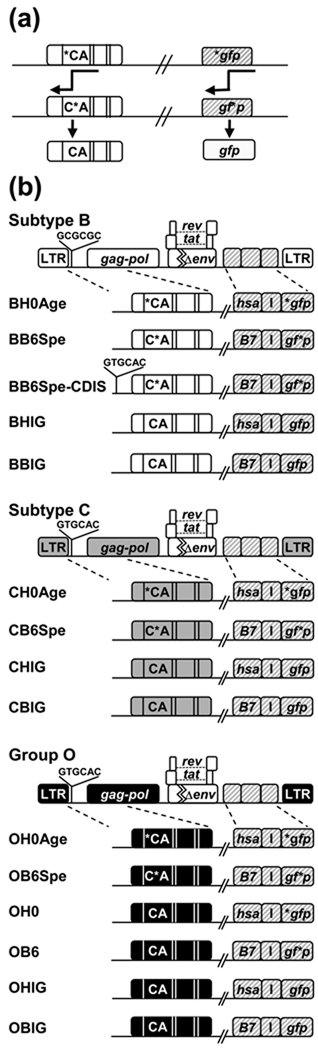
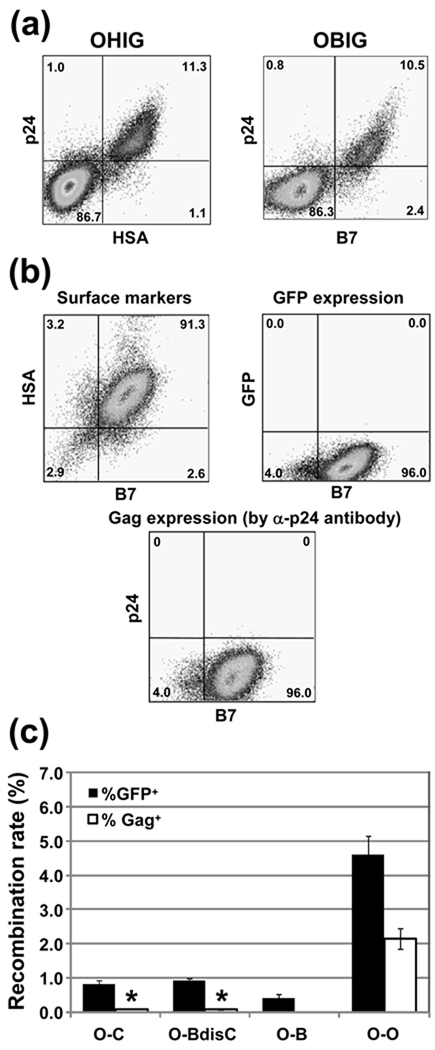
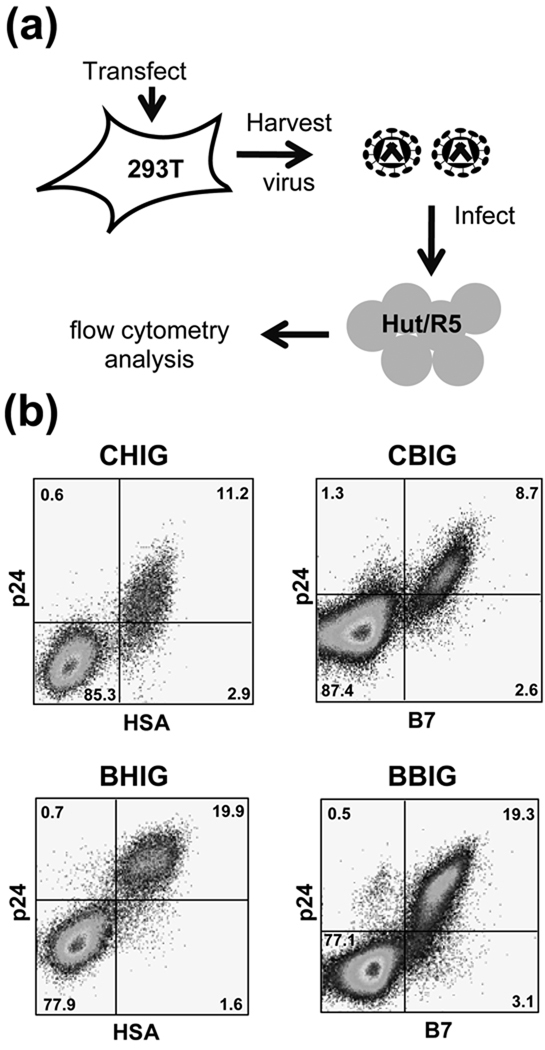
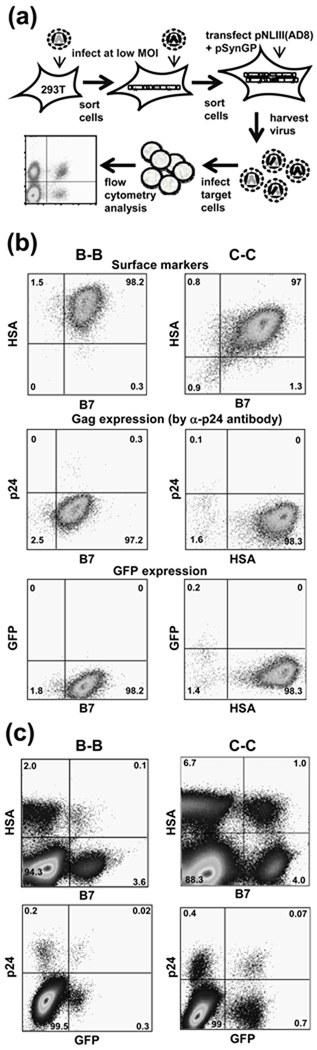
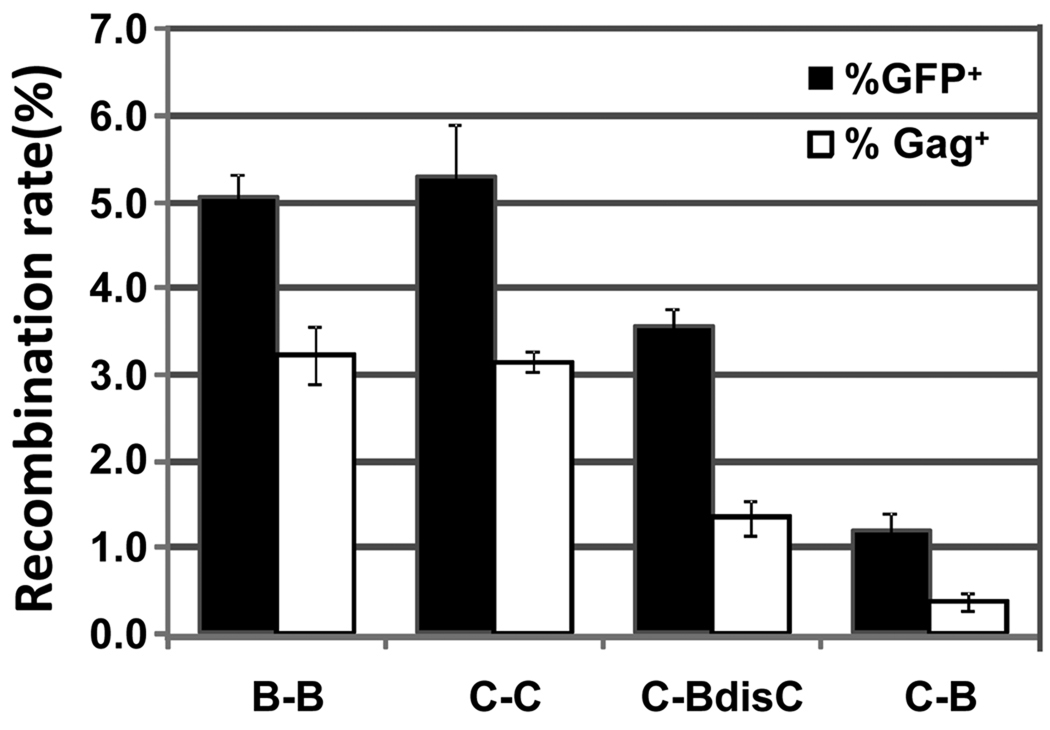
Recombination is a major force for generating human immunodeficiency virus type 1 (HIV-1) diversity and produces numerous recombinants circulating in the human population. We previously established a cell-based system using green fluorescent protein gene (gfp) as a reporter to study the mechanisms of HIV-1 recombination. We now report an improved system capable of detecting recombination using authentic viral sequences. Frameshift mutations were introduced into the gag gene so that parental viruses do not express full-length Gag; however, recombination can generate a progeny virus that expresses a functional Gag. We demonstrate that this Gag reconstitution assay can be used to detect recombination between two group M HIV-1 variants of the same or of different subtypes. Using both gfp and gag assays, we found that, similar to group M viruses, group O viruses also recombine frequently. When recombination between a group M virus and a group O virus was examined, we found three distinct barriers for intergroup recombination. First, similar to recombination within group M viruses, intergroup recombination is affected by the identity of the dimerization initiation signal (DIS); variants with the same DIS recombined at a higher rate than those with different DIS. Second, using the gfp recombination assay, we showed that intergroup recombination occurs much less frequently than intragroup recombination, even though the gfp target sequence is identical in all viruses. Finally, Gag reconstitution between variants from different groups is further reduced compared with green fluorescent protein, indicating that sequence divergence interferes with recombination efficiency in the gag gene. Compared with identical sequences, we estimate that recombination rates are reduced by 3-fold and by 10- to 13-fold when the target regions in gag contain 91% and 72-73% sequence identities, respectively. These results show that there are at least three distinct mechanisms preventing exchange of genetic information between divergent HIV-1 variants from different groups.
重组是产生人类免疫缺陷病毒 1 型(HIV-1)多样性的主要力量,产生了许多在人群中循环的重组体。我们之前建立了一个基于细胞的系统,使用绿色荧光蛋白基因(gfp)作为报告基因来研究 HIV-1 重组的机制。我们现在报告了一个改进的系统,能够使用真实的病毒序列检测重组。在 gag 基因中引入移码突变,使得亲本病毒不能表达全长 Gag;然而,重组可以产生表达功能性 Gag 的后代病毒。我们证明,这种 Gag 重建测定可以用于检测相同或不同亚型的两种组 M HIV-1 变体之间的重组。使用 gfp 和 gag 测定,我们发现,与组 M 病毒类似,组 O 病毒也经常重组。当研究组 M 病毒和组 O 病毒之间的重组时,我们发现了三个不同的种间重组障碍。首先,与组 M 病毒内部的重组类似,种间重组受到二聚化起始信号(DIS)的同一性的影响;具有相同 DIS 的变体以比具有不同 DIS 的变体更高的速率重组。其次,使用 gfp 重组测定,我们表明,即使 gfp 靶序列在所有病毒中都是相同的,种间重组发生的频率也远低于种内重组。最后,与绿色荧光蛋白相比,来自不同组的变体之间的 Gag 重建进一步减少,表明序列差异会干扰 gag 基因中的重组效率。与相同序列相比,我们估计当 gag 中的靶区分别含有 91%和 72-73%的序列同一性时,重组率分别降低了 3 倍和 10-13 倍。这些结果表明,至少有三种不同的机制可以防止来自不同组的不同 HIV-1 变体之间遗传信息的交换。