Delviks-Frankenberry Krista A, Nikolaitchik Olga A, Burdick Ryan C, Gorelick Robert J, Keele Brandon F, Hu Wei-Shau, Pathak Vinay K
Viral Mutation Section, HIV Dynamics and Replication Program, National Cancer Institute at Frederick, Frederick, Maryland, United States of America.
Viral Recombination Section, HIV Dynamics and Replication Program, National Cancer Institute at Frederick, Frederick, Maryland, United States of America.
PLoS Pathog. 2016 May 17;12(5):e1005646. doi: 10.1371/journal.ppat.1005646. eCollection 2016 May.
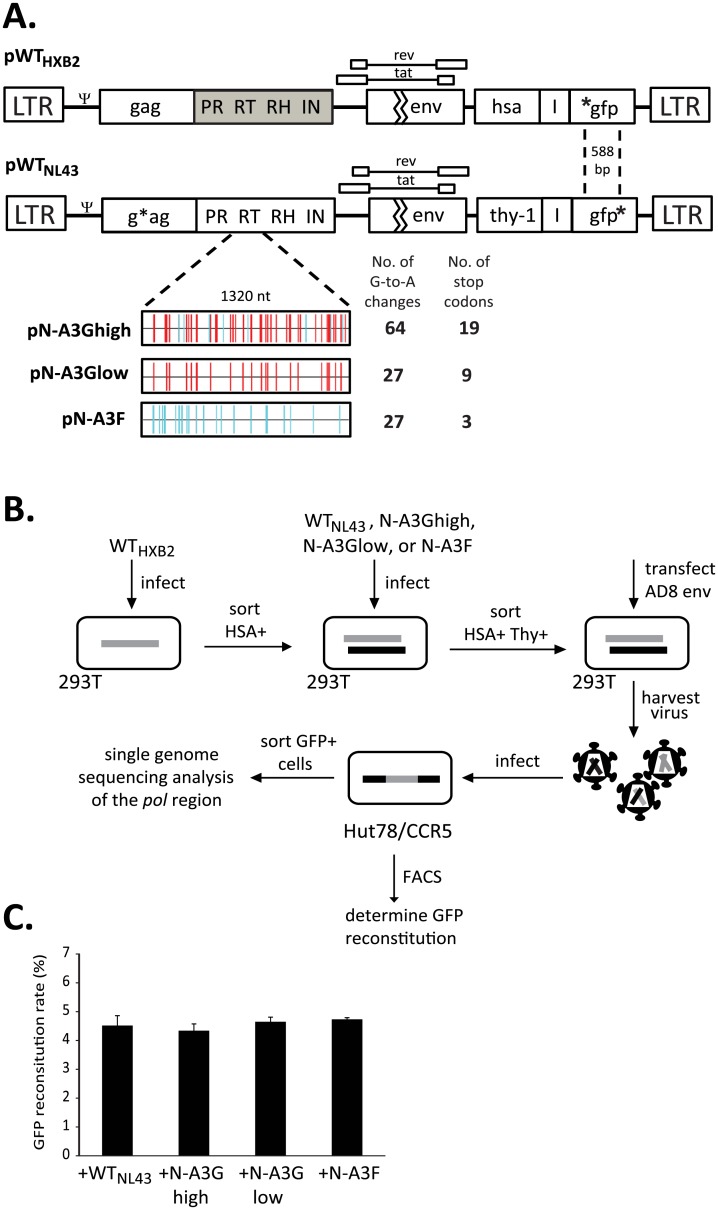
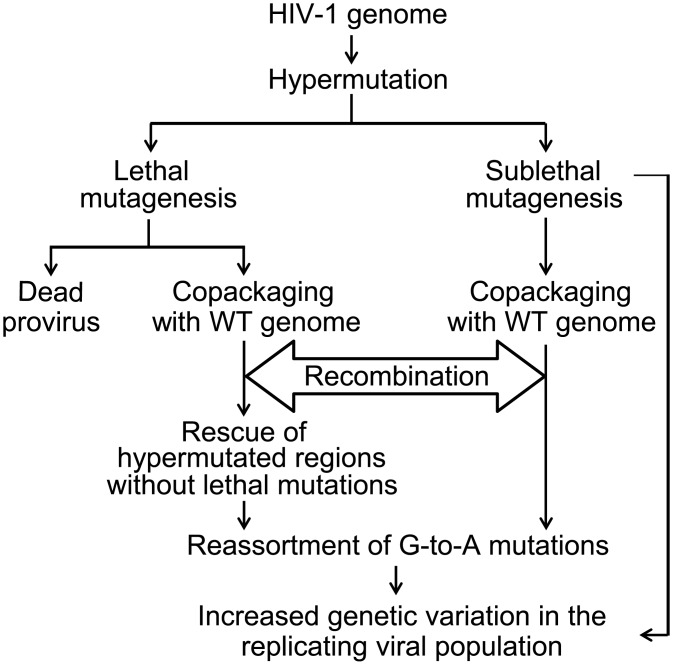
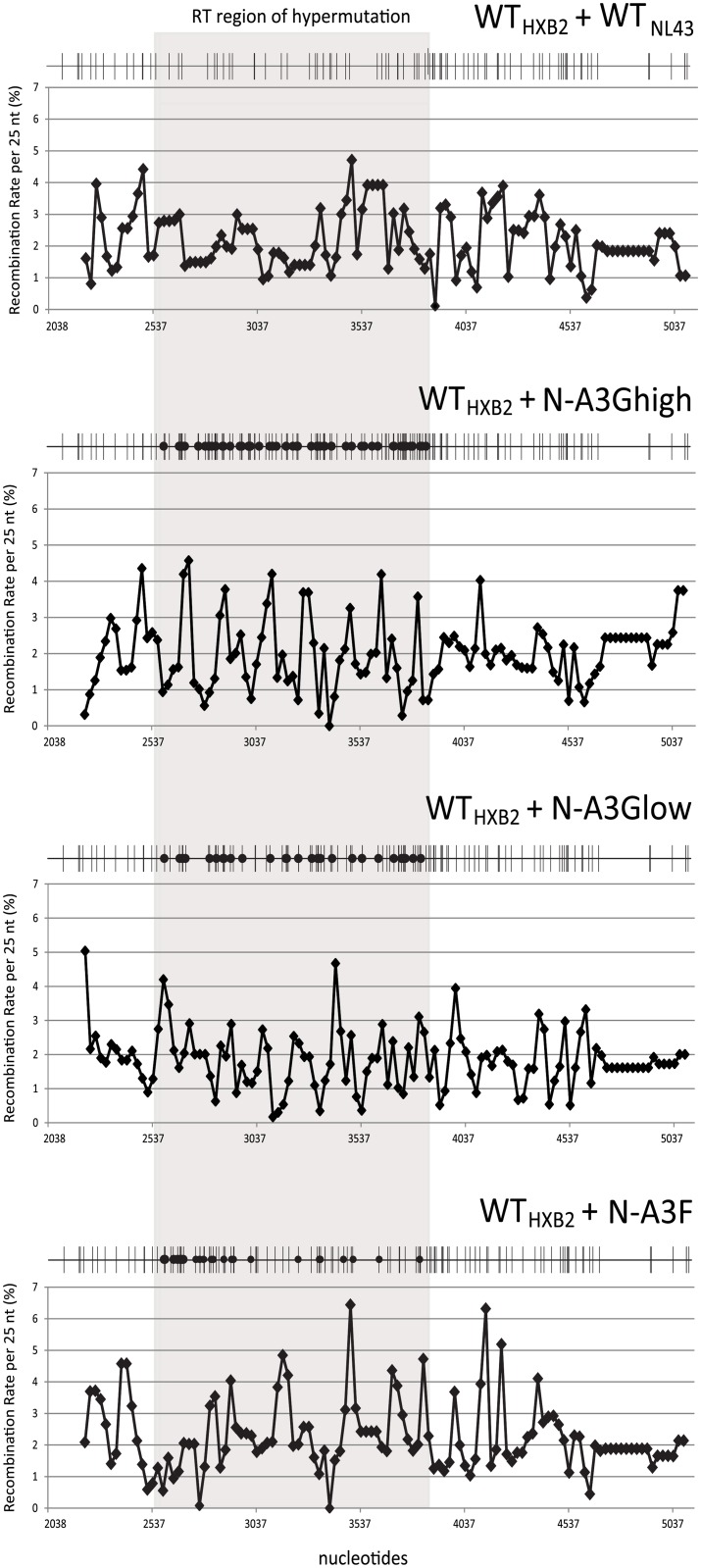
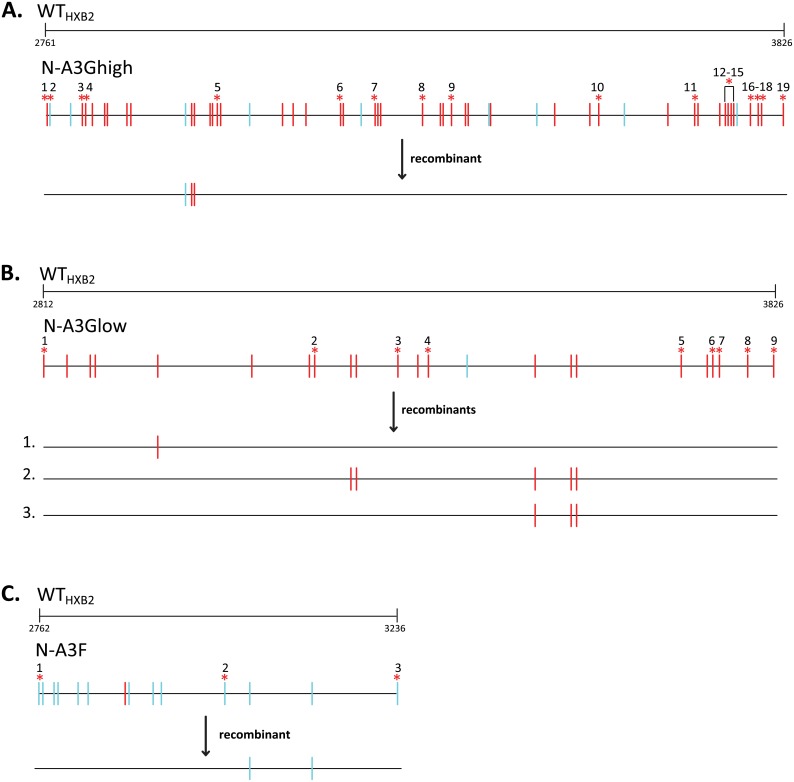
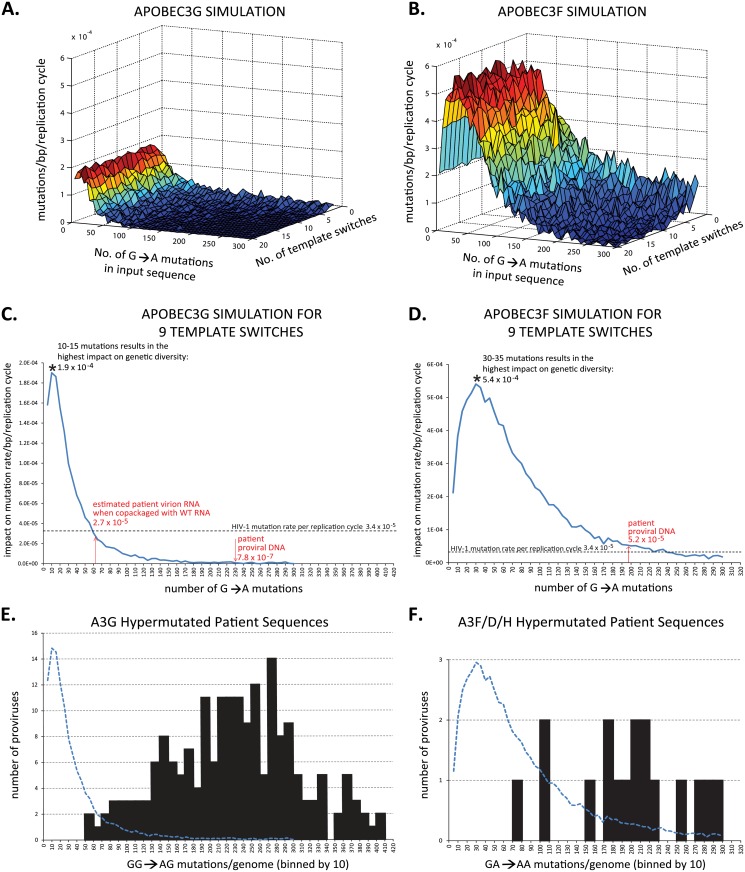
Although the predominant effect of host restriction APOBEC3 proteins on HIV-1 infection is to block viral replication, they might inadvertently increase retroviral genetic variation by inducing G-to-A hypermutation. Numerous studies have disagreed on the contribution of hypermutation to viral genetic diversity and evolution. Confounding factors contributing to the debate include the extent of lethal (stop codon) and sublethal hypermutation induced by different APOBEC3 proteins, the inability to distinguish between G-to-A mutations induced by APOBEC3 proteins and error-prone viral replication, the potential impact of hypermutation on the frequency of retroviral recombination, and the extent to which viral recombination occurs in vivo, which can reassort mutations in hypermutated genomes. Here, we determined the effects of hypermutation on the HIV-1 recombination rate and its contribution to genetic variation through recombination to generate progeny genomes containing portions of hypermutated genomes without lethal mutations. We found that hypermutation did not significantly affect the rate of recombination, and recombination between hypermutated and wild-type genomes only increased the viral mutation rate by 3.9 × 10⁻⁵ mutations/bp/replication cycle in heterozygous virions, which is similar to the HIV-1 mutation rate. Since copackaging of hypermutated and wild-type genomes occurs very rarely in vivo, recombination between hypermutated and wild-type genomes does not significantly contribute to the genetic variation of replicating HIV-1. We also analyzed previously reported hypermutated sequences from infected patients and determined that the frequency of sublethal mutagenesis for A3G and A3F is negligible (4 × 10-21 and1 × 10-11, respectively) and its contribution to viral mutations is far below mutations generated during error-prone reverse transcription. Taken together, we conclude that the contribution of APOBEC3-induced hypermutation to HIV-1 genetic variation is substantially lower than that from mutations during error-prone replication.
尽管宿主限制因子载脂蛋白B mRNA编辑酶催化多肽样蛋白3(APOBEC3)对HIV-1感染的主要作用是阻断病毒复制,但它们可能会通过诱导G到A的超突变而意外增加逆转录病毒的遗传变异。关于超突变对病毒遗传多样性和进化的贡献,众多研究存在分歧。导致这场争论的混杂因素包括不同APOBEC3蛋白诱导的致死性(终止密码子)和亚致死性超突变的程度、无法区分APOBEC3蛋白诱导的G到A突变和易出错的病毒复制、超突变对逆转录病毒重组频率的潜在影响,以及病毒重组在体内发生的程度,而病毒重组可以在超突变基因组中重新组合突变。在这里,我们通过重组产生不含致死性突变的超突变基因组部分的子代基因组,确定了超突变对HIV-1重组率的影响及其对遗传变异的贡献。我们发现超突变并没有显著影响重组率,并且超突变基因组与野生型基因组之间的重组仅使杂合病毒粒子中的病毒突变率增加了3.9×10^-5个突变/碱基对/复制周期,这与HIV-1的突变率相似。由于超突变基因组与野生型基因组在体内共包装的情况非常罕见,因此超突变基因组与野生型基因组之间的重组对正在复制的HIV-1的遗传变异没有显著贡献。我们还分析了先前报道的来自感染患者的超突变序列,并确定A3G和A3F的亚致死诱变频率可以忽略不计(分别为4×10^-21和1×10^-11),其对病毒突变的贡献远低于易出错逆转录过程中产生的突变。综上所述,我们得出结论,APOBEC3诱导的超突变对HIV-1遗传变异的贡献远低于易出错复制过程中的突变。