Université Lyon 1, Centre National de la Recherche Scientifique, UMR 5020 Neurosciences Sensorielles, Comportement, Cognition, Lyon, France.
PLoS One. 2011 Jan 26;6(1):e16445. doi: 10.1371/journal.pone.0016445.
The impact of respiratory dynamics on odor response has been poorly studied at the olfactory bulb level. However, it has been shown that sniffing in the behaving rodent is highly dynamic and varies both in frequency and flow rate. Bulbar odor response could vary with these sniffing parameter variations. Consequently, it is necessary to understand how nasal airflow can modify and shape odor response at the olfactory bulb level.
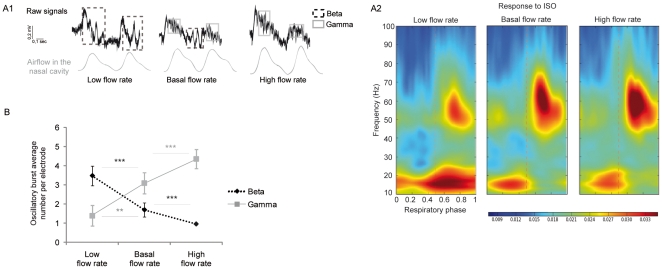
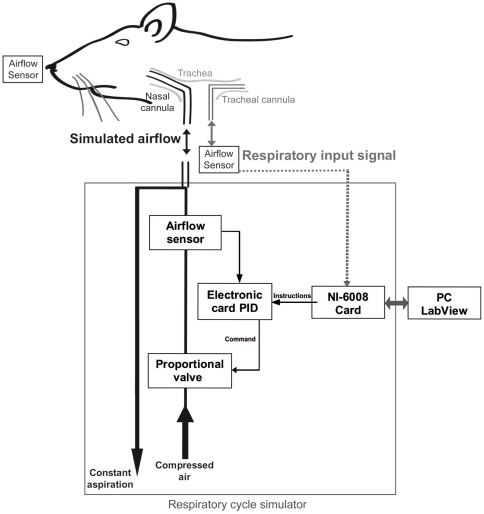
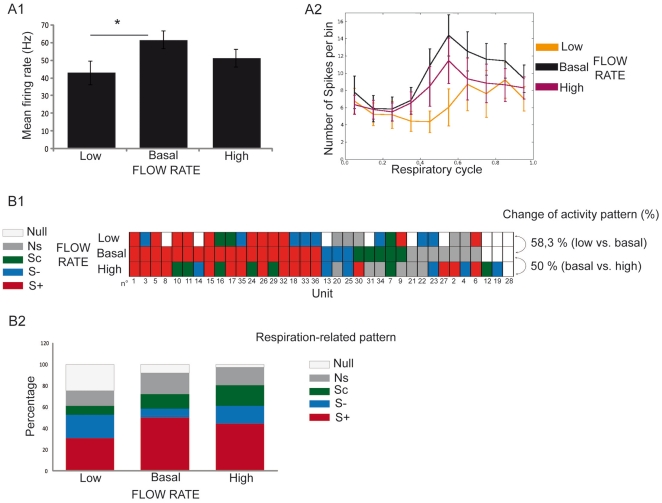
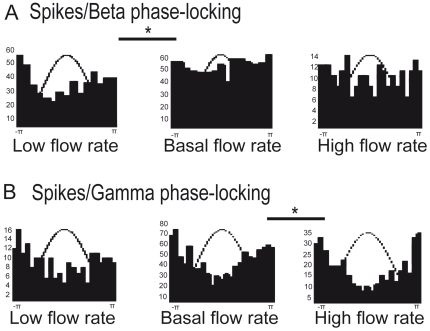
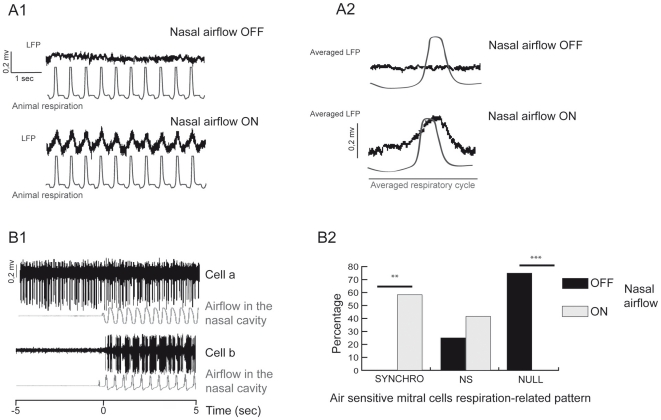
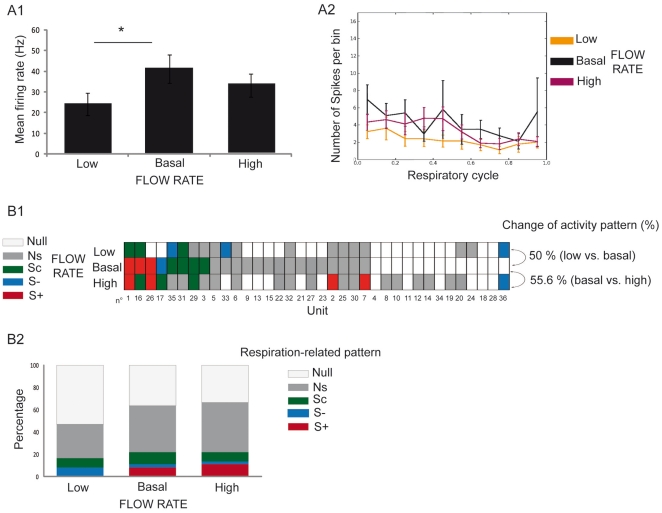
To assess this question, we used a double cannulation and simulated nasal airflow protocol on anesthetized rats to uncouple nasal airflow from animal respiration. Both mitral/tufted cell extracellular unit activity and local field potentials (LFPs) were recorded. We found that airflow changes in the normal range were sufficient to substantially reorganize the response of the olfactory bulb. In particular, cellular odor-evoked activities, LFP oscillations and spike phase-locking to LFPs were strongly modified by nasal flow rate.
Our results indicate the importance of reconsidering the notion of odor coding as odor response at the bulbar level is ceaselessly modified by respiratory dynamics.
呼吸动力学对嗅球水平气味反应的影响尚未得到充分研究。然而,已经表明,在行为啮齿动物中嗅探的频率和流速都具有高度动态性。嗅球气味反应可能会随着这些嗅探参数的变化而变化。因此,有必要了解鼻腔气流如何在嗅球水平上改变和塑造气味反应。
为了评估这个问题,我们在麻醉大鼠上使用了双套管和模拟鼻腔气流方案,将鼻腔气流与动物呼吸分离。记录了迷走/锥形细胞细胞外单位活动和局部场电位 (LFPs)。我们发现,正常范围内的气流变化足以极大地重组嗅球的反应。特别是,细胞气味诱发活动、LFP 振荡和对 LFP 的尖峰相位锁定受到鼻腔流量的强烈影响。
我们的结果表明,有必要重新考虑气味编码的概念,因为嗅球水平的气味反应不断受到呼吸动力学的影响。