Departament de Sanitat i d'Anatomia Animals, Facultat de Veterinària, Universitat Autònoma de Barcelona, 08193 Cerdanyola del Vallès, Spain.
Vet Res. 2011 Jan 18;42(1):9. doi: 10.1186/1297-9716-42-9.
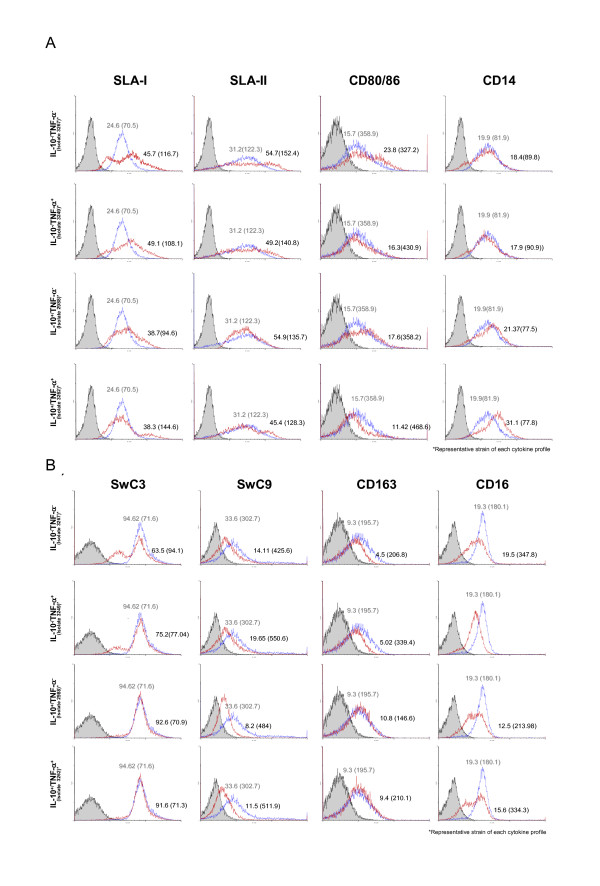
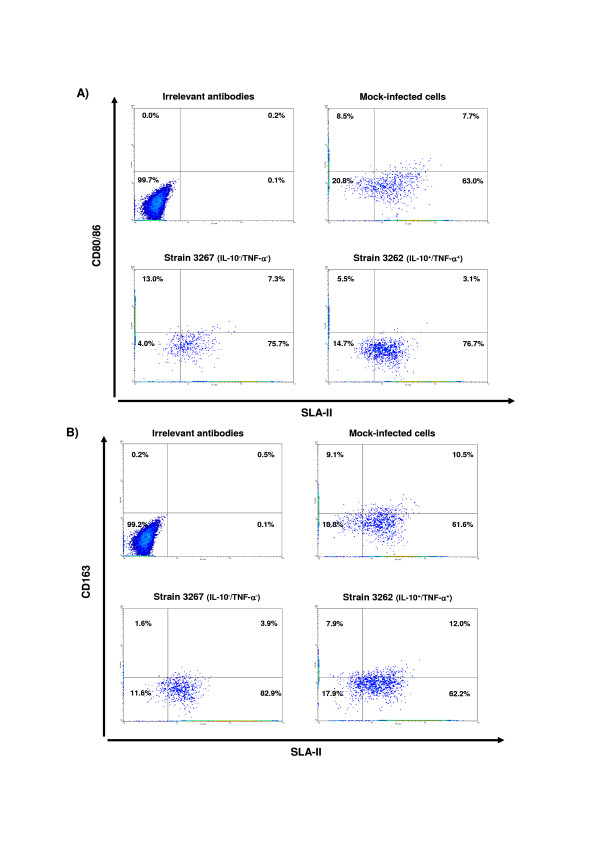
The present study examined the immunological response of antigen presenting cells (APC) to genotype-I isolates of porcine reproductive and respiratory syndrome virus (PRRSV) infection by analysing the cytokine profile induced and evaluating the changes taking place upon infection on immunologically relevant cell markers (MHCI, MHCII, CD80/86, CD14, CD16, CD163, CD172a, SWC9). Several types of APC were infected with 39 PRRSV isolates. The results show that different isolates were able to induce different patterns of IL-10 and TNF-α. The four possible phenotypes based on the ability to induce IL-10 and/or TNF-α were observed, although different cell types seemed to have different capabilities. In addition, isolates inducing different cytokine-release profiles on APC could induce different expression of cell markers.
本研究通过分析诱导的细胞因子谱并评估感染后免疫相关细胞标志物(MHC I、MHC II、CD80/86、CD14、CD16、CD163、CD172a、SWC9)的变化,研究了抗原呈递细胞(APC)对猪繁殖与呼吸综合征病毒(PRRSV)感染的 I 型分离株的免疫反应。用 39 株 PRRSV 分离株感染几种类型的 APC。结果表明,不同的分离株能够诱导不同的 IL-10 和 TNF-α 模式。观察到基于诱导 IL-10 和/或 TNF-α的能力的四种可能表型,尽管不同的细胞类型似乎具有不同的能力。此外,在 APC 上诱导不同细胞因子释放谱的分离株可以诱导不同的细胞标志物表达。