Ceregene Inc., San Diego, California 92121, USA.
Mov Disord. 2011 Jan;26(1):27-36. doi: 10.1002/mds.23442. Epub 2010 Nov 18.
AAV2-neurturin (CERE-120) is designed to deliver the neurotrophic-factor, neurturin, to the striatum to restore and protect degenerating nigrostriatal neurons in Parkinson's disease (PD). A common hypothesis is that following expression in the striatum, neurotrophic-factors like neurturin (NRTN) will be transported from degenerating terminals to their cell bodies in the substantia nigra pars compacta (SNc).
We tested this concept using immunohistochemistry, comparing the bioactivity of AAV2-neurturin in brains of PD patients versus those of nonhuman primates similarly treated.
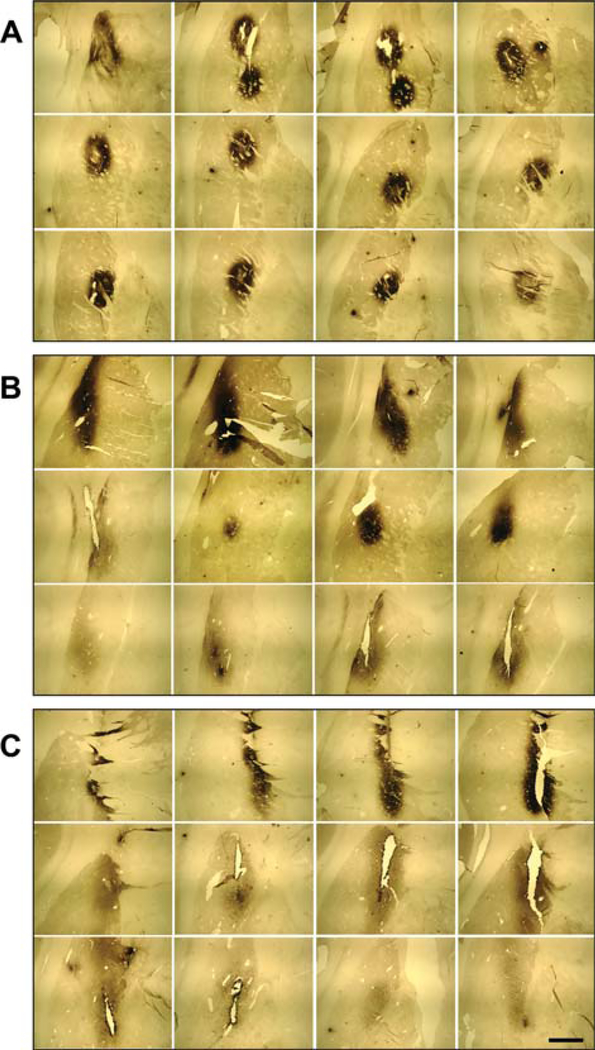
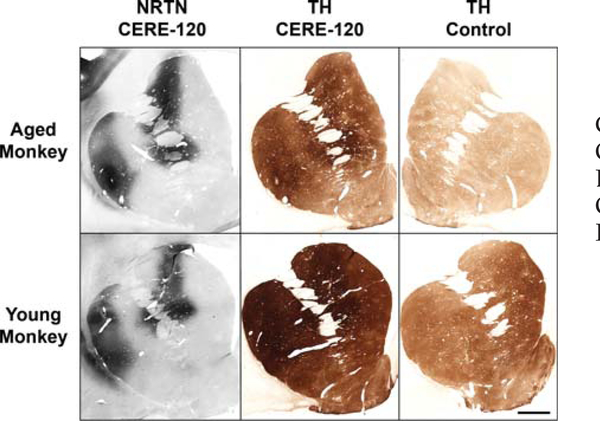
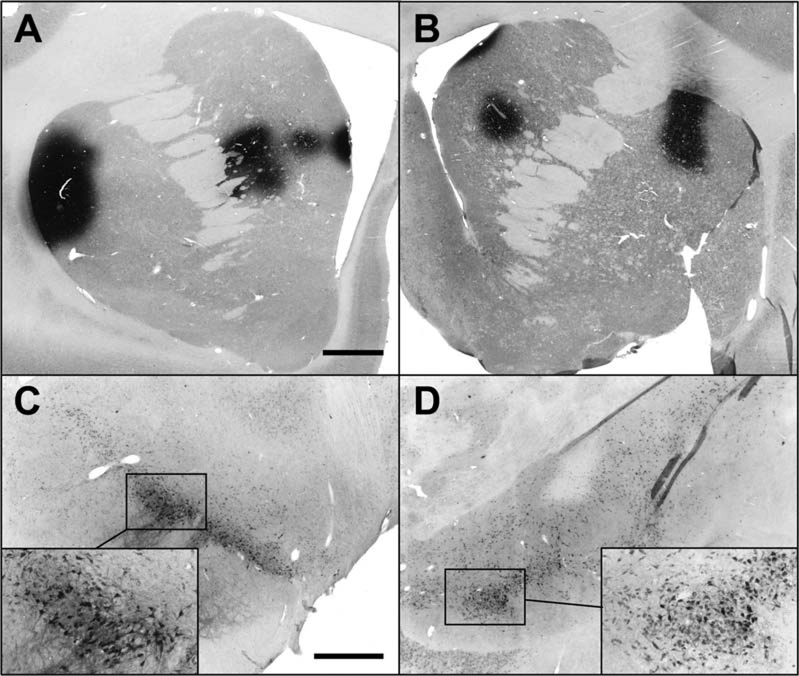
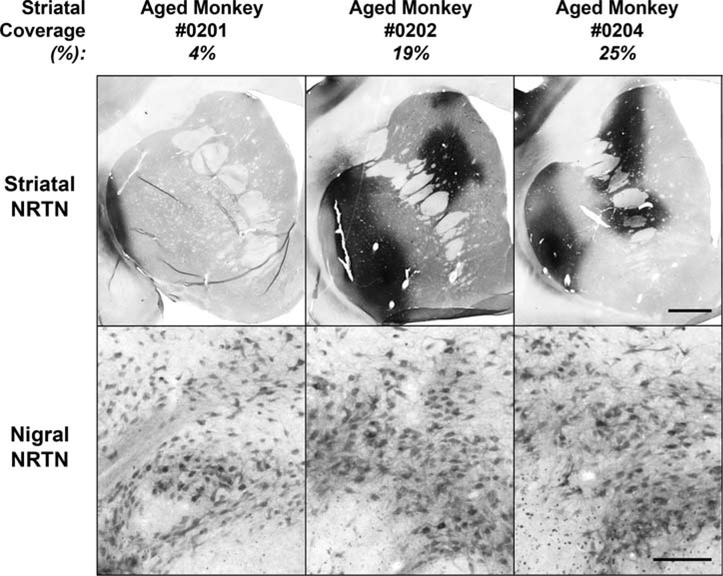
NRTN-immunostaining in the targeted striatum was seen in all PD cases (mean putaminal coverage: ∼15% by volume); comparable expression was observed in young, aged, and parkinsonian monkeys. In the SNc cell bodies, however, only rare evidence of neurturin was seen in PD, while ample evidence of intense nigral-NRTN was observed in all monkeys. NRTN-expression was associated with occasional, sparse TH-induction in the striatum of PD, but nothing apparent in the SNc. In primates, NRTN produced robust TH-induction throughout the nigrostriatal neurons.
These data provide the first evidence that gene therapy can increase expression of a neurotrophic-factor deep in the PD brain and that clear but modest enhancement of degenerating neurons can be induced. They also provide important insight regarding deficiencies in the status of nigrostriatal neurons in advanced PD, suggesting that serious axon-transport deficits reduced the bioactivity of AAV2-NRTN by limiting the protein exposed to the cell body. Thus, future efforts using neurotrophic-factors to treat neurodegenerative diseases will need to target both the terminal fields and the cell bodies of degenerating neurons to assure maximal benefit is achieved.
AAV2-neurturin(CERE-120)旨在将神经营养因子 neurturin 递送至纹状体,以恢复和保护帕金森病(PD)中退化的黑质纹状体神经元。一个常见的假设是,在纹状体表达后,像 neurturin(NRTN)这样的神经营养因子将从退化的末梢运送到其在 SNc 的细胞体。
我们使用免疫组织化学方法对此概念进行了测试,将接受过 AAV2-neurturin 治疗的 PD 患者的大脑与接受过类似治疗的非人类灵长类动物的大脑进行了比较。
在所有 PD 病例中,均在目标纹状体中观察到 NRTN-免疫染色(平均壳核覆盖率:体积的约 15%);在年轻、年老和帕金森氏病猴子中也观察到了类似的表达。然而,在 SNc 细胞体中,仅在 PD 中观察到少量的神经营养因子,而在所有猴子中均观察到强烈的黑质-NRTN 证据。NRTN 表达与 PD 纹状体中偶尔稀疏的 TH 诱导有关,但在 SNc 中则没有明显的诱导。在灵长类动物中,NRTN 可在整个黑质纹状体神经元中产生强烈的 TH 诱导。
这些数据首次提供了证据表明基因治疗可以增加 PD 大脑深部的神经营养因子表达,并且可以诱导明显但适度增强的退化神经元。它们还提供了有关晚期 PD 中黑质纹状体神经元状态的重要见解,表明严重的轴突转运缺陷通过限制暴露于细胞体的蛋白质,从而降低了 AAV2-NRTN 的生物活性。因此,未来使用神经营养因子治疗神经退行性疾病的努力将需要同时针对退化神经元的末梢和细胞体,以确保达到最大的获益。