Sandoval Ivette M, Kelley Christy M, Bernal-Conde Luis Daniel, Steece-Collier Kathy, Marmion David J, Davidsson Marcus, Crosson Sean M, Boye Sanford L, Boye Shannon E, Manfredsson Fredric P
Parkinson's Disease Research Unit, Department of Translational Neuroscience, Barrow Neurological Institute, Phoenix, AZ 85013, USA.
Department of Translational Neuroscience, Michigan State University College of Human Medicine, Grand Rapids, MI 49506, USA.
Mol Ther Nucleic Acids. 2024 Sep 12;35(4):102332. doi: 10.1016/j.omtn.2024.102332. eCollection 2024 Dec 10.
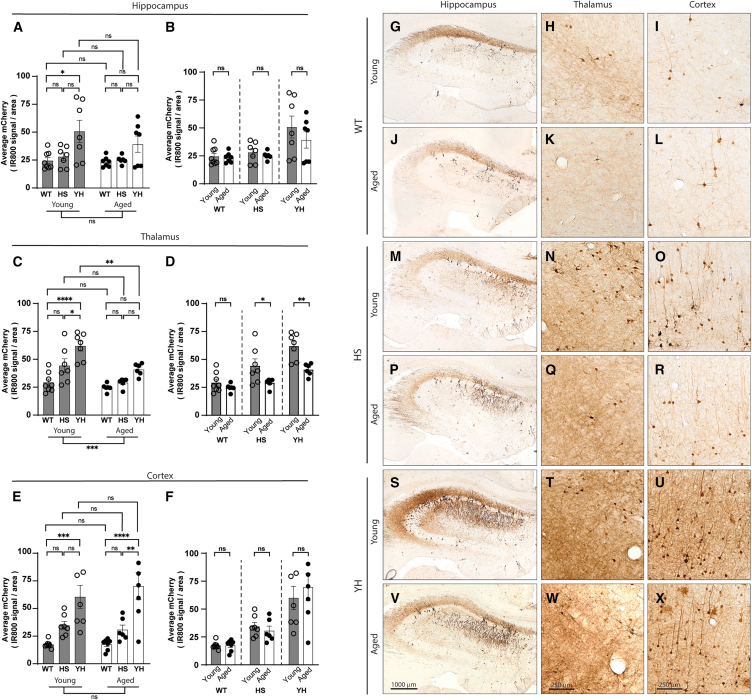
Adeno-associated virus (AAV)-based gene therapy has enjoyed great successes over the past decade, with Food and Drug Administration-approved therapeutics and a robust clinical pipeline. Nonetheless, barriers to successful translation remain. For example, advanced age is associated with impaired brain transduction, with the diminution of infectivity depending on anatomical region and capsid. Given that CNS gene transfer is often associated with neurodegenerative diseases where age is the chief risk factor, we sought to better understand the causes of this impediment. We assessed two AAV variants hypothesized to overcome factors negatively impacting transduction in the aged brain; specifically, changes in extracellular and cell-surface glycans, and intracellular transport. We evaluated a heparin sulfate proteoglycan null variant with or without mutations enhancing intracellular transport. Vectors were injected into the striatum of young adult or aged rats to address whether improving extracellular diffusion, removing glycan receptor dependence, or improving intracellular transport are important factors in transducing the aged brain. We found that, regardless of the viral capsid, there was a reduction in many of our metrics of transduction in the aged brain. However, the transport mutant was less sensitive to age, suggesting that changes in the cellular transport of AAV capsids are a key factor in age-related transduction deficiency.
在过去十年中,基于腺相关病毒(AAV)的基因疗法取得了巨大成功,有美国食品药品监督管理局批准的治疗方法以及强大的临床研发产品线。尽管如此,成功转化仍存在障碍。例如,高龄与脑转导受损相关,感染性的降低取决于解剖区域和衣壳。鉴于中枢神经系统基因转移通常与神经退行性疾病相关,而年龄是主要风险因素,我们试图更好地理解这种障碍的原因。我们评估了两种假设可克服对老年大脑转导产生负面影响因素的AAV变体;具体而言,是细胞外和细胞表面聚糖以及细胞内运输的变化。我们评估了一种硫酸乙酰肝素蛋白聚糖缺失变体,其带有或不带有增强细胞内运输的突变。将载体注射到年轻成年大鼠或老年大鼠的纹状体中,以探讨改善细胞外扩散、消除聚糖受体依赖性或改善细胞内运输是否是转导老年大脑的重要因素。我们发现,无论病毒衣壳如何,老年大脑中许多转导指标均有所下降。然而,运输突变体对年龄不太敏感,这表明AAV衣壳细胞内运输的变化是与年龄相关的转导缺陷的关键因素。