Department of Medical Pharmacology and Physiology, University of Missouri School of Medicine, Columbia, Missouri 65212, USA.
Lipids Health Dis. 2011 Feb 23;10:36. doi: 10.1186/1476-511X-10-36.
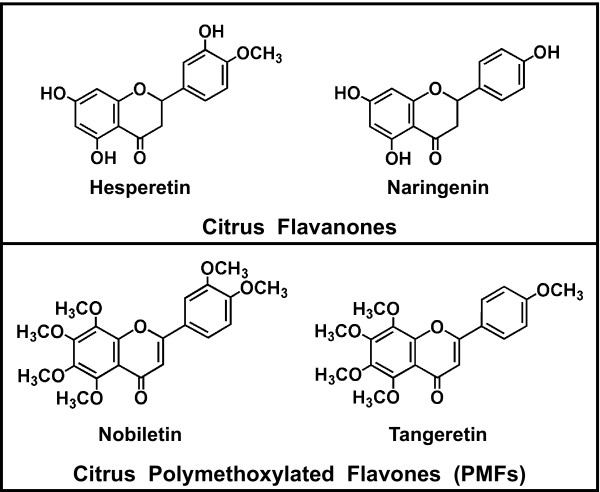
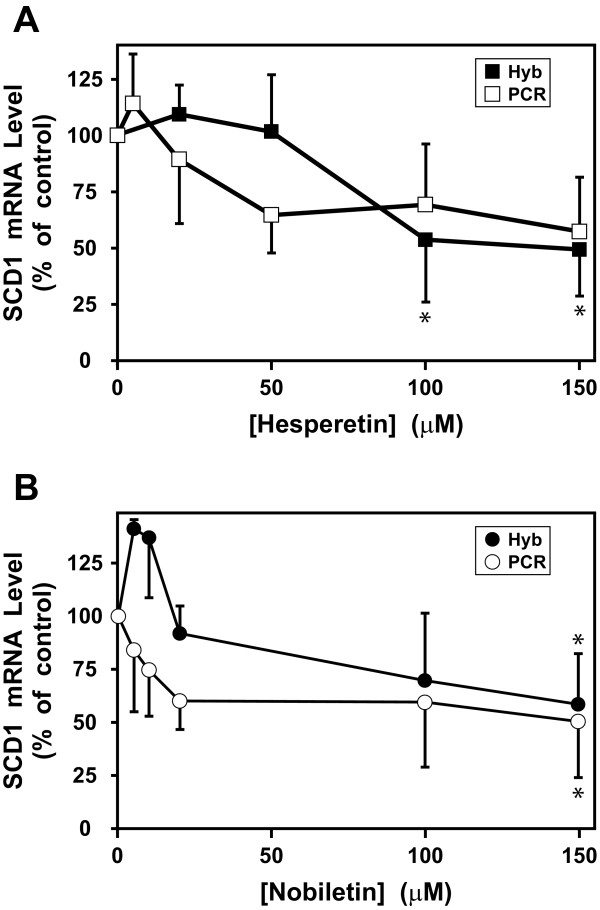
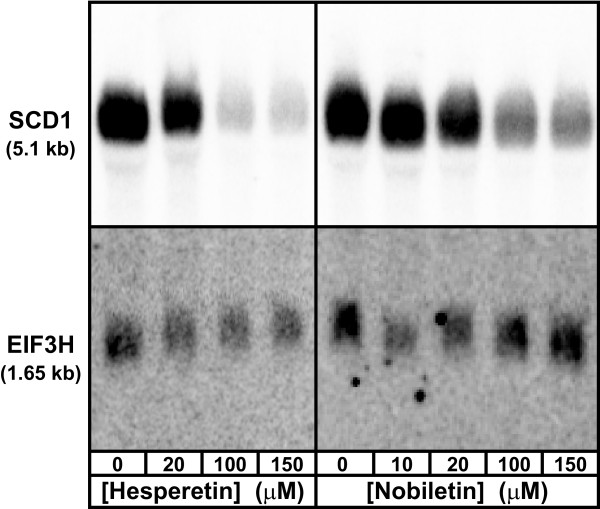
Citrus flavonoids have been shown to decrease plasma lipid levels, improve glucose tolerance, and attenuate obesity. One possible mechanism underlying these physiological effects is reduction of hepatic levels of the mRNA for stearoyl-CoA desaturase-1 (SCD1), since repression of this enzyme reduces hyperlipidemia and adiposity. Here, we show that citrus flavonoids of two structural classes reduce SCD1 mRNA concentrations in a dose-dependent manner in rat primary hepatocytes. This is the first demonstration of repression of SCD1 by citrus flavonoids, either in vivo or in cultured cells. Furthermore, it is the first use of freshly-isolated hepatocytes from any animal to examine citrus flavonoid action at the mRNA level. This study demonstrates that regulation of SCD1 gene expression may play a role in control of obesity by citrus flavonoids and that rat primary hepatocytes are a physiologically-relevant model system for analyzing the molecular mechanisms of flavonoid action in the liver.
柑橘类黄酮已被证明可以降低血浆脂质水平、改善葡萄糖耐量并减轻肥胖。这些生理效应的一个可能机制是降低肝酰基辅酶 A 去饱和酶-1(SCD1)的 mRNA 水平,因为抑制这种酶可以减少高血脂和肥胖。在这里,我们显示两种结构类型的柑橘类黄酮以剂量依赖的方式降低大鼠原代肝细胞中的 SCD1 mRNA 浓度。这是首次证明柑橘类黄酮在体内或在培养细胞中抑制 SCD1。此外,这是首次使用任何动物的新鲜分离肝细胞来在 mRNA 水平上检测柑橘类黄酮的作用。这项研究表明,SCD1 基因表达的调节可能在柑橘类黄酮控制肥胖中起作用,并且大鼠原代肝细胞是分析黄酮类化合物在肝脏中作用的分子机制的生理相关模型系统。