Department of Psychiatry, Duke University Medical Center, Durham, NC 27710, USA.
Psychopharmacology (Berl). 2011 Jun;215(3):493-504. doi: 10.1007/s00213-011-2216-5. Epub 2011 Feb 24.
Early-onset drug taking is associated with increased likelihood of addiction, but it is unclear whether early onset is causal in development of addiction. Many other factors are associated with increased risk of addiction and also promote early intake. Here, a rodent model is used to explore the causality of early onset in development of self-administration and addiction-like behavior and to examine factors that promote self-administration.
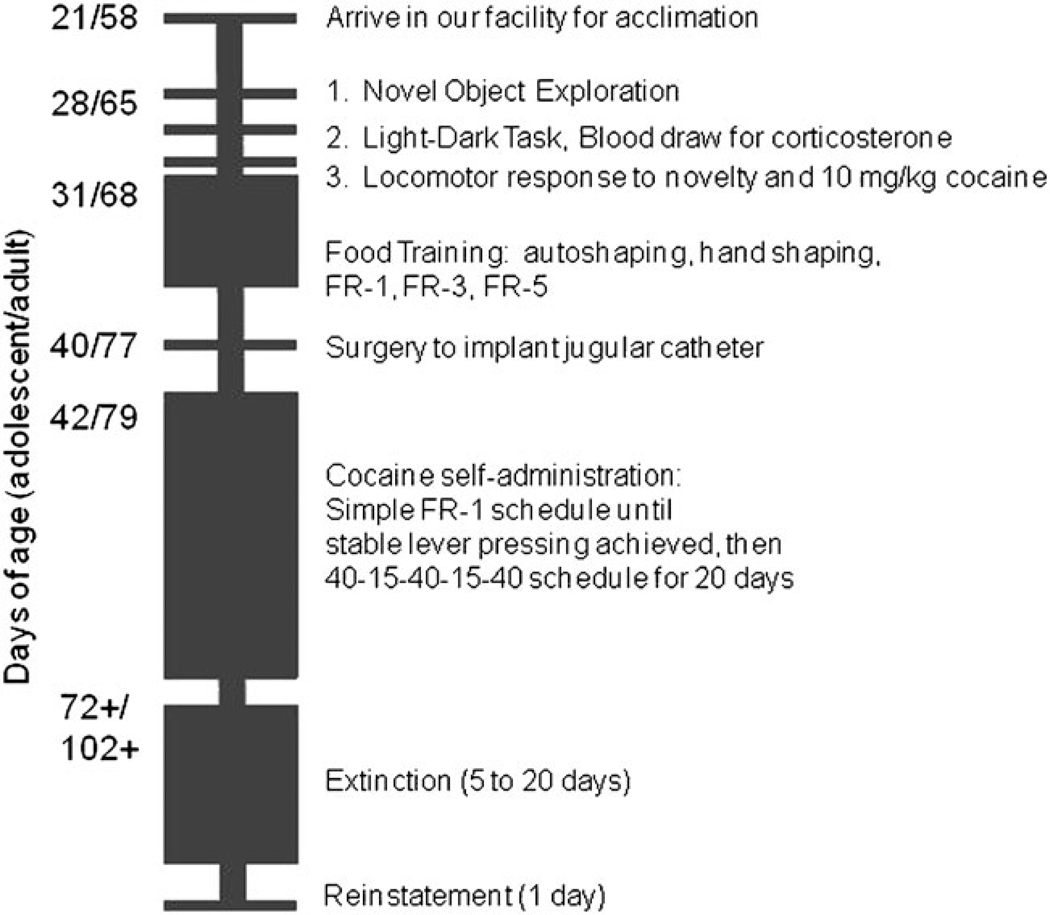
We used cocaine self-administration to examine drug taking and addiction-like behavior in adolescent and adult rats a priori characterized for their locomotor responses to novelty and cocaine and behavior in the light-dark task.
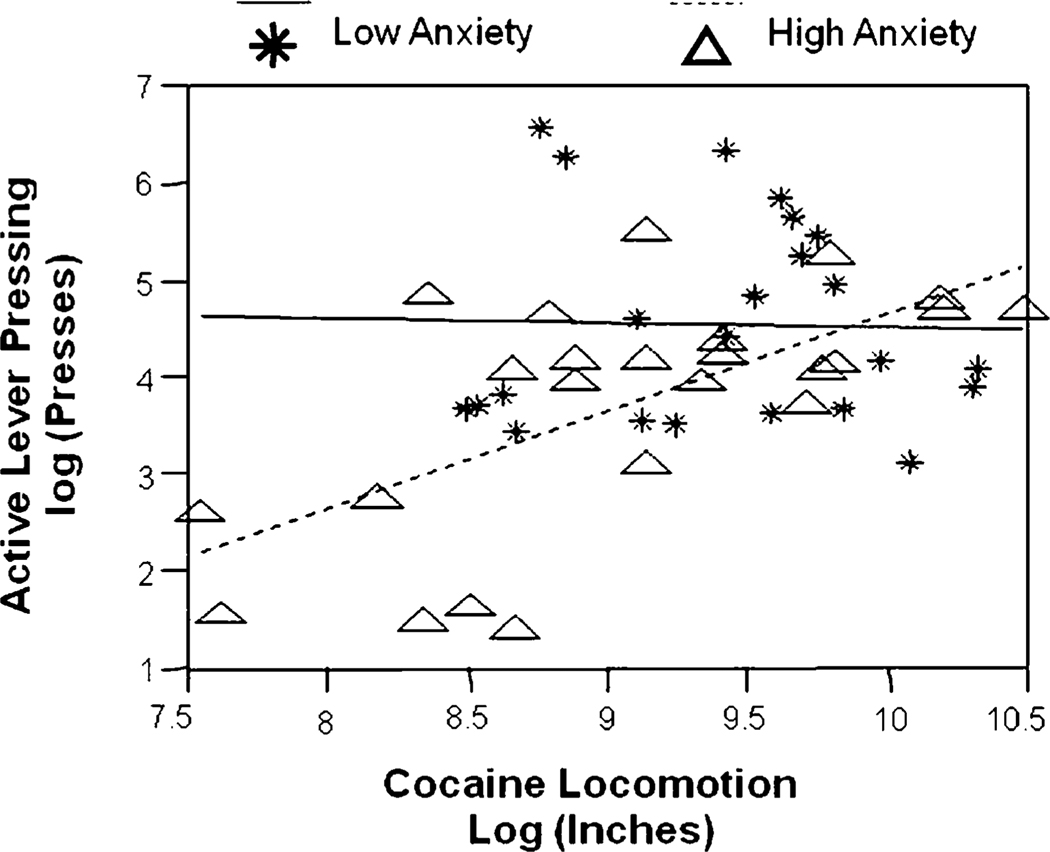
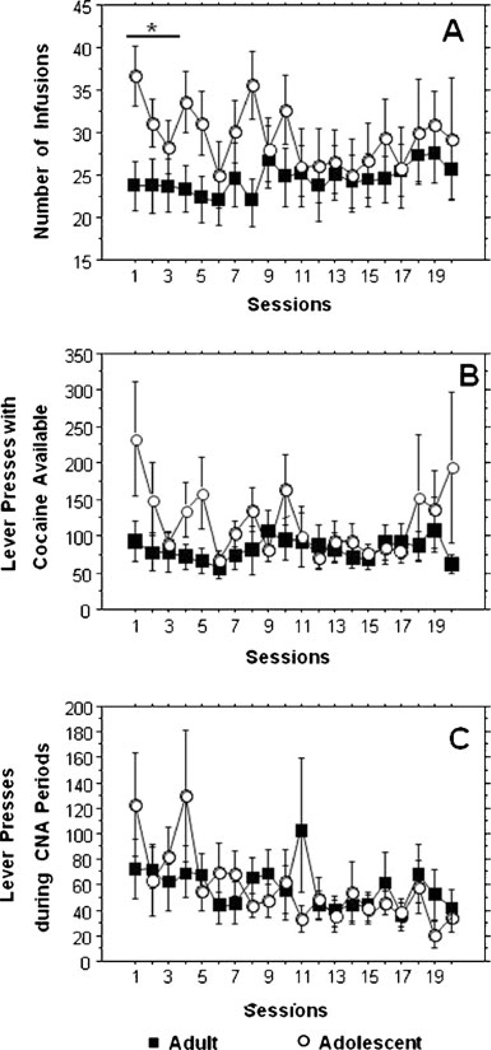
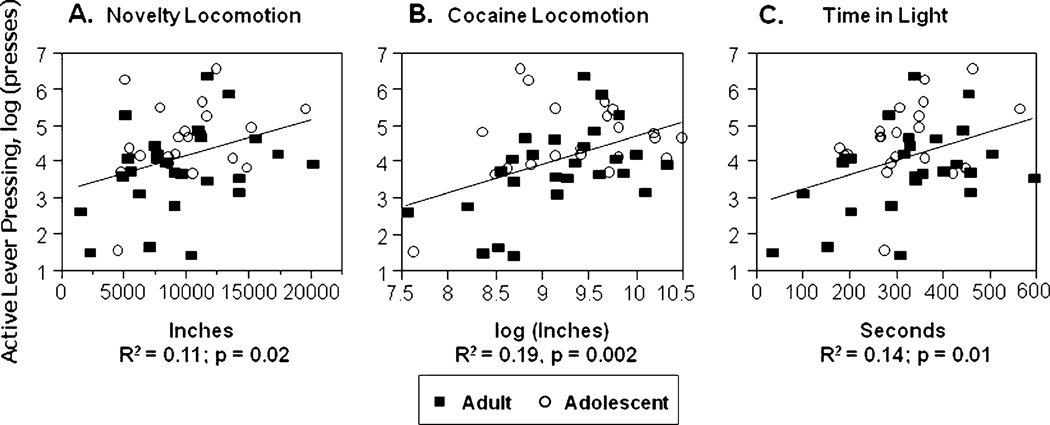
Adolescent animals initially sought more cocaine than adults. However, as the adolescents matured, their intake fell and they did not differ from adults in terms of unreinforced lever-pressing, extinction or reinstatement behavior. For both age groups, self-administration was positively correlated with the locomotor response to novelty, the locomotor response to cocaine, and with time in light in the light-dark task. The rats that were insensitive to cocaine's locomotor effects and that spent the least time in light in the light-dark task sought the least cocaine, appearing to be "protected" from the reinforcing effects of cocaine. There was no difference between the two age groups in appearance of this "protected" phenotype.
These results suggest that early onset of drug taking may promote increased use, but does not promote progression to addiction-like behavior. Furthermore, protective factors, such as innate anxiety and insensitivity to cocaine's pharmacological effects, function across developmental stages.
早期药物使用与成瘾的可能性增加有关,但早期发病是否是成瘾发展的原因尚不清楚。许多其他因素与成瘾风险增加有关,并且也促进了早期摄入。在这里,使用啮齿动物模型来探讨早期发病在自我给药和类似成瘾行为发展中的因果关系,并研究促进自我给药的因素。
我们使用可卡因自我给药来检查青少年和成年大鼠的药物使用和类似成瘾的行为,这些大鼠先前根据其对新奇事物和可卡因的运动反应以及在明暗任务中的行为进行了特征描述。
青少年动物最初比成年动物寻求更多的可卡因。然而,随着青少年的成熟,他们的摄入量下降,并且在未强化杠杆按压、消退或复吸行为方面与成年动物没有差异。对于两个年龄组,自我给药与对新奇事物的运动反应、对可卡因的运动反应以及在明暗任务中的光时间呈正相关。那些对可卡因的运动效应不敏感并且在明暗任务中在光中花费最少时间的大鼠寻求的可卡因最少,似乎免受可卡因的强化作用的影响。在这种“保护”表型的出现方面,两个年龄组之间没有差异。
这些结果表明,早期发病可能会促进使用量的增加,但不会促进类似成瘾行为的发展。此外,保护因素,如先天焦虑和对可卡因药理作用的不敏感,在发育阶段都起作用。