Center for Immunotherapy of Cancer and Infectious Diseases, Department of Immunology, University of Connecticut School of Medicine, Farmington, CT 06030-1601, USA.
Vaccine. 2011 Mar 3;29(11):2169-77. doi: 10.1016/j.vaccine.2010.12.029.
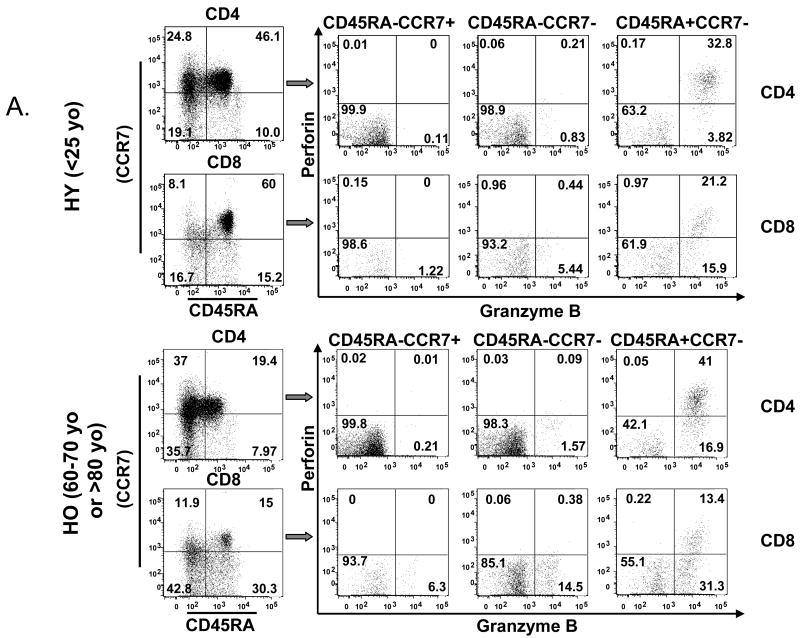
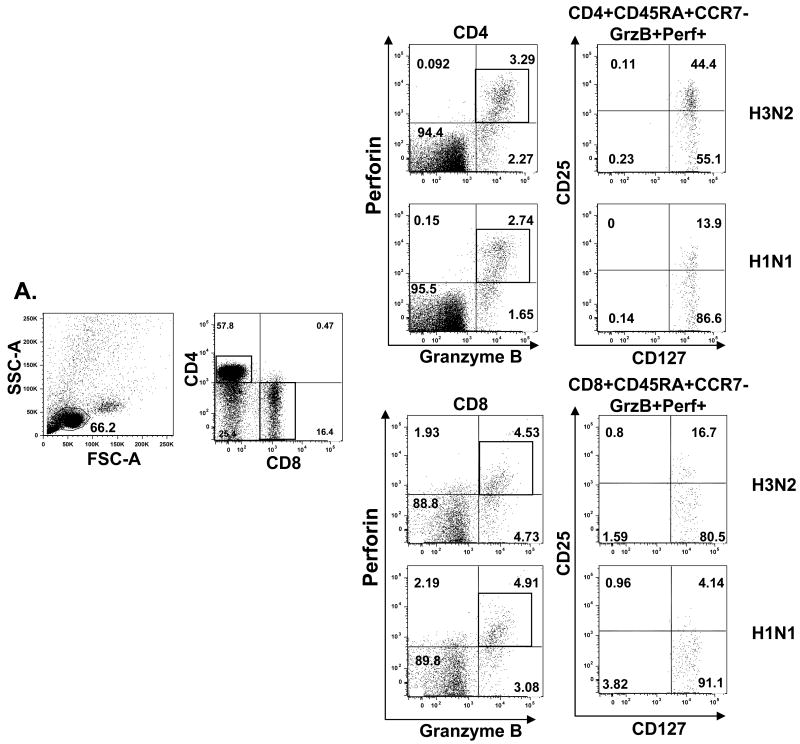
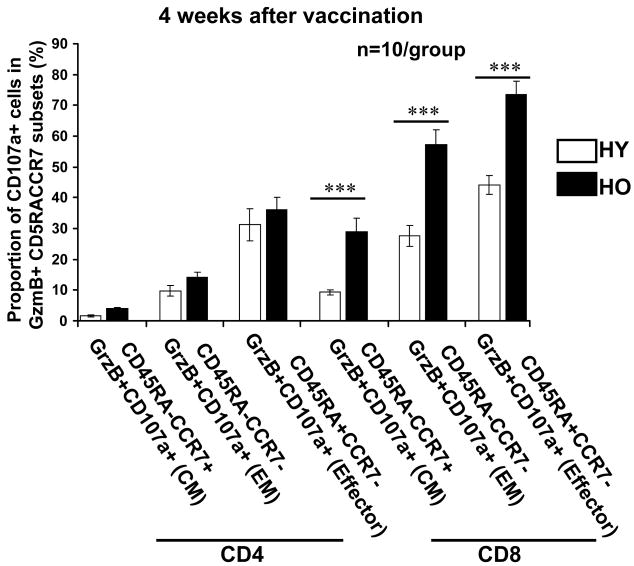
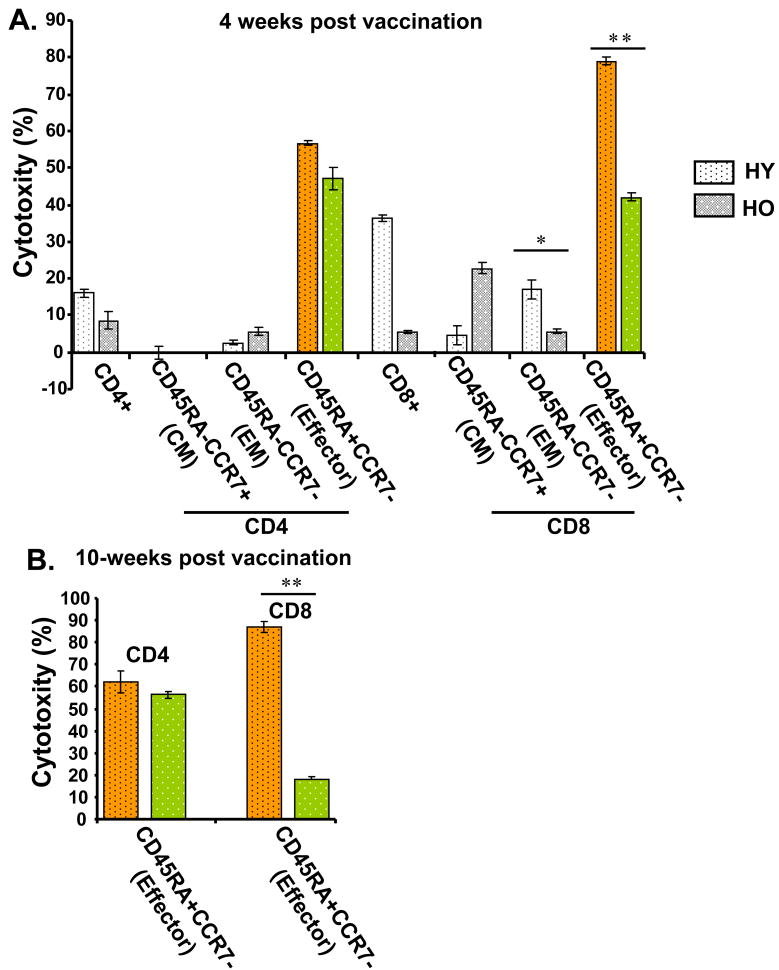
Age-dependent changes in the cellular immune response have been mainly described in CD8+ T cells, with relative sparing of CD4+ T cells. We show that in older compared to young adults, effector memory and effector CD8+ T-cell subsets responding to influenza A/H3N2 challenge have diminished cytolytic activity. In contrast, effector CD4+ T-cell subsets in older adults share similar phenotypic and functional characteristics with those from young adults. Further, we observed a diminished cytolytic T-cell response to both seasonal influenza A/H3N2 and pandemic H1N1 (pH1N1) strains in older compared to young adults who had received seasonal influenza vaccine. These results are consistent with the observed rates of serious complications from seasonal and pandemic influenza infections in different age groups, and suggest that CD4+ T cells may provide a compensatory response to influenza infection when CD8+ T cells become compromised during the aging process.
年龄相关的细胞免疫反应变化主要在 CD8+ T 细胞中描述,而 CD4+ T 细胞相对较少。我们表明,与年轻人相比,老年人对甲型流感 A/H3N2 挑战的效应记忆和效应 CD8+ T 细胞亚群的细胞毒性活性降低。相比之下,老年人的效应 CD4+ T 细胞亚群与年轻人的细胞具有相似的表型和功能特征。此外,我们观察到与年轻人相比,接受季节性流感疫苗接种的老年人对季节性甲型流感 A/H3N2 和大流行 H1N1(pH1N1)株的细胞毒性 T 细胞反应降低。这些结果与不同年龄组中季节性和大流行性流感感染的严重并发症发生率一致,并表明当 CD8+ T 细胞在衰老过程中受损时,CD4+ T 细胞可能对流感感染提供代偿性反应。