Pawar Vidya, De Antara, Briggs Laura, Omar Mahmoud M, Sweeney Sean T, Lord J Michael, Roberts Lynne M, Spooner Robert A, Moffat Kevin G
Department of Biological Sciences, University of Warwick, Coventry, UK.
J Biomol Screen. 2011 Apr;16(4):436-42. doi: 10.1177/1087057110397890. Epub 2011 Mar 1.
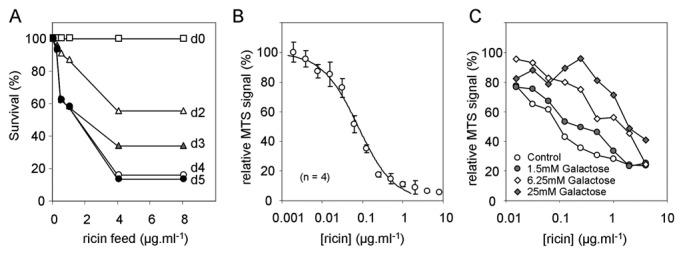
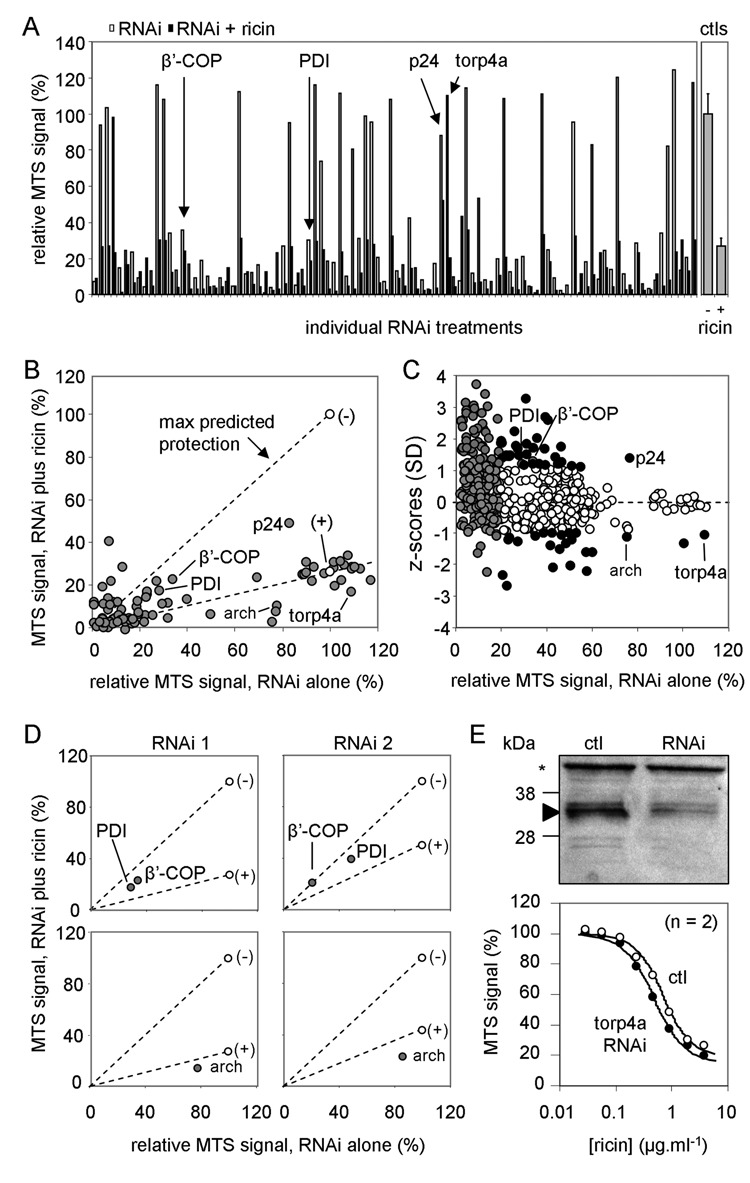
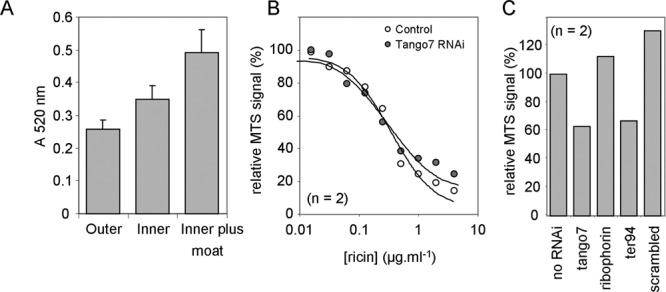
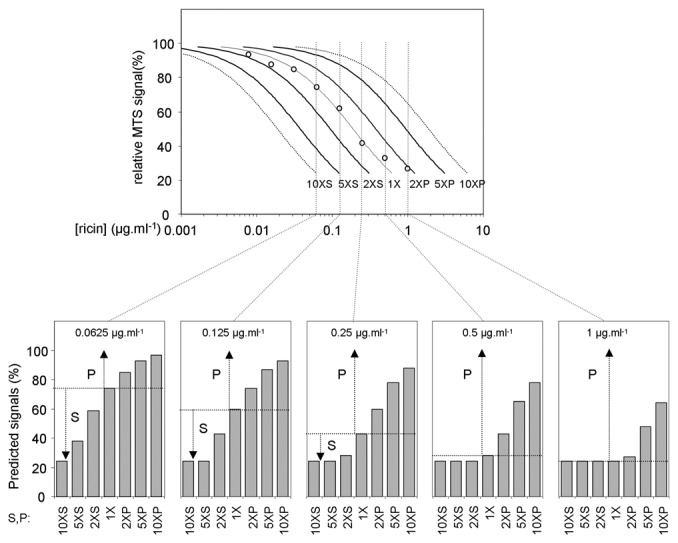
The ribosome-inhibiting toxin ricin binds exposed β1→4 linked galactosyls on multiple glycolipids and glycoproteins on the cell surface of most eukaryotic cells. After endocytosis, internal cell trafficking is promiscuous, with only a small proportion of ricin proceeding down a productive (cytotoxic) trafficking route to the endoplasmic reticulum (ER). Here, the catalytic ricin A chain traverses the membrane to inactivate the cytosolic ribosomes, which can be monitored by measuring reduction in protein biosynthetic capacity or cell viability. Although some markers have been discovered for the productive pathway, many molecular details are lacking. To identify a more comprehensive set of requirements for ricin intoxication, the authors have developed an RNAi screen in Drosophila S2 cells, screening in parallel the effects of individual RNAi treatments alone and when combined with a ricin challenge. Initial screening of 806 gene knockdowns has revealed a number of candidates for both productive and nonproductive ricin trafficking, including proteins required for transport to the Golgi, plus potential toxin interactors within the ER and cytosol.
核糖体抑制毒素蓖麻毒素可与大多数真核细胞表面多种糖脂和糖蛋白上暴露的β1→4连接的半乳糖基结合。内吞作用后,细胞内的运输过程杂乱无章,只有一小部分蓖麻毒素沿着通向内质网(ER)的有效(细胞毒性)运输途径前行。在此,具有催化活性的蓖麻毒素A链穿过膜使胞质核糖体失活,这可以通过测量蛋白质生物合成能力的降低或细胞活力来监测。尽管已经发现了一些生产途径的标志物,但仍缺乏许多分子细节。为了确定蓖麻毒素中毒更全面的一系列要求,作者在果蝇S2细胞中开展了RNA干扰筛选,同时单独及与蓖麻毒素刺激联合筛选各个RNA干扰处理的效果。对806个基因敲除的初步筛选已经揭示了一些蓖麻毒素有效和无效运输的候选基因,包括运输到高尔基体所需的蛋白质,以及内质网和胞质溶胶中的潜在毒素相互作用分子。