Centre de Neuroscience Cognitive, Université de Lyon, CNRS, Bron, France.
PLoS One. 2011 Feb 18;6(2):e17133. doi: 10.1371/journal.pone.0017133.
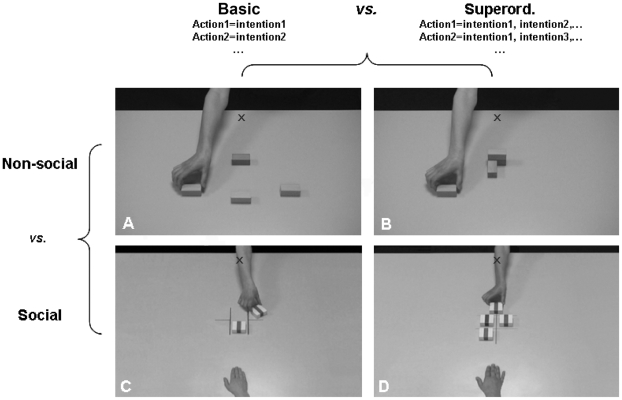
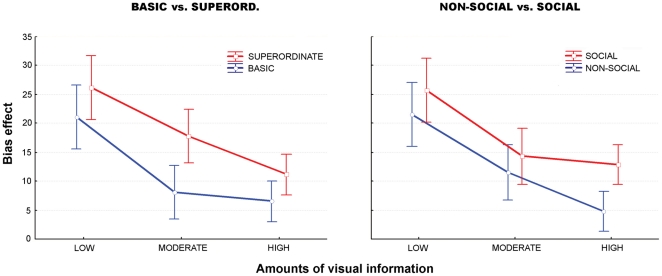
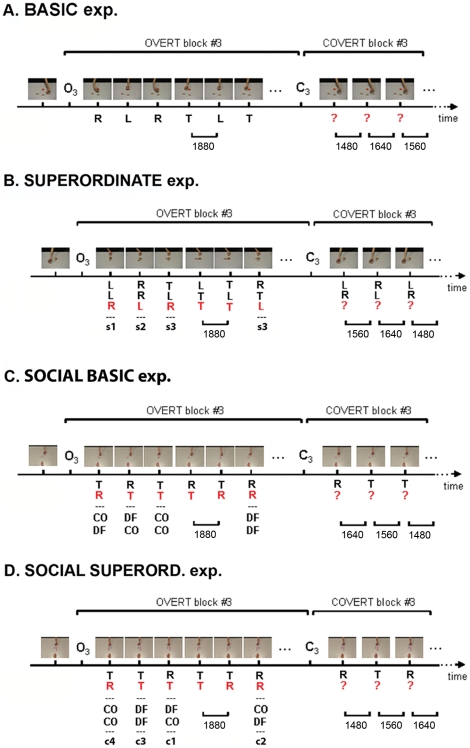
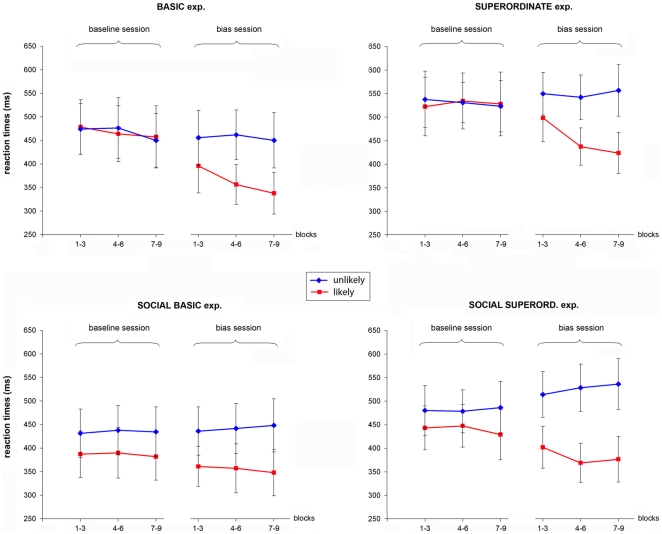
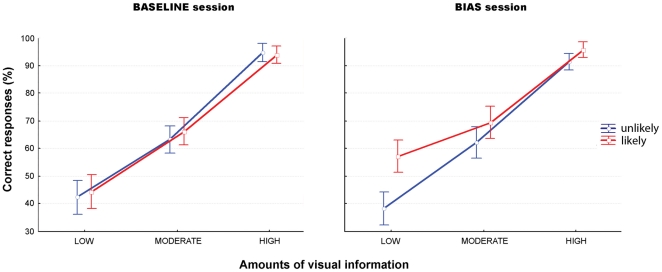
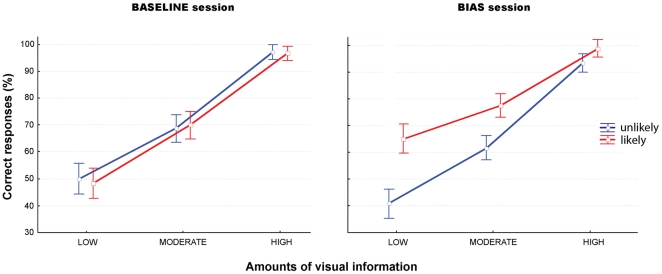
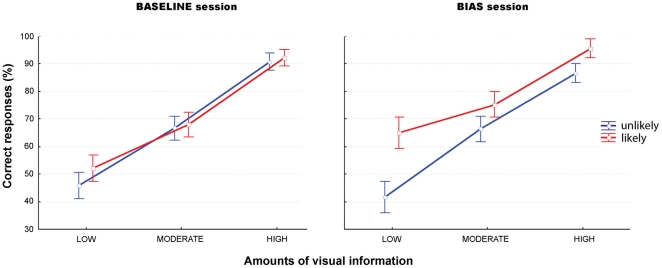
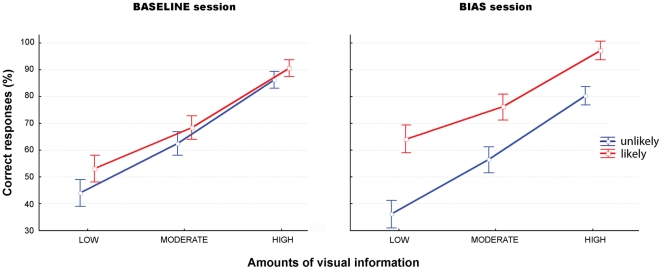
Explaining or predicting the behaviour of our conspecifics requires the ability to infer the intentions that motivate it. Such inferences are assumed to rely on two types of information: (1) the sensory information conveyed by movement kinematics and (2) the observer's prior expectations--acquired from past experience or derived from prior knowledge. However, the respective contribution of these two sources of information is still controversial. This controversy stems in part from the fact that "intention" is an umbrella term that may embrace various sub-types each being assigned different scopes and targets. We hypothesized that variations in the scope and target of intentions may account for variations in the contribution of visual kinematics and prior knowledge to the intention inference process. To test this hypothesis, we conducted four behavioural experiments in which participants were instructed to identify different types of intention: basic intentions (i.e. simple goal of a motor act), superordinate intentions (i.e. general goal of a sequence of motor acts), or social intentions (i.e. intentions accomplished in a context of reciprocal interaction). For each of the above-mentioned intentions, we varied (1) the amount of visual information available from the action scene and (2) participant's prior expectations concerning the intention that was more likely to be accomplished. First, we showed that intentional judgments depend on a consistent interaction between visual information and participant's prior expectations. Moreover, we demonstrated that this interaction varied according to the type of intention to be inferred, with participant's priors rather than perceptual evidence exerting a greater effect on the inference of social and superordinate intentions. The results are discussed by appealing to the specific properties of each type of intention considered and further interpreted in the light of a hierarchical model of action representation.
解释或预测我们同类的行为需要推断其动机的意图的能力。这种推断被认为依赖于两种类型的信息:(1)运动运动学传达的感觉信息和(2)观察者的先验期望——从过去的经验中获得或从先验知识中得出。然而,这两种信息来源的各自贡献仍然存在争议。这种争议部分源于“意图”是一个总称,它可能包含各种子类型,每个子类型都有不同的范围和目标。我们假设意图的范围和目标的变化可能解释了视觉运动学和先验知识对意图推断过程的贡献的变化。为了检验这个假设,我们进行了四项行为实验,其中参与者被指示识别不同类型的意图:基本意图(即运动行为的简单目标)、上位意图(即一系列运动行为的一般目标)或社会意图(即在互惠互动的背景下完成的意图)。对于上述每一种意图,我们都改变了(1)动作场景中可用的视觉信息量,以及(2)参与者对更有可能完成的意图的先验期望。首先,我们表明,意图判断取决于视觉信息和参与者先验期望之间的一致相互作用。此外,我们证明,这种相互作用根据要推断的意图类型而变化,参与者的先验知识而不是感知证据对社会和上位意图的推断产生更大的影响。结果通过诉诸于所考虑的每种意图类型的特定属性进行了讨论,并根据动作表示的层次模型进一步进行了解释。