Cancer and Inflammation Program, Center for Cancer Research, National Cancer Institute, Frederick, Maryland, United States of America.
PLoS One. 2011 Feb 18;6(2):e16967. doi: 10.1371/journal.pone.0016967.
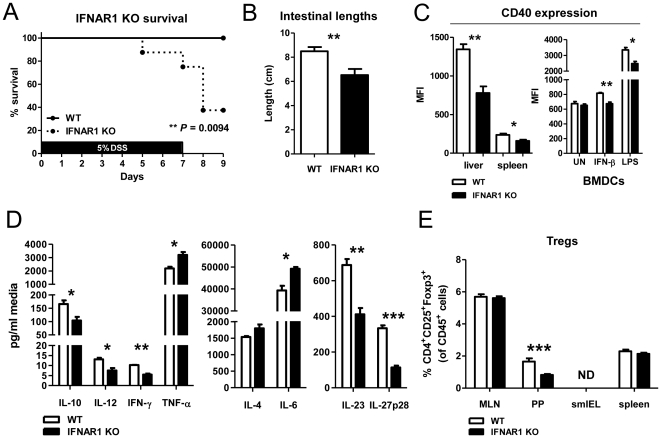
There have been conflicting reports of the role of Type I interferons (IFN) in inflammatory bowel disease (IBD). Clinical trials have shown potent efficacy of systemic interferon-beta (IFN-β) in inducing remission of ulcerative colitis. Likewise, IFNAR1(-/-) mice display an increased sensitivity to dextran sulfate sodium (DSS)-induced colitis, suggesting Type I IFN play a protective role during inflammation of the gut. Curiously, however, there have also been reports detailing the spontaneous development of IBD in patients receiving systemic IFN-β therapy for multiple sclerosis or hepatitis.
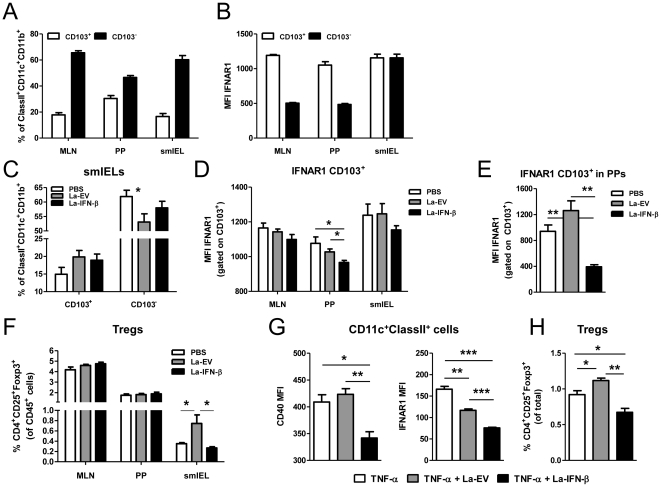
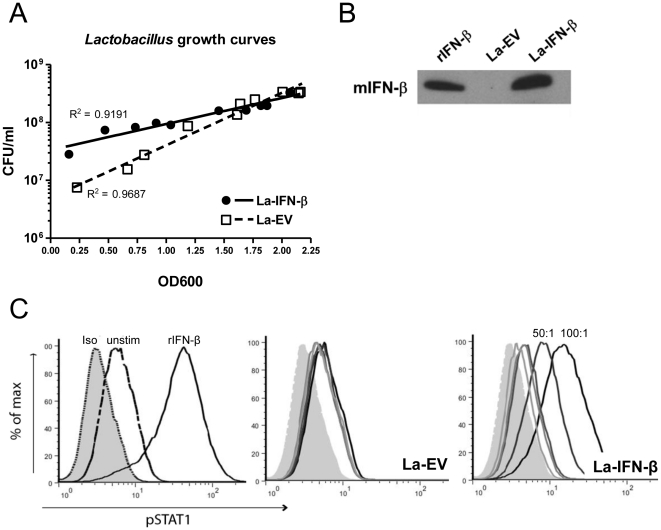
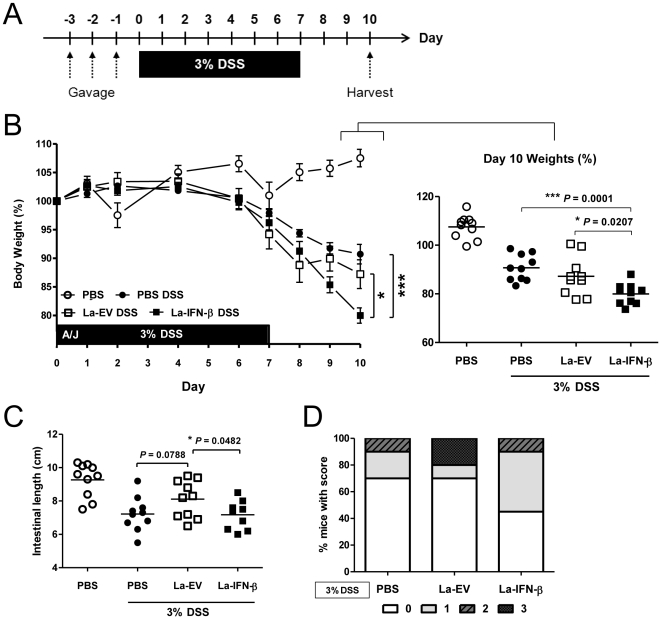
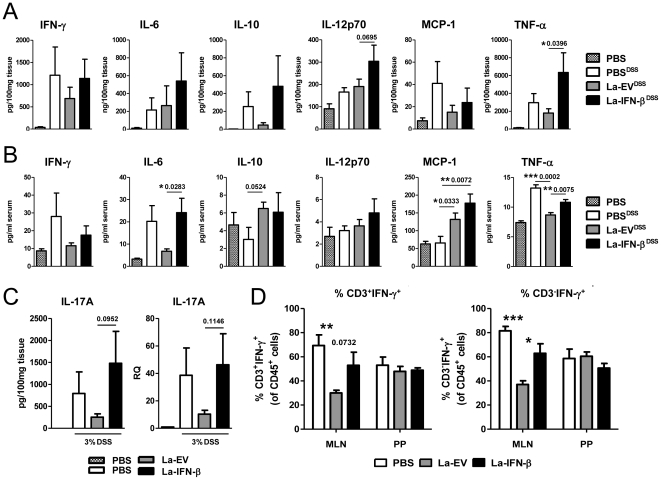
METHODOLOGY/PRINCIPAL FINDINGS: To investigate the effects of local administration of IFN-β on a murine model of colitis, we developed a transgenic Lactobacillus acidophilus strain that constitutively expresses IFN-β (La-IFN-β). While pretreatment of mice with control Lactobacillus (La-EV) provided slight protective benefits, La-IFN-β increased sensitivity to DSS. Analysis showed colitic mice pretreated with La-IFN-β had increased production of TNF-α, IFN-γ, IL-17A and IL-13 by intestinal tissues and decreased regulatory T cells (Tregs) in their small intestine. Examination of CD103(+) dendritic cells (DCs) in the Peyer's patches revealed that IFNAR1 expression was dramatically reduced by La-IFN-β. Similarly, bone marrow-derived DCs matured with La-IFN-β experienced a 3-fold reduction of IFNAR1 and were impaired in their ability to induce Tregs.
CONCLUSIONS/SIGNIFICANCE: Our IFNAR1 expression data identifies a correlation between the loss/downregulation of IFNAR1 on DCs and exacerbation of colitis. Our data show that Lactobacillus secreting IFN-β has an immunological effect that in our model results in the exacerbation of colitis. This study underscores that the selection of therapeutics delivered by a bacterial vehicle must take into consideration the simultaneous effects of the vehicle itself.
关于 I 型干扰素(IFN)在炎症性肠病(IBD)中的作用存在相互矛盾的报道。临床试验表明,全身应用干扰素-β(IFN-β)可有效诱导溃疡性结肠炎缓解。同样,IFNAR1(-/-)小鼠对葡聚糖硫酸钠(DSS)诱导的结肠炎表现出更高的敏感性,这表明 I 型 IFN 在肠道炎症中发挥保护作用。然而,令人好奇的是,也有报道详细描述了在接受多发性硬化症或肝炎全身 IFN-β 治疗的患者中自发性发生 IBD 的情况。
方法/主要发现:为了研究 IFN-β 局部给药对结肠炎小鼠模型的影响,我们开发了一种持续表达 IFN-β 的转基因嗜酸乳杆菌菌株(La-IFN-β)。虽然用对照嗜酸乳杆菌(La-EV)预处理小鼠提供了轻微的保护益处,但 La-IFN-β增加了对 DSS 的敏感性。分析显示,用 La-IFN-β预处理的结肠炎小鼠的肠道组织产生更多的 TNF-α、IFN-γ、IL-17A 和 IL-13,而其小肠中的调节性 T 细胞(Tregs)减少。在派尔集合淋巴结中检查 CD103(+)树突状细胞(DC),发现 La-IFN-β显著降低了 IFNAR1 的表达。同样,用 La-IFN-β 成熟的骨髓来源的 DC 经历了 3 倍的 IFNAR1 减少,并在诱导 Tregs 的能力上受损。
结论/意义:我们的 IFNAR1 表达数据表明,DC 上 IFNAR1 的丧失/下调与结肠炎的加重之间存在相关性。我们的数据表明,分泌 IFN-β 的乳杆菌具有免疫作用,在我们的模型中导致结肠炎的加重。这项研究强调,通过细菌载体输送的治疗药物的选择必须考虑到载体本身的同时作用。